Posts in Economic Commentary
When Market Crashes are Like Rock Climbing Falls
 
brook-anderson-gTQbZXL417Q-unsplash.jpg

“Am I okay?” Fear ripe in my voice. 

We just heard what no climber ever wants to hear: one loud scream, three thuds, then nothing.

At that moment, I was sixty feet in the air doing the routine work of cleaning the anchor, removing all the gear that protected us as we climbed up the route and re-setting the rope to be lowered and move on to the next climb when we heard it.

That sound? It was someone falling. Hard. We didn’t know how far or how badly, but we knew that climb was higher than mine: about eighty feet top to earth.

“I got you!” He called back. “Take a deep breath. Tell me what you’re doing.”

I did. I called out every single step I was taking to clean the anchor and secure the rope back to my harness –triple checked for safety – and he held the rope. Eventually, my feet and wobbling legs arrived safely back on earth.

When you rock climb, there is obvious risk involved. Risk that you accept as the price of admission for moving higher than twenty feet – the height where, if you fall, you most likely will not be fatally injured. 

Confidence matters. Confidence in your gear, skill, weather, and your risk tolerance. Yet there is a confidence that is as important – if not more important – than all the confidence inside you: that is confidence in your belay partner.

Your partner is the one on the other end of the rope, your safety line, whose responsibility it is to pay attention, catch you when you fall, and lower you safely from sky to earth. A good belay partner must not only know the mechanics of climbing and safety but must also know you. They communicate clearly and are always paying attention – often mitigating the risks that are out of your control when you chose to leave the earth and head toward the open blue.

At no point after hearing those falling sounds did anything feel ok. My imagination was a wild hostage situation, forcing in front of my focus nightmares of gear failing and my body hurling through space.

But in reality, I was okay. I was safely anchored.  We had a plan and practice in place for climbing safely. My belay partner was paying attention, “I got you”. He heard the sounds too, but he did not take his focus off the rope and my safety.

Investing in the stock market can be a lot like rock climbing

There is risk involved in climbing your portfolio value higher than a modest, though acceptable, goal of beating inflation.

When the market takes a dive and the media heads are talking about total economic fall-out, it sure doesn’t feel okay. Do you have a good partner? A good advisor is a good partner. 

Are they paying attention? When you hear the rumble and scary sounds of the market moving and you call out, “Am I okay?”, how does your advisor respond?

At Human Investing, we are your partner on the other end of the rope

  • Our climbing anchor is the fiduciary standard. Every trade, conversation, and piece of back-office work is done to mitigate unnecessary risk as your portfolio climbs, and it is all done with YOUR best interest in mind.

  • Our figure-eight is clean and tight.  Your financial plan is like tying the climbing rope in to your harness – it is your safety line that serves to mitigate risk by informing how your dollars are invested to avoid and securely catch any falls. When the market crashes, we are on the other end of the line. 

  • Our GriGri is loaded and locked.  We have the highest standard in investment tools.  We know our tools and we use them well, monitoring the “weather patterns” of the market, watching your portfolio as it climbs and responding as appropriate.

  • “On Belay? Belay on! Climbing? Climb on!”  Before you climb you say to your partner:  Are you ready and paying attention?  We are paying attention and ready to serve you. There is more than one set of eyes on your accounts – you are more than dollars and stock holdings to us.  We will not be distracted by the noise around us.

  • “I got you!”  As with any good partner: We know you.  We will respond to fear or a fall.  Your time with us is invested in discussing your goals, your values, and your reactions when your portfolio climbs or lurches.  We answer when you call, and sometimes we call you first because we also hear the sounds of the news and peers, and it may be scary. But in the end, we “got you.” We will not allow a fall-fear to inflict avoidable loss.

If you would like to talk to an advisor about how to climb your portfolio the Human Investing way, give us a call or send us an email.  It would be our pleasure to partner with you.


Related Articles

How do Elected Governments Affect the Stock Market?
 

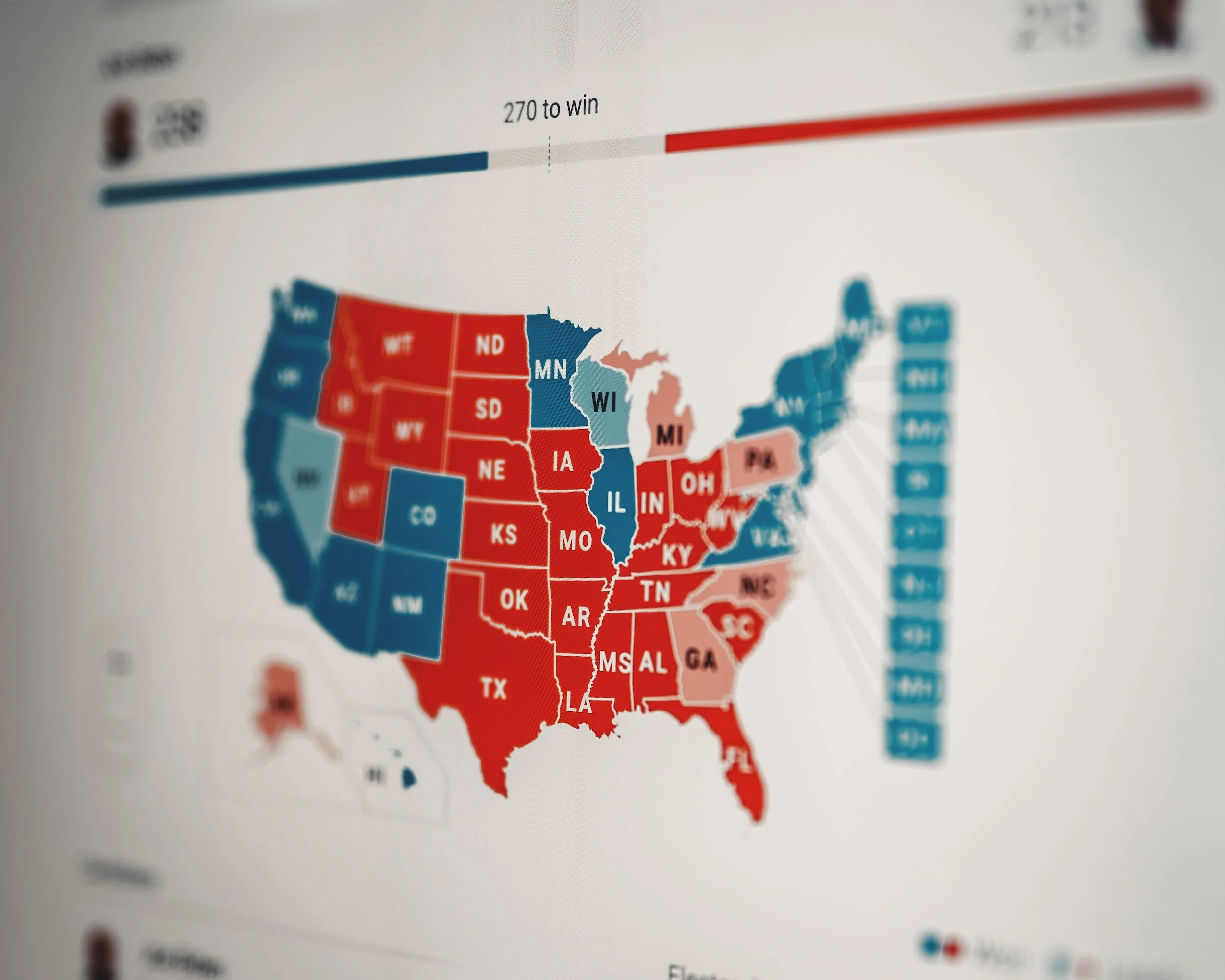
Every four years, our clients are eager to talk about the election’s influence on their portfolios and the broader economy. And, as has been consistent over the last 20+ years, our response is dreadfully dull. Let me explain.

Generally, the stock market is apolitical, showing no preference to either Republicans or Democrats (Li & Born, 2006). Historically, Democratic administrations are associated with more expansionary policies. With a more inflationary approach in mind, Democratic administrations are also more inclined to juice the economy with Gross National Product expanding at 5%, versus 1.2% for a Republican administration in their first two years (Alesina & Sachs, 1988). 

The market cares little about the president, the Senate, or the House. As Figure 1 below highlights, an investor who placed $1,000 into the stock market beginning January of 1926 amassed significant wealth, regardless of the political leanings and party affiliation of the President. 

Figure 1

Figure 1

You might be thinking, “but this time, it’s different”. Probably not. The chart above includes years with impeached presidents, wars, crisis, and plagues, and as you can see by growth over time, the stock market cares minimally about these events. Don’t just take my word for it. Read history and periodically look at Figure 1 as a reminder.

The data we have reviewed suggests that there is almost no evidence connecting stock market performance (good or bad) with a president and their political affiliation. Consequently, households should focus on their financial plan and the rate of return necessary to achieve their goals, and less about the election and its impact on the market. 


References

Alesina, A. and J. Sachs, 1988, Political parties and the business cycle in the United States, 1948–1984, Journal of Money, Credit and Banking, 63–82.

Li, J., & Born, J. A. (2006). Presidential election uncertainty and common stock returns in the United States. Journal of Financial Research, 29(4), 609-622.


New Standards Set by the SEC on Transparency and Conduct for all Advisors
oliver-schwendener-uOGG7PerNf4-unsplash2.jpg

Human Investing is celebrating. Why? We have good news for you. While we’ve always been transparent at Human Investing, the rest of the industry is now required to catch up.

A new rule took effect on June 30th, designed to help provide investors with a transparent look at their investment professionals.

The U.S. Security and Exchange Commission (SEC) enacted the Regulation Best Interest rule which requires all Advisors and Brokers to provide their retail clients with Form CRS (an acronym for Client Relationship Summary).

Our firm has been promoting transparency with our clients for a long time. As a fiduciary, that’s what we stand for. We have experienced transparency leads to greater trust and better results with our clients and within our team. We are now excited to see that the rest of the industry is required to do the same. If you are working with an advisor, or plan to work with an advisor, this impacts news for you.  

The intent of the Form CRS is to address the first PILLAR of the SEC’s three-part mission:

  1. Protect investors 

  2. Maintain fair, orderly, and efficient markets 

  3. Facilitate capital formation 

Regulation Best Interest and Form CRS were created with the intent to help investors protect themselves. Form CRS accomplishes this by requiring advisors to communicate information that an investor should know (e.g. conflicts of interest and how your advisor gets paid) in a clear standardized format. This new rule isn’t a panacea for all industry ills, however, the transparency provided by Form CRS will help investors better educate and protect themselves.   

We also hope that transparency will affect wide change in our industry for the benefit of the investor. The impact of transparency we hope for is described well in Ray Dalio's book Principles.  

"Radical transparency fosters goodness in so many ways for the same reasons that bad things are more likely to take place behind closed doors." - Ray Dalio.  

So, what exactly will you be able to learn about your advisor via Form CRS? 

  • The types of services a firm offers — are there services they offer that you aren't receiving?

  • The fees and costs you will have to pay for those services — this is especially important because there are many different fee structures

  • Conflicts of interest a broker or adviser may have — an estimated $17 billion is spent annually on conflicted advice for retirement savings in the US

  • The required standard of conduct associated with the services a firm offers 

  • Whether a firm and its financial professionals have reportable legal or disciplinary history

  • Key questions to ask your financial professional

Want to learn about your financial advisor? Here is a link to the SEC's search engine of Form CRS - Form CRS Search Engine. See Human Investing’s Form CRS here.

If you have a question about Form CRS or you are interested in having a clear, transparent conversation about your financial plan, please contact us at Human Investing.  We're here to help! 


Sources:

www.investor.gov

https://www.sec.gov/Article/whatwedo.html

https://obamawhitehouse.archives.gov/blog/2015/02/23/effects-conflicted-investment-advice-retirement-savings