Quarterly Economic Update: The Market Beneath the Market

If you had told me at the beginning of the year that the seven largest companies would underperform, inflation would remain stubborn, tariffs would add pressure to prices, another interest-rate hike would become a real possibility, and conflict would disrupt shipping through the Strait of Hormuz, I would have guessed the stock market would be down.
That would have been a reasonable guess….it also would have been wrong.
Through July, the S&P 500 has gained roughly 10% including dividends, despite an economic backdrop that seemed to hint otherwise. It’s a reminder that the future rarely unfolds exactly as we think it will. Markets have a way of surprising both optimists and pessimists.
That brings us to one of the more interesting stories unfolding beneath the surface this year.
A Different Kind of Market
For the past several years, the story of the U.S. stock market was largely the story of seven companies: NVIDIA, Apple, Microsoft, Amazon, Alphabet, Meta, and Tesla. Together, they are often referred to as the “Magnificent Seven,” or simply the “Mag 7.”
In 2023, the Magnificent Seven gained approximately 76%, while the remaining 493 companies in the S&P 500 returned roughly 11%. In 2024, the Mag 7 gained another 48%, compared with approximately 14% for the rest of the index.
Compounded over those two years, the Magnificent Seven appreciated roughly 160%, while the remaining 493 companies of the S&P 500 gained about 27%.
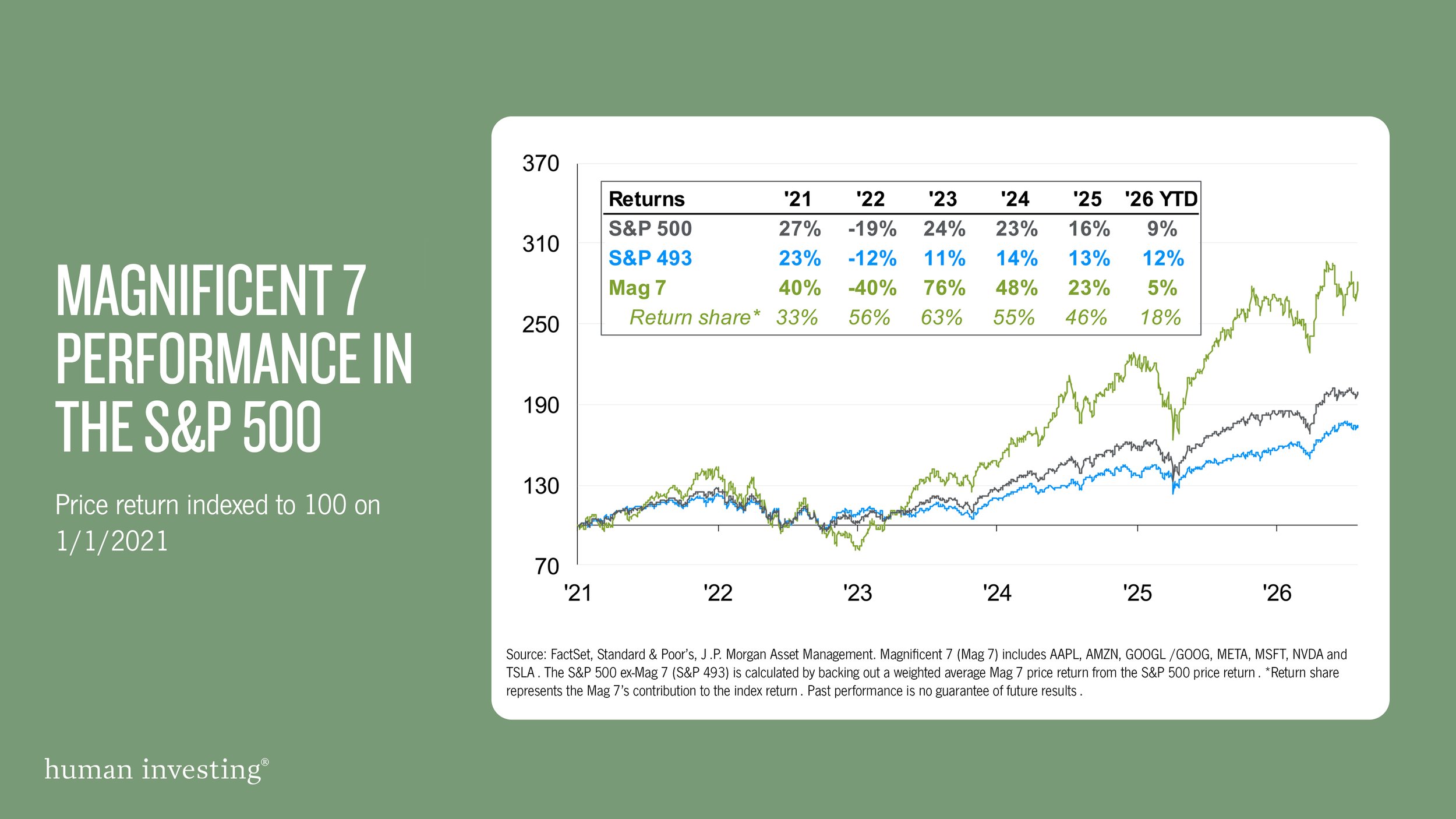
These returns were supported by business success. The companies delivered impressive earnings, benefited from the excitement surrounding artificial intelligence, and established themselves as leaders in some of the world’s most important industries. As a result, this relatively small group accounted for a significant share of the market’s gains.
This year, something important has changed. The market has continued to move higher, but this time the gains have come from a much wider range of companies. Smaller companies generally have outperformed large companies, and international markets have outperformed large companies in the US.
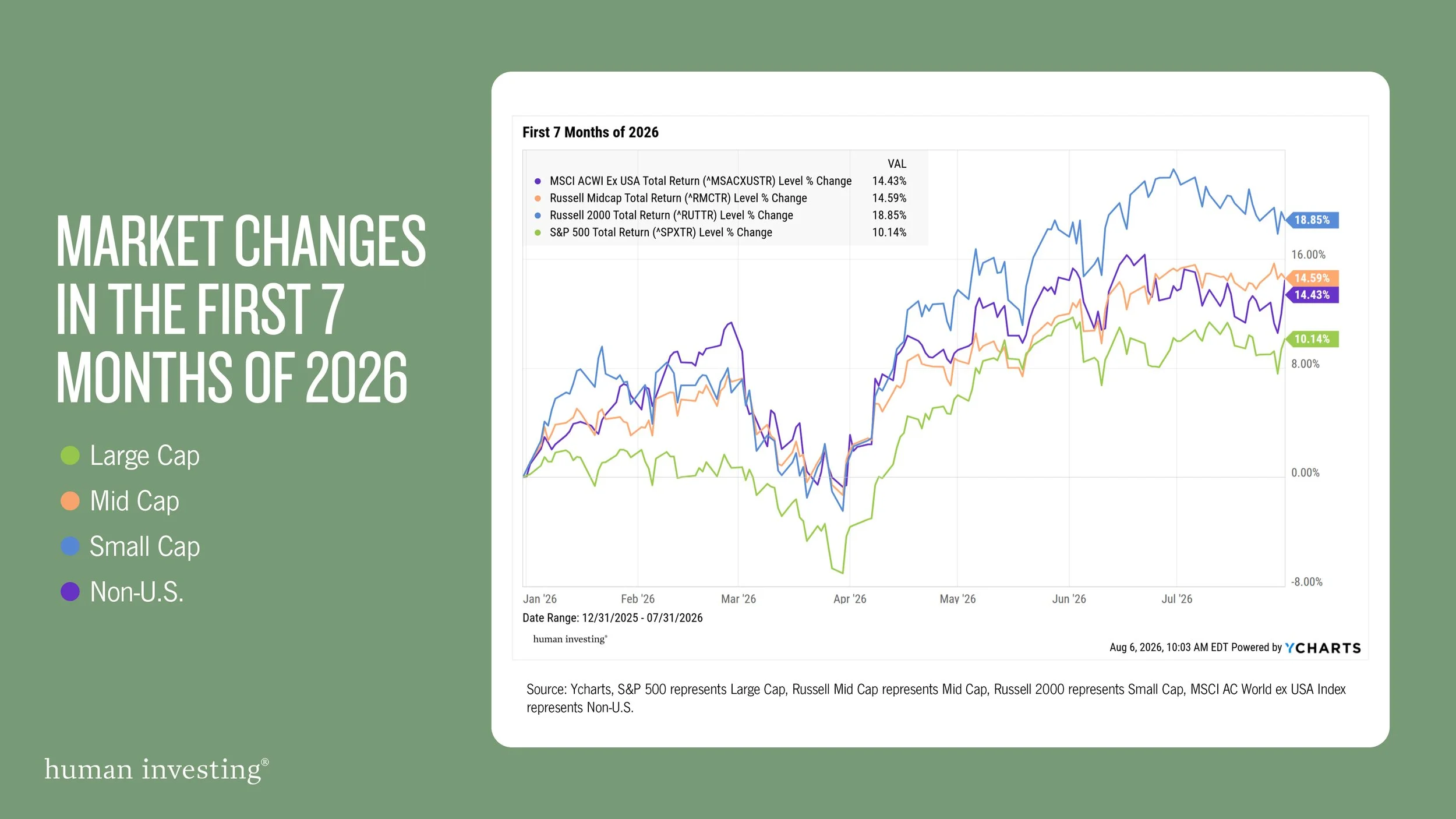
The market has continued to move forward, but it hasn’t needed the same seven companies to carry it.
Why Broader Participation Matters
A market supported by more companies is generally healthier than one carried by only a handful of names. Broader participation means the market is less dependent on the ongoing success of the same companies.
One of the interesting realities of investing is that a great business doesn't always make a great investment. A company can continue growing while its stock underperforms simply because expectations have already become so high.
The Magnificent Seven did not suddenly become seven bad businesses. They entered the year carrying high expectations, large positions within the index, and several years of extraordinary performance. Meanwhile, many other parts of the market entered the year with lower valuations and less enthusiasm.
As investors began finding opportunities elsewhere, market leadership broadened. This shift is a normal part of how markets work.
J.P. Morgan’s historical review of the ten largest companies in the S&P 500 shows how market leadership has changed across decades. The companies dominating the index in 1985 looked very different from those leading in 2005, 2015, or 2025. Some remained successful businesses for decades. Very few remained the market’s dominant investment leaders.
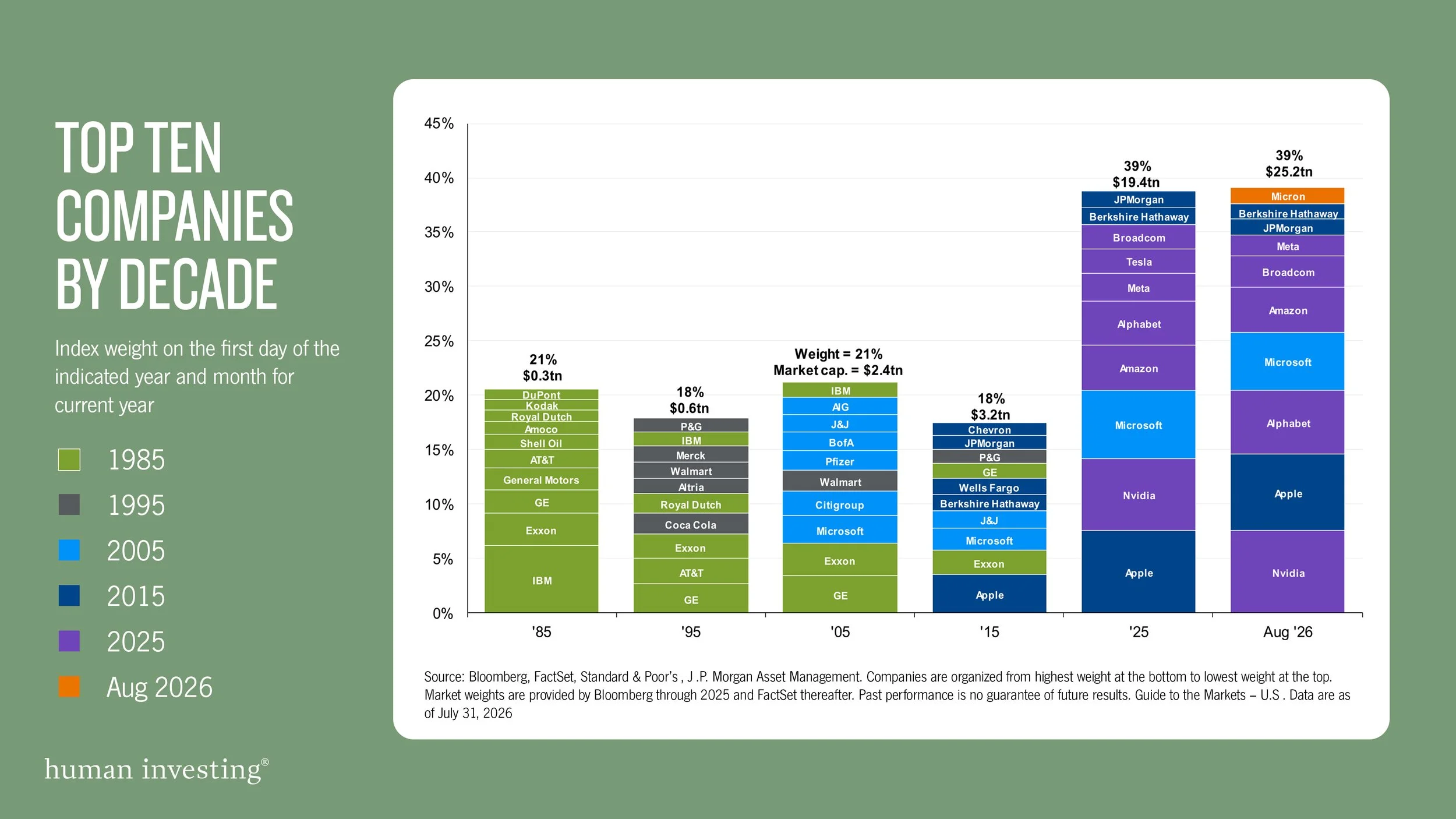
The lesson is not that today’s largest companies are destined to fail. History simply gives us little reason to assume that the same group will lead forever.
Seasons like this are where diversification proves its value
When large technology companies lead the market for several years, it can begin to feel as though they are the only investments that matter. International stocks, smaller companies, and other parts of the market may receive far less attention. Then leadership quickly changes, often when few investors expect it.
Diversification acknowledges that none of us knows exactly how the future will unfold. Rather than trying to predict the next winning sector, company, or country, it allows investors to participate in market growth as a whole. The result is a portfolio that is less dependent on any single outcome and better prepared for a range of possible futures.
The Portfolio Serves the Plan
One of the reasons we spend so much time building a financial plan before building an investment portfolio is because the plan defines what success actually looks like.
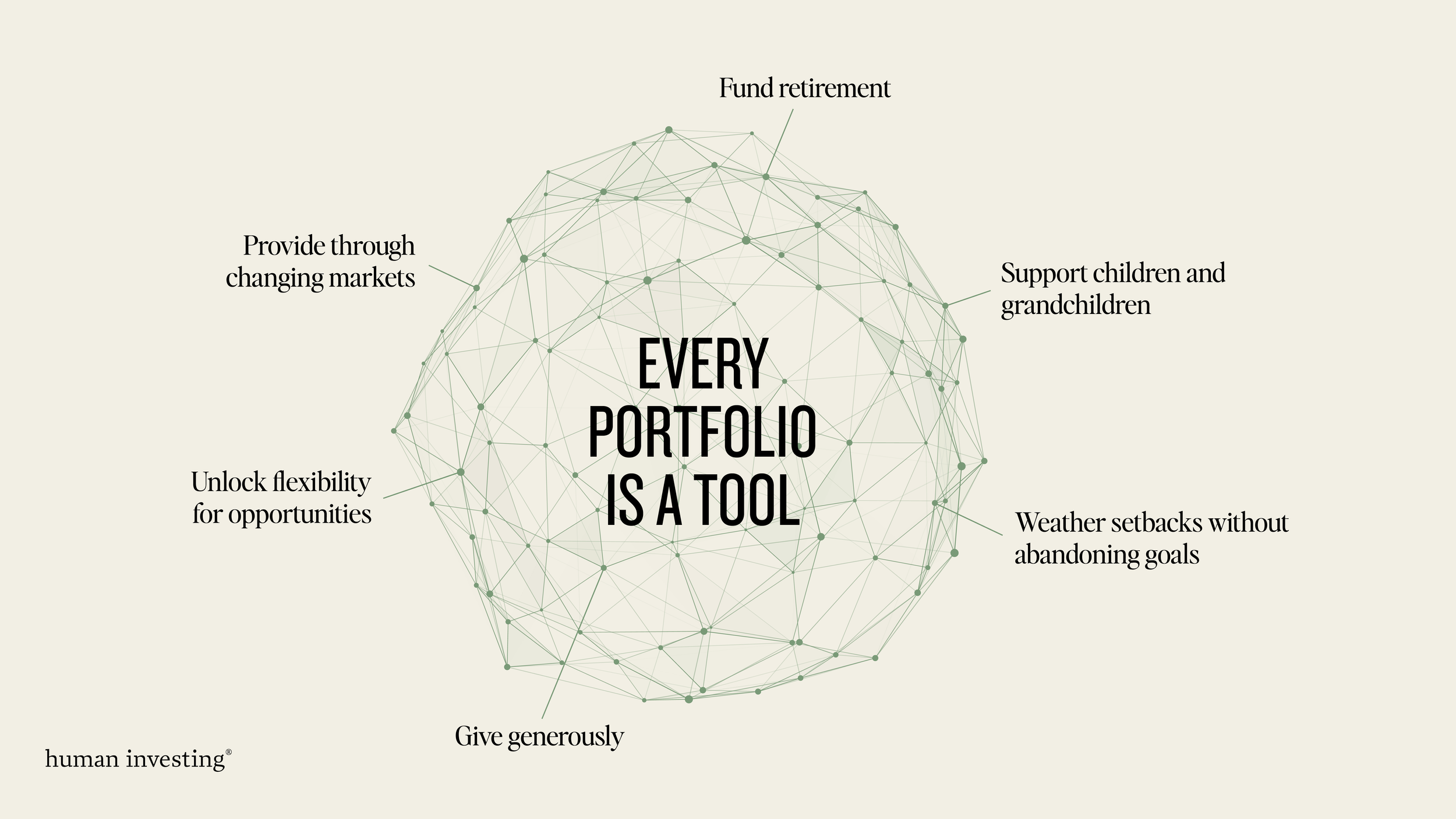
The portfolio then becomes a tool to support that plan. Its purpose may be:
To fund retirement.
To provide confidence that spending can continue through changing markets.
To create flexibility for opportunities that arise unexpectedly.
To support children and grandchildren.
To give generously.
To weather setbacks without having to abandon long-term goals.
When a portfolio is anchored to a thoughtful financial plan, it becomes easier to stomach periods of change. There is less need to chase whatever happens to be performing best because the portfolio was never built around a single prediction in the first place.
Instead, we ask a different question: Does this portfolio continue to provide a high probability of accomplishing the goals that matter most?
That perspective doesn't eliminate uncertainty. It simply helps us respond to uncertainty with patience rather than reaction.
Built for Uncertainty
None of this means the risks have disappeared. Markets will almost certainly face new challenges that we cannot anticipate today, and periods of volatility are inevitable.
But this year has offered an important reminder: the market often does its best work while investors are focused on reasons it shouldn't.
While leadership changes, narratives change, and headlines change, the importance of your goals does not.
That is why we continue to believe in thoughtful financial planning, broad diversification, tax-wise investing, and the discipline to stay focused on what matters most.
The objective has never been to predict every twist in the market. It is to build a financial plan and portfolio that can succeed through many different kinds of markets.
At the beginning of the year, many investors would have predicted a very different outcome than the one we've experienced.
We cannot know which companies, sectors, or countries will lead next… fortunately, we do not have to.

Disclosure:
This material is provided for informational and educational purposes only. It should not be construed as investment, legal, or tax advice, nor does it constitute a recommendation or solicitation to buy or sell any security. Investors should consult with a qualified financial professional before making any investment decisions. Rebalancing and asset allocation strategies do not ensure a profit or protect against loss in declining markets. There is no guarantee that any investment strategy will achieve its objectives. Any references to historical performance, academic studies, or research are based on past data and should not be considered indicative of future results. Past performance is not a guarantee of future outcomes. Advisory services offered through Human Investing, an SEC-registered investment adviser.