Posts in Economic Commentary
Hi Ground Episode 10: Ride The Wave: What Midterms Do To Markets
 

E-mail us your questions, comments, and if you like our banter: higroundpodcast@gmail.com

Episode 10 show notes

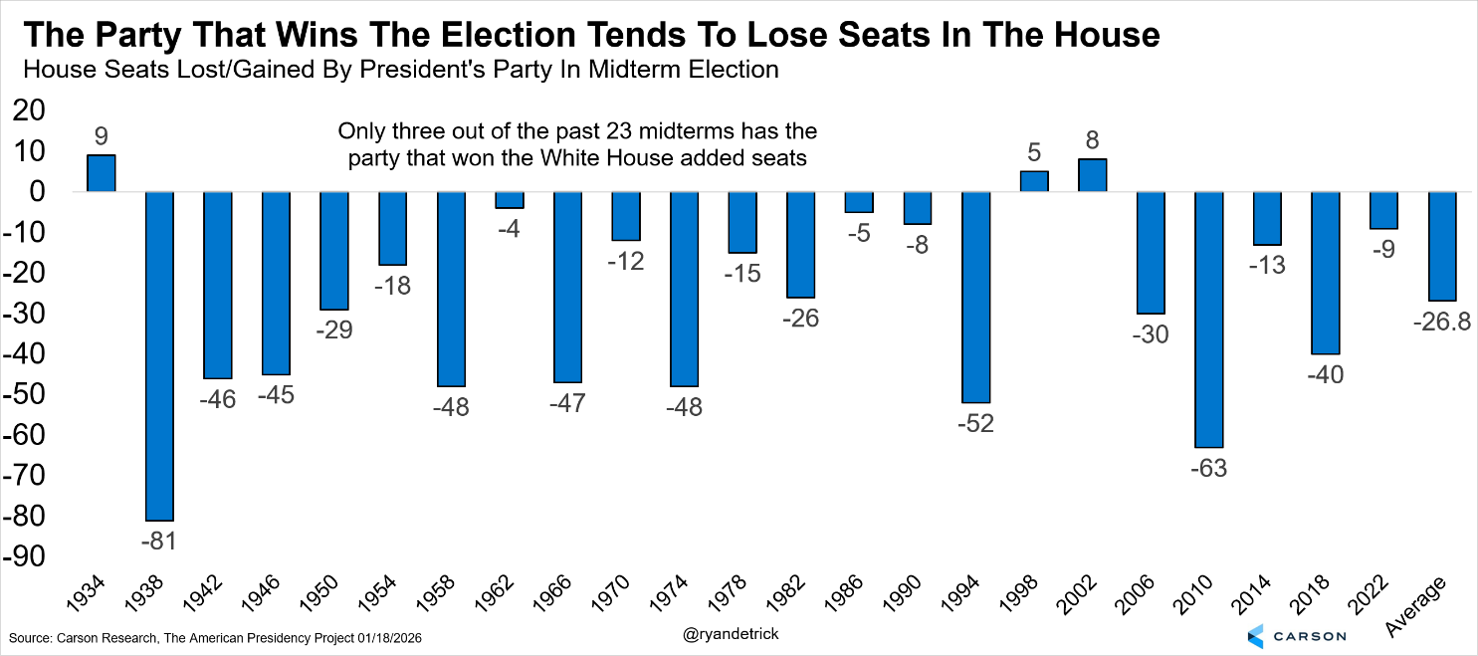
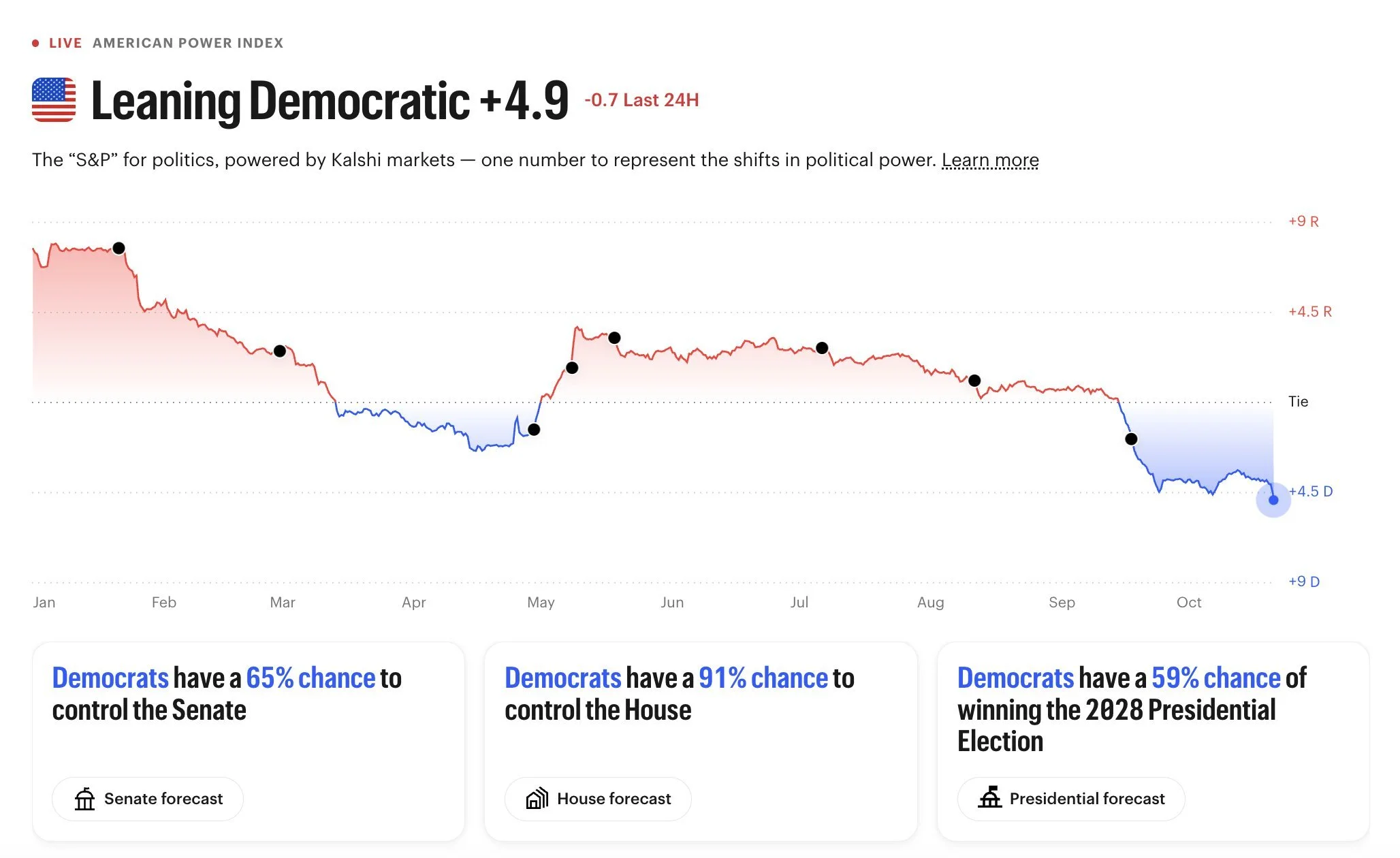
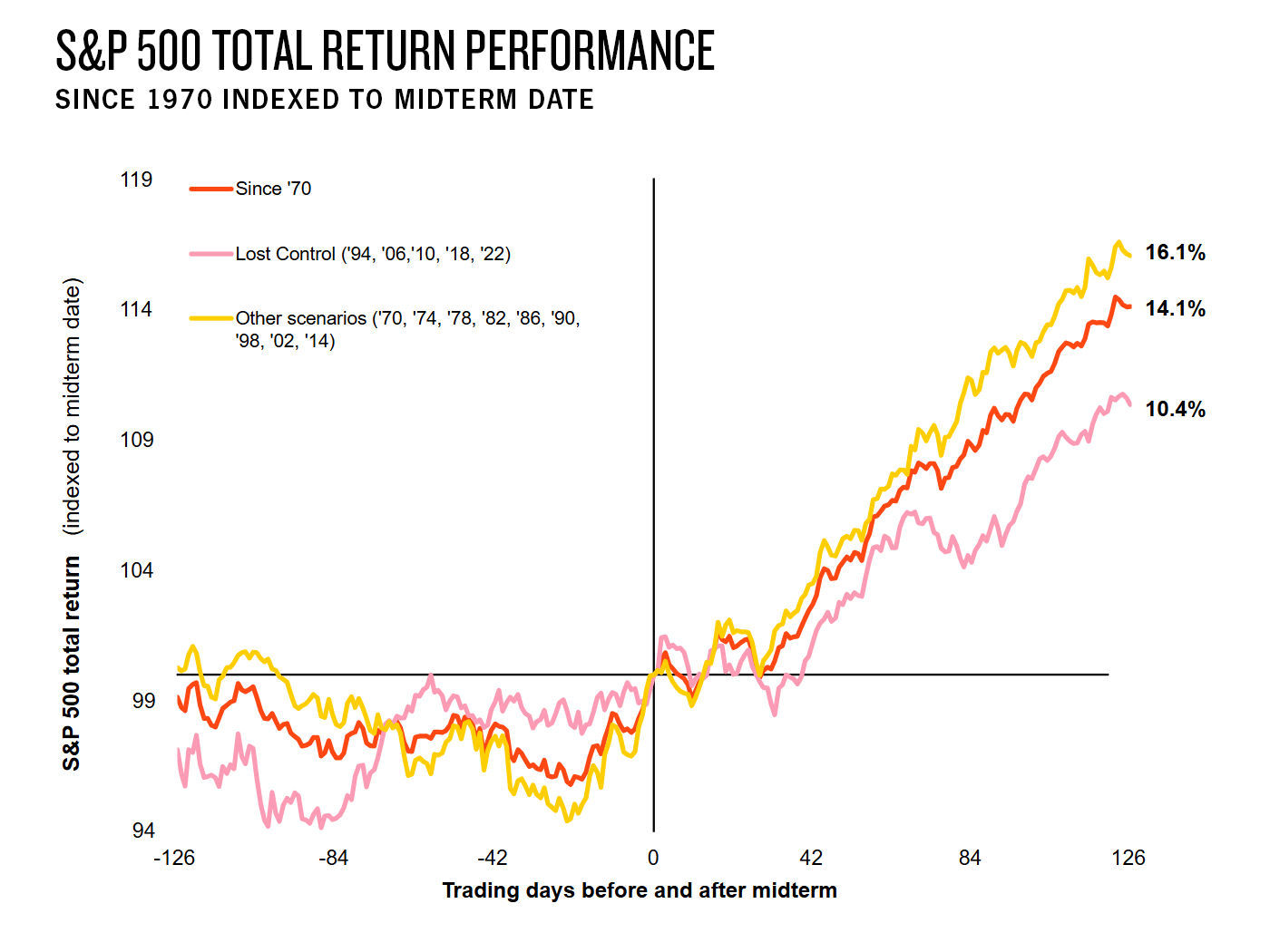
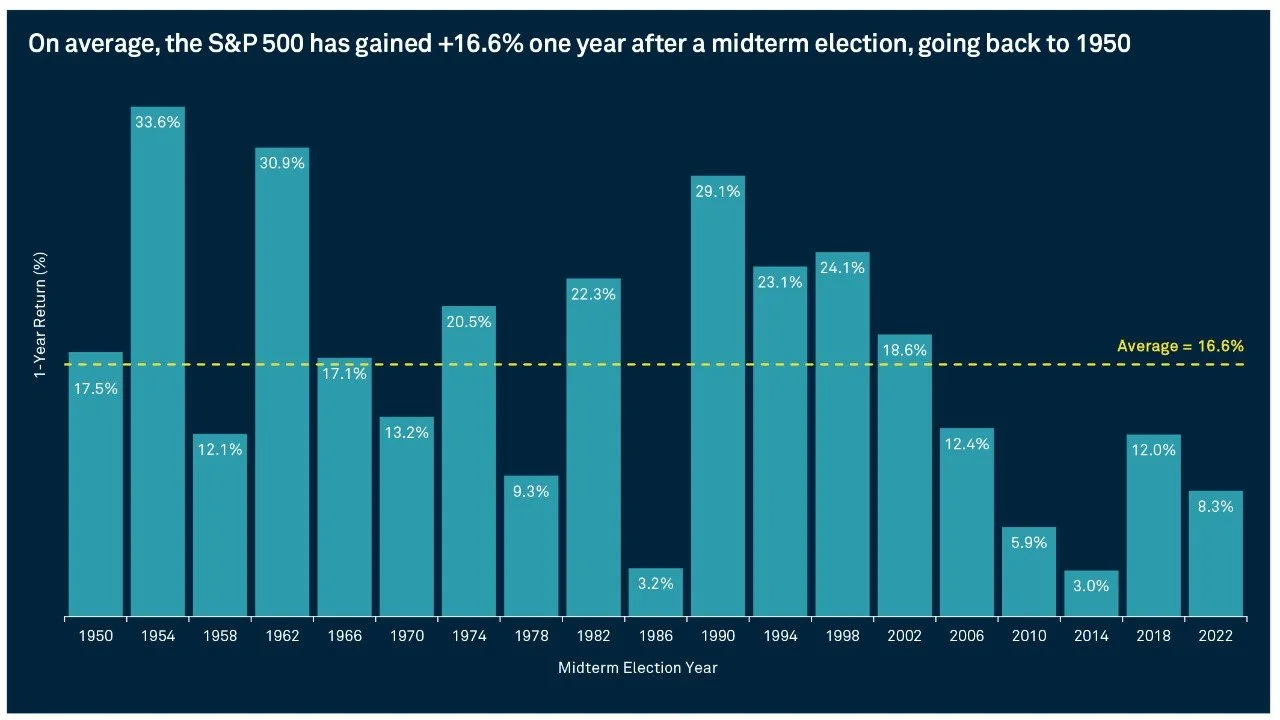
Part 1: Midterm Elections

  • Bonaparte, Kumar. “Political Climate, Optimism, and Investment Decisions” Science Direct, June 2017 [Article]


Data as of 10/19/2026


Sources: Large Cap Stock performance is the Ibbotson® SBBI® US Large-Cap Stocks (Total Return) for 1926 thru Sep1989, S&P 500 Total Return for Oct 1989 to Dec 2025. Ibbotson data courtesy of CFA Institute, S&P 500 TR data courtesy of Ycharts.
• Data is monthly Jan 1926 thru Dec 2025.
• Changes to Congress and President are assumed to occur 1/1 of each odd year (i.e 1937, 1939, etc.) Congressional and Presidential control data courtesy of house.gov records.


Source: BlackRock


Source: BNY Mellon


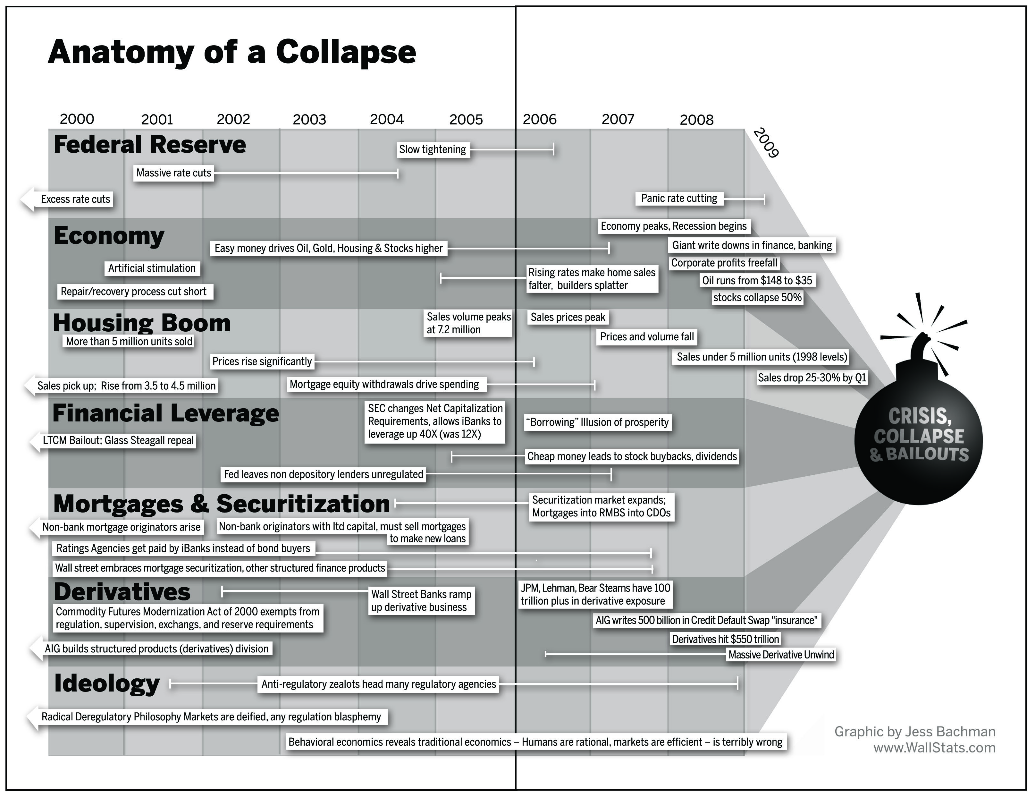
Part 2: Correlation v.s. Causation


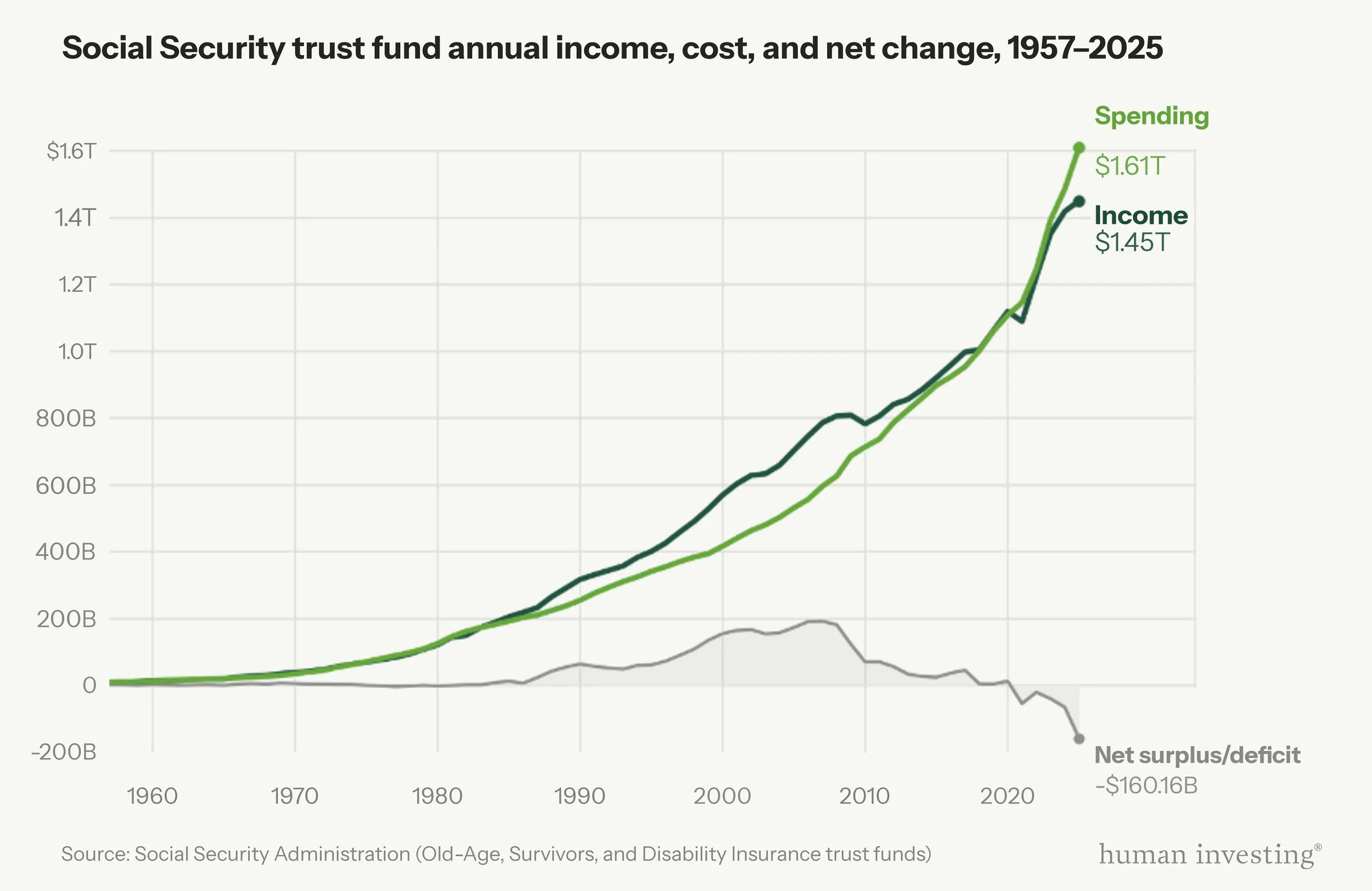
Part 3: 2032 Social Security

Kellar, Will. “The Reality Behind Social Security: What the 2032 Deadline Really Means” Human Investing Journal, 22 October 2026 [Article]


Part 4: Local Recs

  • Durant Vineyards, Dundee, Oregon [Link]

  • Verboort Sausage & Kraut Festival, Verboort, Oregon [Link]


Disclosure:
This material is provided for informational and educational purposes only. It should not be construed as investment, legal, or tax advice, nor does it constitute a recommendation or solicitation to buy or sell any security. Investors should consult with a qualified financial professional before making any investment decisions. Rebalancing and asset allocation strategies do not ensure a profit or protect against loss in declining markets. There is no guarantee that any investment strategy will achieve its objectives. Any references to historical performance, academic studies, or research are based on past data and should not be considered indicative of future results. Past performance is not a guarantee of future outcomes. Advisory services offered through Human Investing, an SEC-registered investment adviser.


Related Articles

Hi Ground Episode 9: Headline Reactions; Plus 5 Year-End Financial Planning Moves To Make
 

E-mail us your questions, comments, and if you like our banter: higroundpodcast@gmail.com

Episode 9 show notes

E-mail us your questions, comments, and if you like our banter: higroundpodcast@gmail.com

Episode 10 show notes

Part 1: Headline Reactions

  • Herbert, Emily. “S&P 500 hits record high as AI stocks shrug off bond market slump” Financial Times, 6 October 2026 [Article]

  • Wang, Isabel and Wiltermuth, Joy. “Rising yields are quietly crashing the stock market’s earlier winners of 2026” Market Watch, 8 October 2026 [Article]

  • Fonda, Daren. “Here comes third-quarter earnings season. Booming profits could propel the S&P 500 to new heights” CNBC, 7 October 2026 [Article]

  • Confino, Paolo. “Michael Burry's Bearish View. The Market Is In 'Denial' About The End Of The AI Trade.” Investor’s Business Daily, 6 October 2026 [Article]

  • Detrick, Ryan [@RyanDetrick]. “When the S&P 500 is in the sweet spot going into Q4 (up YTD between 10% to 20%) the returns get even better. Higher 85% of the time in Q4 and up 5.3% on average.” X, 1 October, 2026 [Tweet]

  • Morningstar Mind the Gap US 2026 [Report]

Part 2: Bonds in Retirement Plans

  • Nelson, Andrew. “The Bond Market is Changing Retirement Math” Human Investing Journal, 6 October 2026 [Article]

Part 3: End of the Year Moves

Part 4: Local Recs

  • Dos Mundos, Newberg, Oregon [Link]

  • Mole Mole, Portland, Oregon [Link]


Disclosure:
This material is provided for informational and educational purposes only. It should not be construed as investment, legal, or tax advice, nor does it constitute a recommendation or solicitation to buy or sell any security. Investors should consult with a qualified financial professional before making any investment decisions. Rebalancing and asset allocation strategies do not ensure a profit or protect against loss in declining markets. There is no guarantee that any investment strategy will achieve its objectives. Any references to historical performance, academic studies, or research are based on past data and should not be considered indicative of future results. Past performance is not a guarantee of future outcomes. Advisory services offered through Human Investing, an SEC-registered investment adviser.


Related Articles

Hi Ground Episode 8: Sports Cards, Jerseys, and Serious Money
 

E-mail us your questions, comments, and your childhood attic finds: higroundpodcast@gmail.com

Episode 8 show notes

Part 1: Collectibles as an Asset Class

  • Post, J.J. “Joe Montana Super Bowl XXIV jersey fetches record price” ESPN, 13 August 2026 [Article]

  • Holder, Larry. “What’s working in the sports collectibles world: Industry leaders share what they’re seeing” The Athletic, 6 August 2026 [Article]

  • Burrows, Benjamin. “CardVault by Tom Brady adds investors including Aaron Judge, Jay-Z, Connor McDavid” The Athletic, 13 August 2026 [Article]

Part 2: Local Real Estate Updates

  • U.S. Bank. U.S. Bank 2026 Wealth Report, 2026 [Report]


Part 3: Local Recs

  • The Alley Cards and Collectibles, Lake Oswego, Oregon [Link]

  • E.Z. Orchards, Salem, Oregon [Link]


Disclosure:
This material is provided for informational and educational purposes only. It should not be construed as investment, legal, or tax advice, nor does it constitute a recommendation or solicitation to buy or sell any security. Investors should consult with a qualified financial professional before making any investment decisions. Rebalancing and asset allocation strategies do not ensure a profit or protect against loss in declining markets. There is no guarantee that any investment strategy will achieve its objectives. Any references to historical performance, academic studies, or research are based on past data and should not be considered indicative of future results. Past performance is not a guarantee of future outcomes. Advisory services offered through Human Investing, an SEC-registered investment adviser.


Related Articles

Hi Ground Episode 7: Gen-Z's Retirement Plan? Place Your Bets
 

E-mail us your questions, comments, and bad sports bet breaks: higroundpodcast@gmail.com

Episode 7 show notes

Part 1: Sports Betting Rush

  • Song, Zijia and Amponsah, Michelle. “Gen Z Is Moving Money From Stocks to Sports Betting in Wealth Plans” Bloomberg, 12 August 2026 [Article]

  • Bloomberg Originals. “Why Gen Z Is Gambling With Its Future” YouTube, uploaded by Bloomberg Originals, 10 July 2026 [Video]

  • Northwestern Mutual. “Planning & Progress Study 2026” Northwestern Mutual, 2026 [Report]


Part 2: Becoming a 401(k) Millionaire

  • Picchi, Aimee. “Sturdy stock market mints a record number of 401(k) millionaires” CBS News, 4 September 2026 [Article]

  • Fuhrmans, Vanessa. “American Workers Are Staying Put” Wall Street Journal, 9 September 2026 [Article]

  • Human Investing Retirement Contribution by Decade Calculator [Link]

  • Becoming a 401(K) Millionaire by Peter Fisher [Link]


Part 3: Local Recs

  • Swan Island Dahlias in Canby, OR [Link]

  • Hood to Coast Relay [Link]


Disclosure:
This material is provided for informational and educational purposes only. It should not be construed as investment, legal, or tax advice, nor does it constitute a recommendation or solicitation to buy or sell any security. Investors should consult with a qualified financial professional before making any investment decisions. Rebalancing and asset allocation strategies do not ensure a profit or protect against loss in declining markets. There is no guarantee that any investment strategy will achieve its objectives. Any references to historical performance, academic studies, or research are based on past data and should not be considered indicative of future results. Past performance is not a guarantee of future outcomes. Advisory services offered through Human Investing, an SEC-registered investment adviser.


Related Articles

Hi Ground Episode 6: Time to Nerd Out. Bonds Are Having A Moment
 

E-mail us your questions, comments, and if you have a blue polo too: higroundpodcast@gmail.com

Episode 6 show notes

Part 1: Why Are Bonds Acting Up?

  • Goldfarb, Sam and Rubin, Richard. “Bonds Are Getting Hammered, and Wall Street Says the Rout Won’t End Anytime Soon” Wall Street Journal, 18 August 2026 [Article]

Part 2: Where Do Bonds Fit?

  • Kellar, Will. “Managing Your Finances With The Three Bucket Approach” Human Investing Journal, 10 June 2025 [Article]


Part 3: Parking ‘Safe’ Dollars

  • Gottfried, Miriam. “Wealth Management Has a $3 Trillion Problem: Investors Are Keeping Too Much Cash” Wall Street Journal, 12 August 2026 [Article]

 
  • Damodaran, Aswath. “Historical Returns on Stocks, Bonds, Real Estate and Gold.” Stern School of Business at New York University. 1 August 2026. [Database]

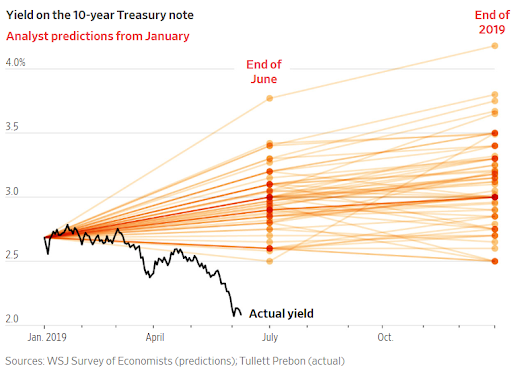
  • Chilkoti, Avantika and Kruger, Daniel. “Some Investors Had Hunch Yields Were About to Fall” Wall Street Journall, 9 June 2019 [Article]


Part 4: Local Recs

  • Portland Annual Swift Watch [Link]

  • LPGA The Standard Classic [Link]


Disclosure:
This material is provided for informational and educational purposes only. It should not be construed as investment, legal, or tax advice, nor does it constitute a recommendation or solicitation to buy or sell any security. Investors should consult with a qualified financial professional before making any investment decisions. Rebalancing and asset allocation strategies do not ensure a profit or protect against loss in declining markets. There is no guarantee that any investment strategy will achieve its objectives. Any references to historical performance, academic studies, or research are based on past data and should not be considered indicative of future results. Past performance is not a guarantee of future outcomes. Advisory services offered through Human Investing, an SEC-registered investment adviser.


Related Articles

Hi Ground Episode 5: The Economy, Staying Balanced, and Hot Dogs?
 

E-mail us your questions, comments, and hot dog stories: higroundpodcast@gmail.com

Episode 5 show notes

Part 1: The Economy vs. Stock Market

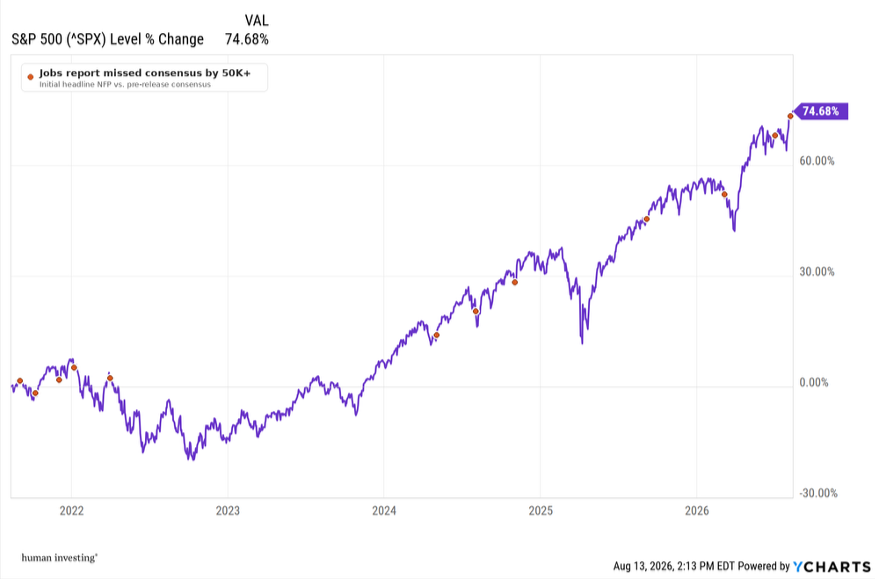
  • Heard on the Streets Staff. “Markets Rally on Surprise U.S. Job Losses” Wall Street Journal, 7 August 2026 [Article]

  • Mutikani, Lucia. “US suffers unexpected job losses in July, markets dial back rate hike expectations” Reuters, 7 August 2026 [Article]

  • Michael Burry 2023 “Sell” [Link]

  • Chart: S&P 500 % Change Over Previous 5-years


Part 2: $100 Hot Dogs & Investing Behavior

  • Chandler, Adam. “The Rise of the $100 Hot Dog” Wall Street Journal, 8 August 2026 [Article]

  • Lake, Sydney. “Costco CEO promises the $1.50 hot dog isn’t going away: The price will not change as long as I’m around” Fortune, 4 July 2026 [Article]

  • Understanding ERISA Diversification [Link]

  • “The Real Cost of Your Morning Coffee” Human Investing, 22 May 2015 [Article]

Part 3: Local Recs

  • Hot Mama Salsa Tortilla Chips [Link]

  • Farmer Johns Produce & Nursery, McMinnville OR [Link]


Disclosure:
This material is provided for informational and educational purposes only. It should not be construed as investment, legal, or tax advice, nor does it constitute a recommendation or solicitation to buy or sell any security. Investors should consult with a qualified financial professional before making any investment decisions. Rebalancing and asset allocation strategies do not ensure a profit or protect against loss in declining markets. There is no guarantee that any investment strategy will achieve its objectives. Any references to historical performance, academic studies, or research are based on past data and should not be considered indicative of future results. Past performance is not a guarantee of future outcomes. Advisory services offered through Human Investing, an SEC-registered investment adviser.


Related Articles

Hi Ground Episode 4: The Chase, The Crash, & Investing Sirens
 

E-mail us your questions, comments, and investing sirens: higroundpodcast@gmail.com

Episode 4 show notes

Part 1: The Allure of the Gamble

  • “'I couldn't breathe': South Korea's frenzied stock trading exposes margin loan risks.” Reuters, 19 July 2026 [Article]

  • The Frame by Samsung [Link]

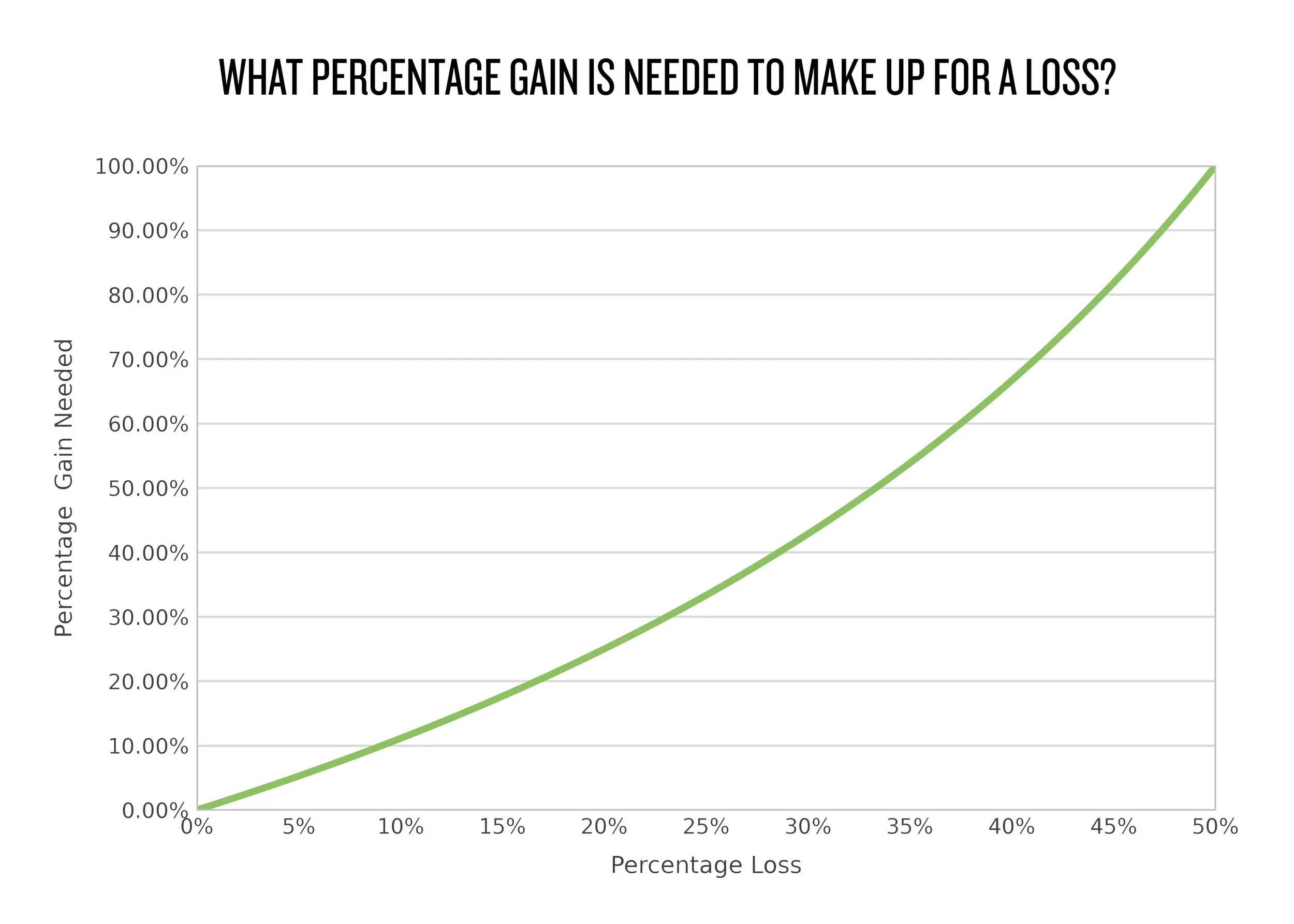
  • Thaler, Richard. Johnson, Eric. “Gambling With the House Money and Trying to Break Even: The Effects of Prior Outcomes on Risky Choice.” Research Gate, June 1990 [Article]

  • Chart: What percentage gain is needed to make up for a loss?


Part 2: The Odyssey Sirens

Part 3: Rip City Update

  • “Tom Dundon using a tired playbook.” Bald Faced Truth by John Canzano, 25 July 2026 [Article]

  • “Trail Blazers, city of Portland finally meet, but distance to arena deal remains ‘significant’.” The Athletic, 30 July 2026 [Article]

  • 4.14.2004: Kobe Bryant Nails the Winning 3 in Double OT [Video]

Part 4: Local Gems

  • Call Ja Morant Hotline [Link]

  • Suttle Lodge Boat House, Deschutes National Forest, Oregon [Link]


Disclosure:
This material is provided for informational and educational purposes only. It should not be construed as investment, legal, or tax advice, nor does it constitute a recommendation or solicitation to buy or sell any security. Investors should consult with a qualified financial professional before making any investment decisions. Rebalancing and asset allocation strategies do not ensure a profit or protect against loss in declining markets. There is no guarantee that any investment strategy will achieve its objectives. Any references to historical performance, academic studies, or research are based on past data and should not be considered indicative of future results. Past performance is not a guarantee of future outcomes. Advisory services offered through Human Investing, an SEC-registered investment adviser.


Related Articles

Hi Ground Episode 3: 2026 Halftime Report: Stock Market, Oregon Real Estate & Risk


Disclosure:
This material is provided for informational and educational purposes only. It should not be construed as investment, legal, or tax advice, nor does it constitute a recommendation or solicitation to buy or sell any security. Investors should consult with a qualified financial professional before making any investment decisions. Rebalancing and asset allocation strategies do not ensure a profit or protect against loss in declining markets. There is no guarantee that any investment strategy will achieve its objectives. Any references to historical performance, academic studies, or research are based on past data and should not be considered indicative of future results. Past performance is not a guarantee of future outcomes. Advisory services offered through Human Investing, an SEC-registered investment adviser.


Related Articles

Hi Ground Episode 2: Why is my paycheck disappearing so fast?


Disclosure:
This material is provided for informational and educational purposes only. It should not be construed as investment, legal, or tax advice, nor does it constitute a recommendation or solicitation to buy or sell any security. Investors should consult with a qualified financial professional before making any investment decisions. Rebalancing and asset allocation strategies do not ensure a profit or protect against loss in declining markets. There is no guarantee that any investment strategy will achieve its objectives. Any references to historical performance, academic studies, or research are based on past data and should not be considered indicative of future results. Past performance is not a guarantee of future outcomes. Advisory services offered through Human Investing, an SEC-registered investment adviser.


Related Articles

Hi Ground Episode 1: Is SpaceX Actually Going To Do Well?


Disclosure:
This material is provided for informational and educational purposes only. It should not be construed as investment, legal, or tax advice, nor does it constitute a recommendation or solicitation to buy or sell any security. Investors should consult with a qualified financial professional before making any investment decisions. Rebalancing and asset allocation strategies do not ensure a profit or protect against loss in declining markets. There is no guarantee that any investment strategy will achieve its objectives. Any references to historical performance, academic studies, or research are based on past data and should not be considered indicative of future results. Past performance is not a guarantee of future outcomes. Advisory services offered through Human Investing, an SEC-registered investment adviser.


Related Articles

Building Lasting Resilience in an Age of AI
 

“Assuming AI doesn’t take my job first.” We’ve heard some version of that line from clients all year, almost always delivered with a nervous laugh. But behind the humor sits a question a lot of people are wrestling with right now.

Every meaningful shift in technology brings a mix of optimism and concern, and artificial intelligence is no different. For some, this is still a conversation about what might happen. For others, it has already shown up in tangible ways, whether your role has changed, been eliminated, or you're watching your industry transform in real time.

If that's where you are, the uncertainty isn't theoretical, and it isn't just financial. Work is tied to identity, routine, and a sense of progress, which makes disruption especially hard to process. And even if nothing has changed for you yet, it's difficult to ignore the possibility that it could.

Your Most Important Asset

For most people in the accumulation phase of life, the most important asset isn't a number in your portfolio: it's your ability to earn income over the next decade or more. When that ability feels less certain, everything connected to it can feel less stable.

When that uncertainty sets in, the natural instinct is to try to predict what happens next: Should I pivot? Is this temporary? Am I already behind? It's understandable, but what if the path ahead is too uncertain to plan around with confidence?

A more useful shift is to move from prediction to preparation. Rather than guessing the outcome, focus more on understanding how to remain steady across a range of possibilities.

Start With What You Can See

Financial stress often grows in the space between what's happening and what's understood. Not knowing how long savings will last can feel heavier than the actual number, and not knowing which expenses are fixed and which are flexible can make every decision feel harder than it needs to be.

The starting point is visibility. When the future feels undefined, the mind fills in the gaps (usually with worst-case scenarios). Taking even small steps to map the situation eases that pressure, because it turns something vague into something concrete. The numbers don't have to change; they just have to be visible.

In practice, that often starts with mapping your monthly spending in simple terms. What's essential? What's adjustable? A mortgage and insurance premiums are fixed, but a planned trip or a streaming subscription can flex if they need to. This isn't about building a perfect budget. It's about seeing your situation clearly enough to make decisions from a place of information rather than panic.

From there, structured planning does the rest. Turning a broad concern into a set of defined scenarios — What if my income drops 20%? What if I'm out of work for six months? — makes it possible to act with intention, even when the future stays uncertain. A plan that only works when everything goes right tends to feel fragile. Building in room for strain is what makes it hold up.

Margin Changes the Experience

Two households can face the same disruption and experience it very differently. What separates those experiences is often margin.

Cash doesn't eliminate risk, but it creates time. Time is what makes good decisions possible. With room to breathe, you can weigh options, wait out a market, take the right job instead of the first one. Without it, choices narrow and decisions become reactive instead of intentional.

The most useful way to measure margin is through the lens of time: how many months of essential expenses could I cover if my income changed? The number doesn't need to be perfect, but it gives you a runway. If margin already exists, the goal is to protect it. If it doesn't, the goal is to begin restoring it gradually as circumstances allow.

Some households add a second layer of flexibility by putting a line of credit in place while income is stable. A home equity line of credit (HELOC) is a common example. The purpose isn't to rely on it; it's to have access to it if needed. These options are far easier to secure before they're necessary, and much harder to obtain once income has already changed.

While this example is not specifically about AI disruption, it illustrates the broader value of financial flexibility when circumstances change unexpectedly. One family we worked with ran into this while moving between homes. They found the right next home before their current home had sold, creating a temporary cash gap that their savings alone couldn’t comfortably cover. Because they had established a HELOC while their income and balance sheet were still strong, they were able to bridge the timing difference without rushing the sale of their old home or liquidating investments in a way that would have created an unnecessary tax bill. Once the previous home sold, the line was paid back down. What the HELOC provided was time and the flexibility to make decisions from a position of stability instead of pressure.

Margin doesn't stop the disruption, but it shapes how you respond to it.

Optimizing Your Plan Has a Ceiling

During stable periods, optimization feels like the natural move. There are opportunities everywhere to maximize tax efficiencies, increase savings, and align decisions around long-term growth. Each move is prudent on its own. But the more tightly a plan is optimized, the less room it leaves to adjust when something changes.

Retirement accounts illustrate the tension. They're powerful tools for building wealth, but they're built with constraints and hard to access when you need the money now. Assets that remain accessible before traditional retirement age may be less efficient by the numbers, but they offer something the optimized version can't: room to adjust.

The same pattern shows up in spending. As income rises, fixed commitments tend to rise alongside it. Bigger payments rarely feel restrictive in the moment, but when income changes or priorities shift, they can quickly reduce your ability to adjust.

Debt works similarly. Paying down a smaller obligation like a car loan creates real breathing room. Aggressively paying down a mortgage may improve the long-term math, but it locks money into your house that you can't easily get back if you need it.

Optimization assumes the future will look like the present, and flexibility assumes it might not. That's the difference between a plan that holds and a plan that breaks.

Another Form of Resilience

Visibility, margin, and flexibility are forms of resilience. There's another, less visible but increasingly important: what AI can’t replicate.

AI will keep reshaping how work gets done. It can already draft, analyze, and model at remarkable speed, and it will only get better. But the people who become most valuable (employees) won’t simply be the ones who know how to use AI. They’ll be the ones others trust when the stakes are high.

That kind of trust, the trust built when people share what's at stake, is what makes teams hold together when disruption hits. It's earned by showing up, by working through uncertainty together, by taking responsibility when outcomes aren't guaranteed.

AI can accelerate technical work, but it can’t replicate character, judgment, emotional steadiness, or genuine trust. In many ways, the rise of AI may make those qualities more valuable, not less. Used well, AI tends to amplify the people who already do good work, not replace them.

Create Your Adaptive Advantage

Preparing for uncertainty is less about reacting to every new development and more about maintaining a structure you can trust. In our experience, the people who navigate disruption well rarely anticipated every change. They took the time to understand their situation and made calculated adjustments along the way.

Alongside that structure, earning ability is something you can develop, not just protect. Staying current in your field, strengthening professional relationships, and gradually expanding into adjacent areas where your experience still applies all compound over time, even when the progress is hard to see in the moment.

If you're unsure where to begin, start small: understand your numbers, identify where you have flexibility, and take one step to strengthen your position. Clarity tends to build from there.

Preparation doesn't remove uncertainty, but it can keep uncertainty from making your decisions for you. In periods like this, that steadiness tends to matter more than most people expect.



Disclosure:
This material is provided for informational and educational purposes only. It should not be construed as investment, legal, or tax advice, nor does it constitute a recommendation or solicitation to buy or sell any security. Investors should consult with a qualified financial professional before making any investment decisions. Rebalancing and asset allocation strategies do not ensure a profit or protect against loss in declining markets. There is no guarantee that any investment strategy will achieve its objectives. Any references to historical performance, academic studies, or research are based on past data and should not be considered indicative of future results. Past performance is not a guarantee of future outcomes. Advisory services offered through Human Investing, an SEC-registered investment adviser.


Related Articles

Quarterly Economic Update 2026: A Visual Guide to Long-Term Investing
 

The media offers plenty of reasons to worry. The ongoing conflict in the Middle East, AI rendering human workers obsolete, rising energy costs, the list goes on and on. If you’re investing for the long run, know that headlines will consistently try to pull you off course. Remember why you’re investing: You’re aiming to grow your dollars today to ensure you can maintain (or even grow) your spending power in the future. The rollercoaster of owning equities is rewarded with greater returns and spending power in the future.

Understanding the risk and reward of investing can be challenging. The finance industry likes to use terms like Beta or Standard Deviation. While these are statistically sound measures, most people would be hard-pressed to provide a clean and clear definition of what they mean, or how they’re calculated. Even most advisors would struggle to provide accurate definitions on the spot.

We try to communicate in Human terms with our clients, and we’ve built some charts and graphs to help communicate that. Given the current concerns and headlines, I think this is a great time to showcase some of our favorite graphs.

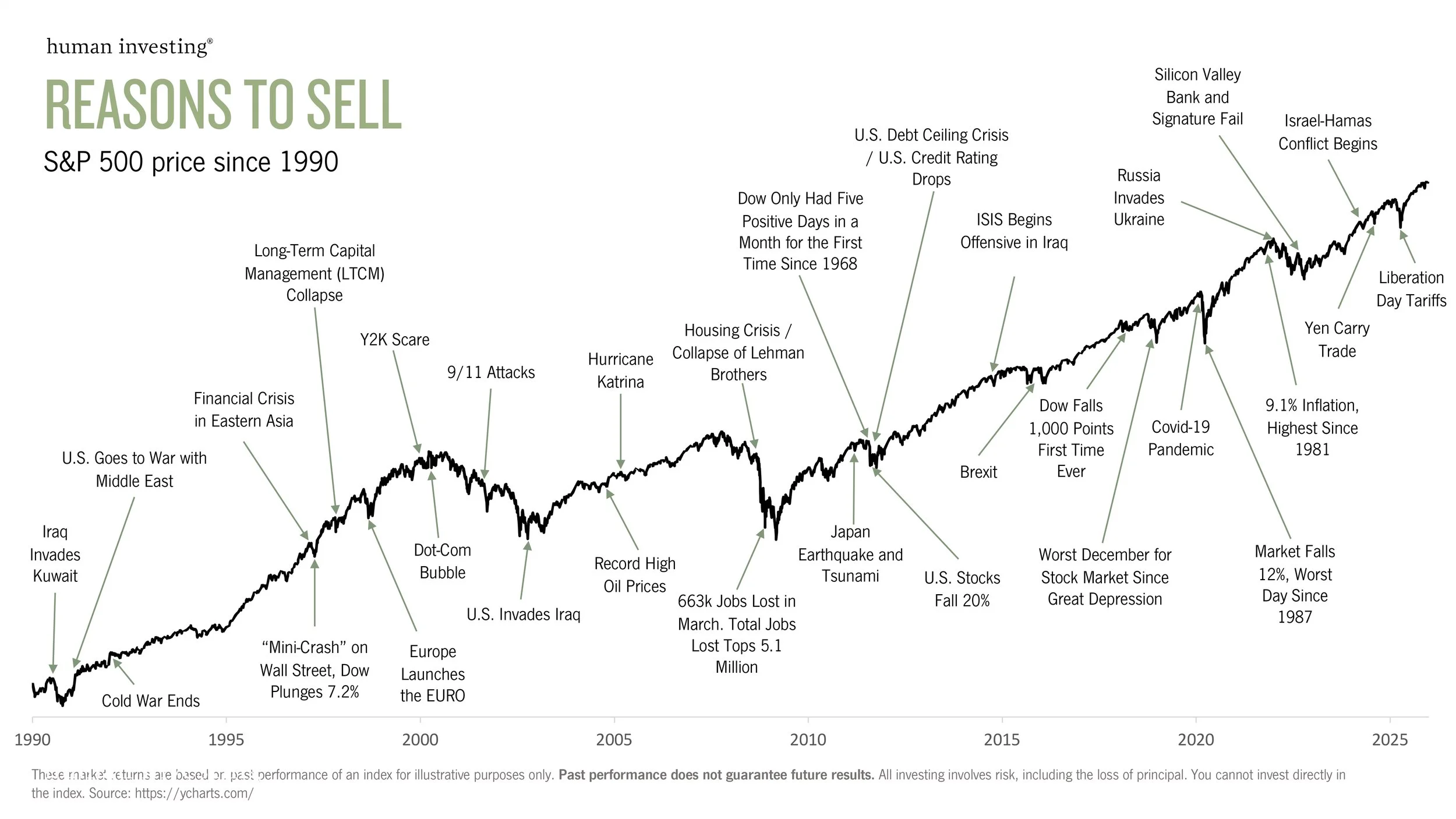
This is one of our favorite graphs. It's always easier to see that yesterday's worries weren't as scary once they're in the rearview mirror. Even through the Dot-Com bubble bursting, the 07-08 global financial crisis, and the COVID-19 global pandemic, stocks have risen. While we may not know the length or extent of a given market downturn, we do know companies have historically navigated challenges and delivered positive returns to long-term investors. We expect that resiliency to continue.

Introducing Intra-Year Declines

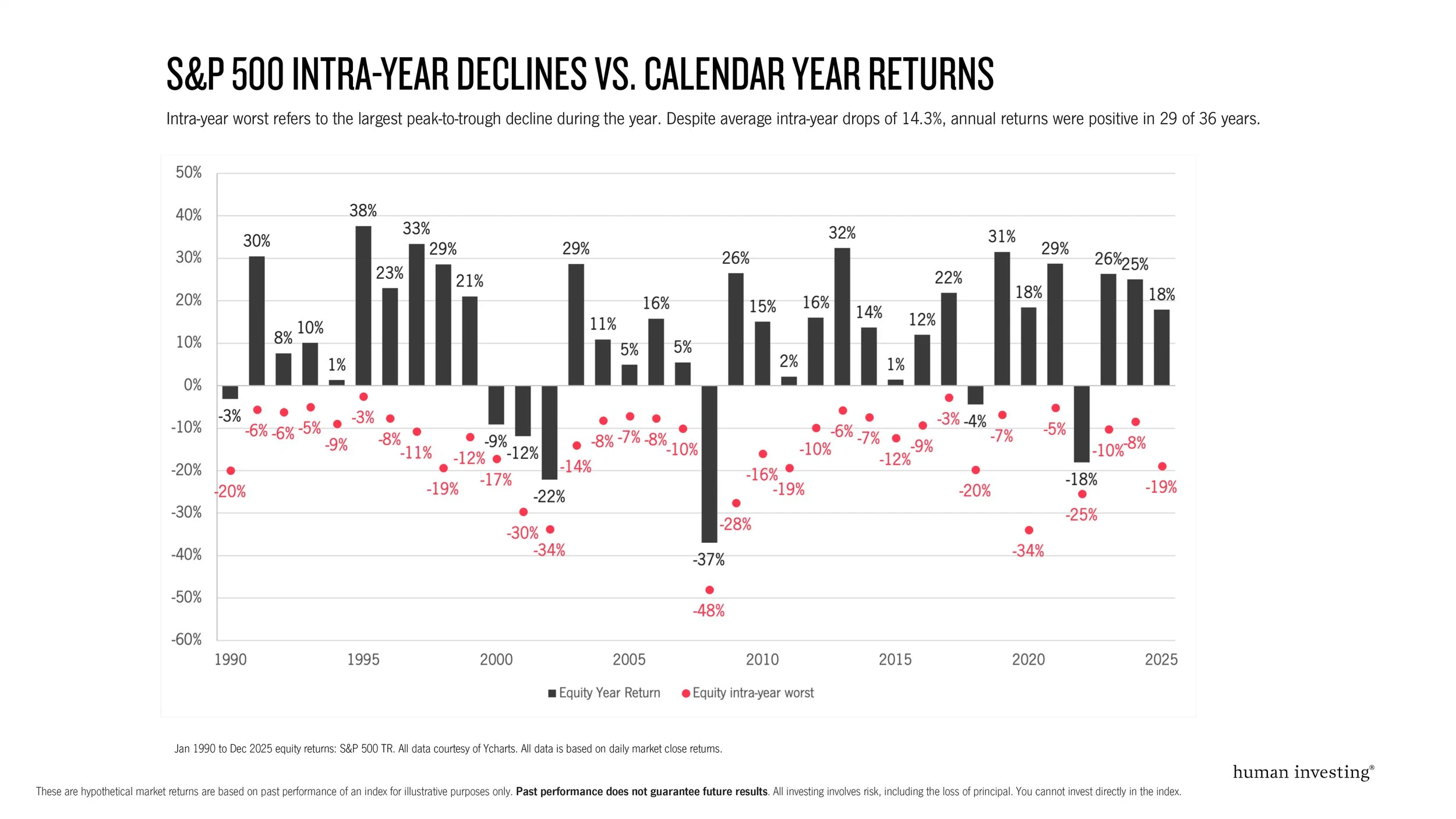
Markets rarely move in a straight line. Even in strong years, there’s almost always at least one significant drop along the way — what we call an intra-year decline. It measures how far the market fell from its highest point before it started recovering. As you can see in the chart below, intra-year declines have occurred every single year in the S&P 500 since 1990.

As I’ve written previously, the stock market is biased towards delivering positive returns. Most calendar years, stocks are up. This graph speaks to the lived experience of investors: every year has a downturn, no exceptions. I’m sure each downturn felt reasonable but worried investors at the time. No investor from 1990-2025 was immune from seeing their portfolio go down. Those who stuck with it saw positive returns in over 80% of those years.

Even amidst recent headlines, the market’s behavior has been typical. The S&P 500 dropped roughly 9% from its January peak to its March low. This is well within the normal range of market volatility where intra-year declines of 10% or more are common.

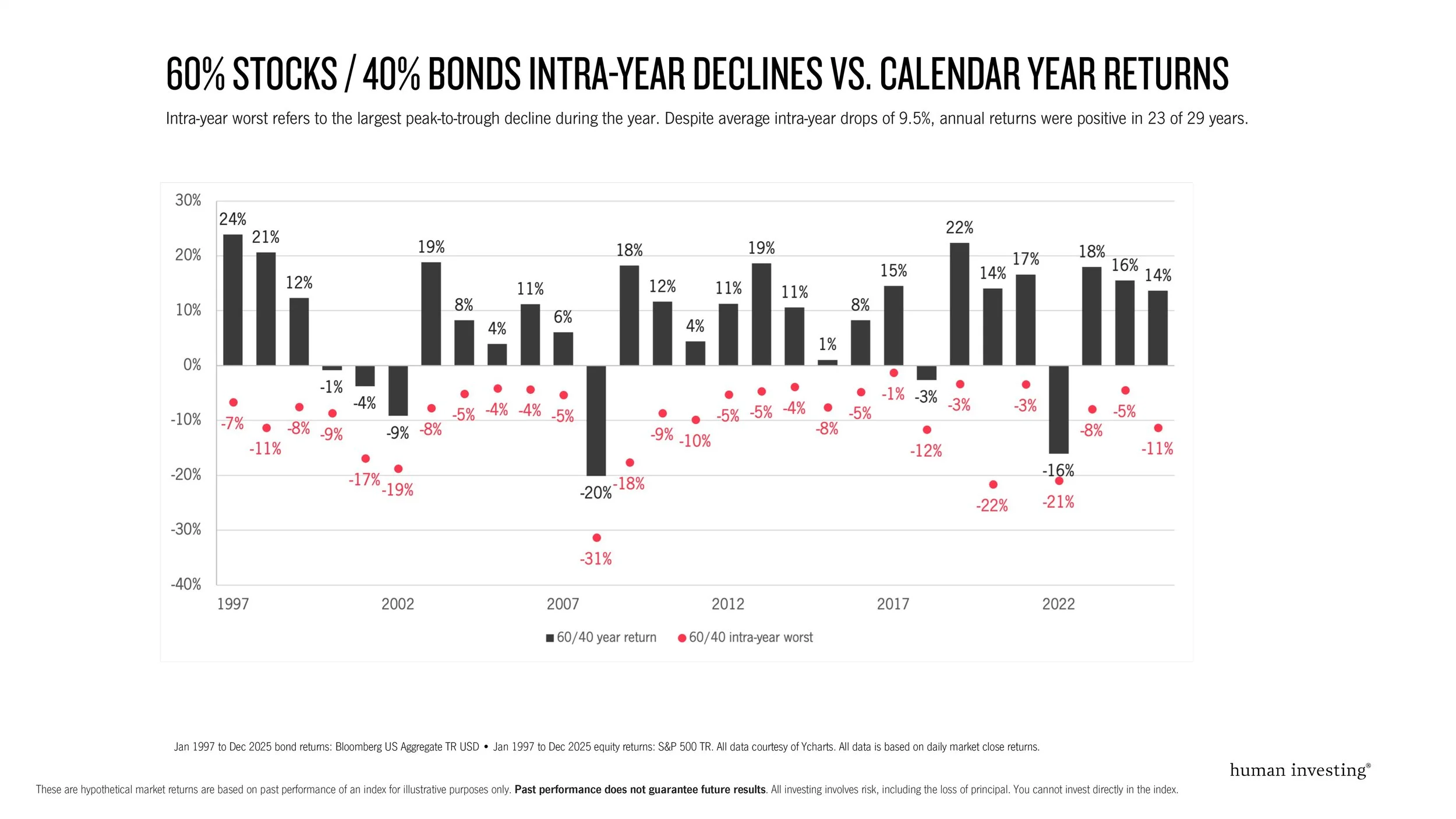
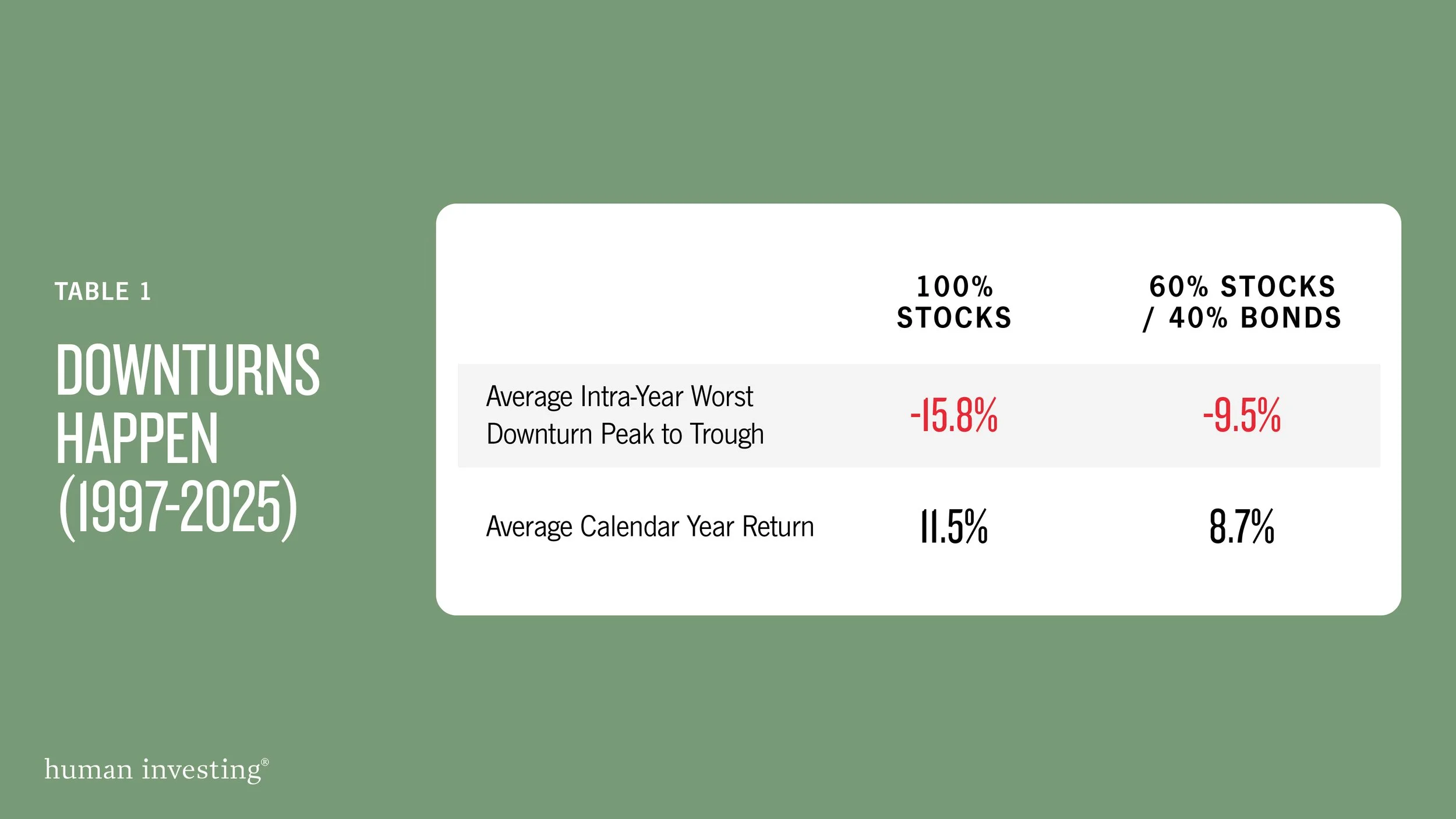
Most investors don’t own 100% equities, so it’s important to understand how introducing bonds can reduce risk. 60% equity and 40% bonds (60/40) is a common allocation because it tends to be a sweet spot between positioning your portfolio to grow and reducing risk enough to weather the volatility. Knowing where your asset allocation should be and when is an important, personal, complicated conversation that should involve a financial planner.

As you can see, while shifting from stocks to bonds doesn’t eliminate downturns, it certainly lessens them. Higher returns tend to come with more ups and downs, while smoother rides usually mean lower long-term growth. There’s no perfectly safe way to grow your dollars faster than inflation, so risk is always going to be part of your investment strategy. The key is finding the right balance between how much risk you’re comfortable with and how much risk you actually need to take to reach your financial goals.

Making plans that last

Anytime we’re designing a portfolio at Human Investing, we’re trying to make decisions we’d be okay with over the timeframe that matters for YOUR goals. That doesn’t mean we don’t revisit or adjust, but we’re not trying to make short-term tactical moves. We know outsmarting the market is incredibly difficult to achieve. We’re planning for our clients’ lifetime, not the next 6 months. We want to ensure our clients are positioned in a way where they are capturing the growth necessary to reach their financial goals, while having enough safety they don’t panic because of a temporary downturn.

No matter how you think about risk, there are a few enduring truths. Stocks are a volatile investment, but they’ve historically been a great growth engine in the long run. Whatever headline or concern today will feel much smaller in the rearview mirror.  

Your financial plan and investments are meant to serve you over your entire life, not the current news cycle. There will be times when it makes sense to revisit your allocation, especially when your personal circumstances change. Those decisions should be driven by your goals, not the headline of the week.

We’re always happy to have conversations to help you understand how your allocation is set to fit your needs. Call us at 503-905-3100, or email hi@humaninvesting.com.


Disclosure: This material is provided for informational and educational purposes only. It should not be construed as investment, legal, or tax advice, nor does it constitute a recommendation or solicitation to buy or sell any security. Any market commentary, forward-looking statements, projections, or return expectations discussed are based on assumptions and current information and are subject to change. There is no guarantee that these views will be realized. Investors should consult with a qualified financial professional before making any investment decisions. There is no guarantee that any investment strategy will achieve its objectives, and investing involves risk, including the potential loss of principal. References to market indexes (including the S&P 500 and blended stock/bond allocations) are for illustrative purposes only, are unmanaged, and do not reflect the performance of any specific investment or client account. Index returns do not reflect the deduction of fees or expenses. Historical returns, projections, or economic conditions are illustrative only and should not be considered indicative of future results. Past performance is not a guarantee of future outcomes. Asset allocation and diversification strategies do not ensure a profit or protect against loss. Advisory services offered through Human Investing, an SEC-registered investment adviser.


Related Articles