
Human Investing Journal
Scroll

Featured Article
Latest Posts
Featured

Today's bond market may represent the most important shift in retirement strategy in over a decade. To understand why, we need to start with where equities have been. Over the 15 years ending in September 2026, the Vanguard S&P 500 ETF (VOO) generated an annualized return of more than 15%.

Is Nike poised to make a comeback? Predicting the future of any stock, or the market overall, is a difficult task. Let’s look at a few different ways to approach valuing a stock to get a sense of if NKE appears over or undervalued.

Being a financial advisor means friends and family feel comfortable asking you their most personal money questions. A friend pulled me aside at coffee last week with a question we hear all the time: How do you know when you can actually afford to retire?

Every year, Nike employees face a decision that feels deceptively simple: RSUs or stock options? For many, it's easy to default to what you chose last year, or to let the current NKE share price drive the decision. But the right answer looks different depending on where you are in your financial life.

Wanting debt paid off as soon as possible is a very human instinct. A client recently told me “We’ve been putting extra money towards paying off our mortgage. It just feels good to see the balance go down.” As another client once succinctly shared, “Loans make me sad.” But in personal finance, sometimes doing what feels responsible can actually cost you.
How should I think about saving & spending?
The order you save in matters more than the amount you save.
Featured

Knowing where to allocate your next dollar can be confusing for those looking to save and invest. There are many choices available. Just like building a house, it’s important to start with a strong financial foundation. Focus on the basics like budgeting and an emergency fund as you begin building your wealth.

In today's challenging real estate market, prospective homebuyers face stiff competition and rising costs. However, there are creative ways to navigate these hurdles and secure your dream home, second home, or investment property

If there is an ability to pre-fund college, in whole or part, it will have lasting financial implications. Funding college early at the birth of a child or grandchild to a college savings account could reduce the future funding liability by six figures. In this article, we will discuss some ways you can start saving for your child’s education.
Featured

A financial plan is a structured approach to managing one’s financial life. It is not merely a spreadsheet or a collection of investment products—it is a comprehensive framework that organizes income, expenses, savings, risk management, taxes, and long-term goals into a cohesive, actionable strategy. When constructed properly, a financial plan enhances decision-making, reduces uncertainty, and improves financial outcomes (Nissenbaum, Raasch, & Ratner, 2004).

When I graduated college, I knew nothing about financial planning. I knew saving and being mindful of my expenses was good, but I didn’t know what it meant to manage my money well.
The financial world can be a confusing place filled with jargon, technicalities, and little to no guarantees. Research suggests that those who are financially literate tend to have better financial outcomes.
How should I approach long-term investing?
Build a portfolio that lasts for decades, not quarters.
Featured

Investing isn’t just about numbers. For many, it’s about making choices that reflect personal values while still aiming for long-term investment growth. One of the more common questions we hear from both clients and prospective clients is, “How can my portfolio better reflect what I care about?”

Rebalancing is the idea that you are bringing your investment portfolio back to it’s targets. For example, if you invest your account as 60% stocks and 40% bonds (60/40) and never trade, in ten years your account will not be 60% stocks.
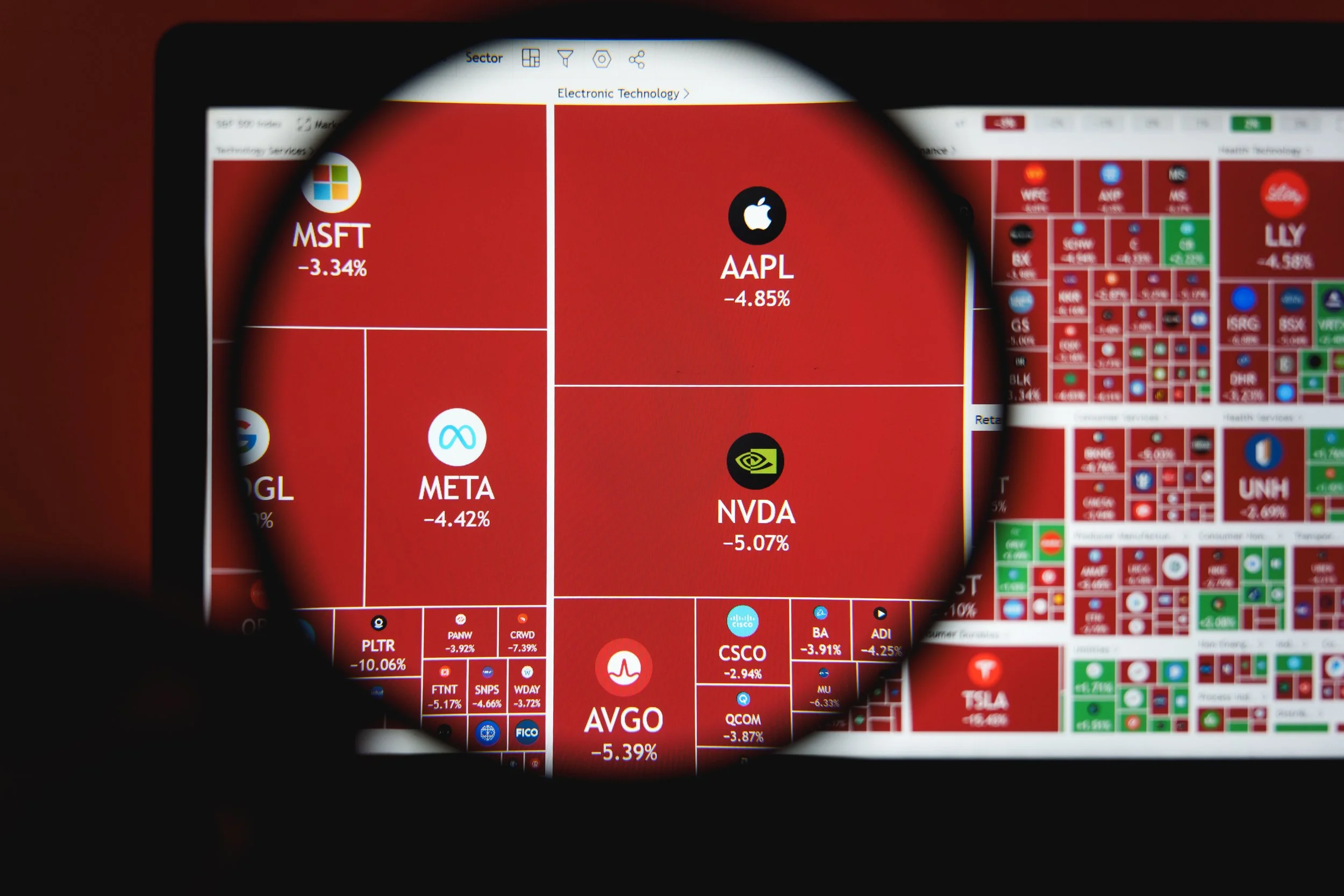
Given the recent stock market volatility, it is important to re-evaluate your plan for your Stock Benefits (RSUs, ESPP, Stock Options) to take advantage of opportunities that may arise in this environment.
Featured

U.S. Treasuries are often described as “risk-free.” Of course, no investment truly is, but no other assets have earned that reputation as convincingly. Their strength is structural: deep markets, global demand, and the dollar’s central role in international finance.

When considering safe investment options, two popular choices that often come to mind are FDIC-insured CDs (Certificates of Deposit) and US Treasuries. While both offer relatively low-risk investment opportunities, there are some critical differences between the two that investors should be aware of.

What are tax-smart planning strategies?
Tax planning doesn’t happen once a year, it’s a year-round decision.
Featured

Tax season creates stress for a lot of people. It often starts with tracking down documents from multiple places, turns into uncertainty about what might be missing, and ends with concern about an unexpected tax bill at exactly the wrong time.

As a leader at your company, you are provided a comprehensive range of benefits that help achieve your financial and retirement goals. However, things can go awry at tax time. The newer Metro and Multnomah County taxes, in addition to regular Federal and Oregon taxes, are becoming an increasing burden for executives to navigate.

Don’t let time run out on these end-of-year tax plays. Not having a tax projection done can be a costly mistake. One common mistake that is made is tax-planning for one single year. Some of the best tax moves may not be the one that gives you the lowest amount of tax in a given year, but think ahead and give you the lowest amount of tax in your lifetime.
Featured

On July 4, the One Big Beautiful Bill Act (OBBBA) became law, as a broad tax and spending package aimed at easing inflation and delivering financial relief to Americans. One of the most notable provisions for retirees is a new $6,000 “senior bonus deduction” for individuals age 65 and older.

Your bonus is not taxed more than regular income.
Have you ever noticed the discrepancy between the bonus payment that was communicated to you and the actual bonus payout? As an example, let’s say your employer announced that you will get a $5,000 bonus, but the upcoming paycheck is only $3,500. What happened?! The common and incorrect narrative is something along the lines of “Bonuses are taxed more than regular income!”
This is not true. Bonuses are taxed at the same rate as your regular income. Please keep reading if you would like to see an example.

Seeing losses in your portfolio during market volatility may be disheartening. Utilizing those losses through a process called tax loss harvesting affords the opportunity to have your taxes benefit from those losses.
How do I stay disciplined as an investor?
Your reaction to volatility may shape your returns more than the market does.
Featured

One of the persistent temptations in investing is the belief that the future can be known, rather than simply estimated or viewed through a lens of probability. Every so often, markets appear to reinforce this belief. It can happen when an analyst makes a sweeping economic call, a television personality highlights a stock, or an investor acts on a strong conviction about a single event. When such a call lands correctly, an investor’s confidence tends to grow much faster than their actual wisdom.

Volatile markets test more than portfolios—they test patience. It’s easy to feel unsettled when headlines scream, and market volatility ensues. But the most important thing you can do as an investor is also the simplest: don’t let emotions get the best of you.

The term speculation has been on the steady decline since 1840. The decline in use is somewhat surprising given the current market environment where speculation runs rampant.
Featured

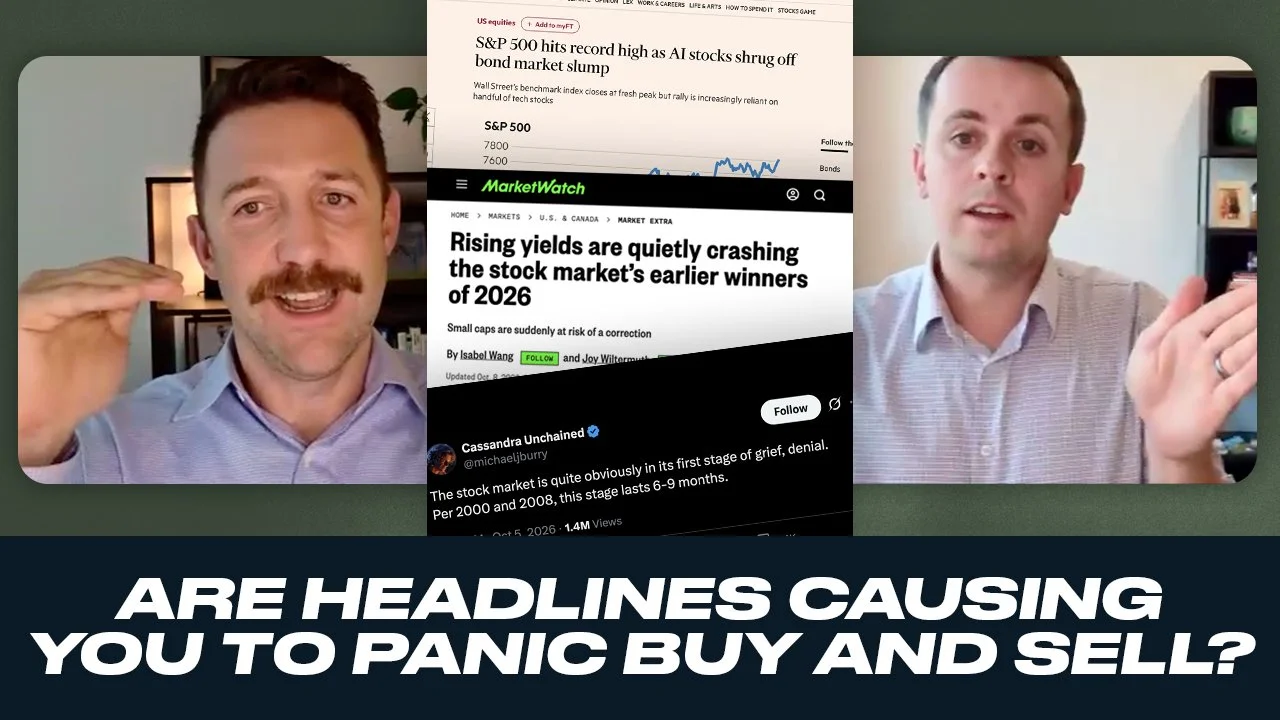
This article explores how financial headlines influence investor behavior, often exacerbating emotional decision-making and undermining long-term investment outcomes. Drawing from behavioral finance research and investor psychology, the article argues that investors should adhere to a written investment plan rather than respond impulsively in the face of uncertainty and sensational news.

In a recent interview Jason Zweig, a personal finance columnist for the WSJ, had a quote that resonated with me. "Emotional discipline is the single hardest thing about the investment game."
What should I do after a windfall, inheritance, or major life event?
A major life event is rarely just a money question.
Featured

From banking and investing to photos, emails, and social media, most of our personal and financial lives now live "in the cloud." But while many people have wills and estate plans, most haven't considered what happens to their digital life when they're gone. That very common gap can leave your family with their own digital haunting. Here's how to spare them.

If you're receiving a settlement after a hardship, know this: you're not alone, and it is normal to ask, “What now?”
This may be the most significant sum of money you’ve ever received. But it’s more than just a windfall. It’s a crossroads. What you do next can shape your financial peace for decades to come.

I have experienced many people admitting that they need to create/update their estate plan but never take the action needed to complete it.
Featured

As the person who manages most of the financial decisions in your household, it's natural to want to ensure your spouse is financially secure if you're no longer around. The financial burden on a widow can be overwhelming, especially with the lesser-known tax implications that often follow the death of a spouse.

Many people are hopeful to receive a considerable amount of money, whether it comes from winning the lottery, an inheritance from a Nigerian price, or the sale of their business. However, without a plan, coming into a considerable amount of money can take someone from rags to riches and back to rags again.

What does the market news actually mean?
Cut through the headlines with decades of credentialed, human perspective.
Featured

Through July, the S&P 500 has gained roughly 10% including dividends, despite an economic backdrop that seemed to hint otherwise. It’s a reminder that the future rarely unfolds exactly as we think it will. Markets have a way of surprising both optimists and pessimists. That brings us to one of the more interesting stories unfolding beneath the surface this year.

If you’re investing for the long run, know that headlines will consistently try to pull you off course. Remember why you’re investing: You’re aiming to grow your dollars today to ensure you can maintain (or even grow) your spending power in the future.

Recent developments in the Middle East have once again drawn attention to oil markets. When tensions rise in regions responsible for a meaningful share of global energy production, investors naturally begin to ask how higher oil prices might influence the broader economy and financial markets.
Featured

Every year starts the same way. A fresh set of market forecasts arrives, confidently predicting what stocks will do next. And every year, markets remind us how unreliable those predictions can be.

There is a growing chorus calling today’s AI surge the next dot-com bubble. Even well-known voices like Michael Burry, who predicted the 2008 housing crisis, have drawn the comparison. It sounds convincing at first, but the comparison breaks down quickly. And for long-term investors, understanding the difference is critical.

Down 10% in two days. Up almost the same the next. Three trading days: A full year’s worth of returns gone, and then mostly back again. Looking at the S&P 500 last week feels disorienting. And in a way, that’s the point.