Posts in Major Financial Decisions
Building Lasting Resilience in an Age of AI
 

“Assuming AI doesn’t take my job first.” We’ve heard some version of that line from clients all year, almost always delivered with a nervous laugh. But behind the humor sits a question a lot of people are wrestling with right now.

Every meaningful shift in technology brings a mix of optimism and concern, and artificial intelligence is no different. For some, this is still a conversation about what might happen. For others, it has already shown up in tangible ways, whether your role has changed, been eliminated, or you're watching your industry transform in real time.

If that's where you are, the uncertainty isn't theoretical, and it isn't just financial. Work is tied to identity, routine, and a sense of progress, which makes disruption especially hard to process. And even if nothing has changed for you yet, it's difficult to ignore the possibility that it could.

Your Most Important Asset

For most people in the accumulation phase of life, the most important asset isn't a number in your portfolio: it's your ability to earn income over the next decade or more. When that ability feels less certain, everything connected to it can feel less stable.

When that uncertainty sets in, the natural instinct is to try to predict what happens next: Should I pivot? Is this temporary? Am I already behind? It's understandable, but what if the path ahead is too uncertain to plan around with confidence?

A more useful shift is to move from prediction to preparation. Rather than guessing the outcome, focus more on understanding how to remain steady across a range of possibilities.

Start With What You Can See

Financial stress often grows in the space between what's happening and what's understood. Not knowing how long savings will last can feel heavier than the actual number, and not knowing which expenses are fixed and which are flexible can make every decision feel harder than it needs to be.

The starting point is visibility. When the future feels undefined, the mind fills in the gaps (usually with worst-case scenarios). Taking even small steps to map the situation eases that pressure, because it turns something vague into something concrete. The numbers don't have to change; they just have to be visible.

In practice, that often starts with mapping your monthly spending in simple terms. What's essential? What's adjustable? A mortgage and insurance premiums are fixed, but a planned trip or a streaming subscription can flex if they need to. This isn't about building a perfect budget. It's about seeing your situation clearly enough to make decisions from a place of information rather than panic.

From there, structured planning does the rest. Turning a broad concern into a set of defined scenarios — What if my income drops 20%? What if I'm out of work for six months? — makes it possible to act with intention, even when the future stays uncertain. A plan that only works when everything goes right tends to feel fragile. Building in room for strain is what makes it hold up.

Margin Changes the Experience

Two households can face the same disruption and experience it very differently. What separates those experiences is often margin.

Cash doesn't eliminate risk, but it creates time. Time is what makes good decisions possible. With room to breathe, you can weigh options, wait out a market, take the right job instead of the first one. Without it, choices narrow and decisions become reactive instead of intentional.

The most useful way to measure margin is through the lens of time: how many months of essential expenses could I cover if my income changed? The number doesn't need to be perfect, but it gives you a runway. If margin already exists, the goal is to protect it. If it doesn't, the goal is to begin restoring it gradually as circumstances allow.

Some households add a second layer of flexibility by putting a line of credit in place while income is stable. A home equity line of credit (HELOC) is a common example. The purpose isn't to rely on it; it's to have access to it if needed. These options are far easier to secure before they're necessary, and much harder to obtain once income has already changed.

While this example is not specifically about AI disruption, it illustrates the broader value of financial flexibility when circumstances change unexpectedly. One family we worked with ran into this while moving between homes. They found the right next home before their current home had sold, creating a temporary cash gap that their savings alone couldn’t comfortably cover. Because they had established a HELOC while their income and balance sheet were still strong, they were able to bridge the timing difference without rushing the sale of their old home or liquidating investments in a way that would have created an unnecessary tax bill. Once the previous home sold, the line was paid back down. What the HELOC provided was time and the flexibility to make decisions from a position of stability instead of pressure.

Margin doesn't stop the disruption, but it shapes how you respond to it.

Optimizing Your Plan Has a Ceiling

During stable periods, optimization feels like the natural move. There are opportunities everywhere to maximize tax efficiencies, increase savings, and align decisions around long-term growth. Each move is prudent on its own. But the more tightly a plan is optimized, the less room it leaves to adjust when something changes.

Retirement accounts illustrate the tension. They're powerful tools for building wealth, but they're built with constraints and hard to access when you need the money now. Assets that remain accessible before traditional retirement age may be less efficient by the numbers, but they offer something the optimized version can't: room to adjust.

The same pattern shows up in spending. As income rises, fixed commitments tend to rise alongside it. Bigger payments rarely feel restrictive in the moment, but when income changes or priorities shift, they can quickly reduce your ability to adjust.

Debt works similarly. Paying down a smaller obligation like a car loan creates real breathing room. Aggressively paying down a mortgage may improve the long-term math, but it locks money into your house that you can't easily get back if you need it.

Optimization assumes the future will look like the present, and flexibility assumes it might not. That's the difference between a plan that holds and a plan that breaks.

Another Form of Resilience

Visibility, margin, and flexibility are forms of resilience. There's another, less visible but increasingly important: what AI can’t replicate.

AI will keep reshaping how work gets done. It can already draft, analyze, and model at remarkable speed, and it will only get better. But the people who become most valuable (employees) won’t simply be the ones who know how to use AI. They’ll be the ones others trust when the stakes are high.

That kind of trust, the trust built when people share what's at stake, is what makes teams hold together when disruption hits. It's earned by showing up, by working through uncertainty together, by taking responsibility when outcomes aren't guaranteed.

AI can accelerate technical work, but it can’t replicate character, judgment, emotional steadiness, or genuine trust. In many ways, the rise of AI may make those qualities more valuable, not less. Used well, AI tends to amplify the people who already do good work, not replace them.

Create Your Adaptive Advantage

Preparing for uncertainty is less about reacting to every new development and more about maintaining a structure you can trust. In our experience, the people who navigate disruption well rarely anticipated every change. They took the time to understand their situation and made calculated adjustments along the way.

Alongside that structure, earning ability is something you can develop, not just protect. Staying current in your field, strengthening professional relationships, and gradually expanding into adjacent areas where your experience still applies all compound over time, even when the progress is hard to see in the moment.

If you're unsure where to begin, start small: understand your numbers, identify where you have flexibility, and take one step to strengthen your position. Clarity tends to build from there.

Preparation doesn't remove uncertainty, but it can keep uncertainty from making your decisions for you. In periods like this, that steadiness tends to matter more than most people expect.



Disclosure:
This material is provided for informational and educational purposes only. It should not be construed as investment, legal, or tax advice, nor does it constitute a recommendation or solicitation to buy or sell any security. Investors should consult with a qualified financial professional before making any investment decisions. Rebalancing and asset allocation strategies do not ensure a profit or protect against loss in declining markets. There is no guarantee that any investment strategy will achieve its objectives. Any references to historical performance, academic studies, or research are based on past data and should not be considered indicative of future results. Past performance is not a guarantee of future outcomes. Advisory services offered through Human Investing, an SEC-registered investment adviser.

 

Related Articles

Nike Layoff Survival Guide: Essential Considerations for Financial Wellbeing


It’s no secret that Nike has been going through a tough time with the recent rounds of layoffs. This can create concern and uneasiness around a Nike employee’s livelihood and how it may affect their financial picture. As we have been actively guiding our Nike clients through this season, we wanted to share things to consider if you were or will be impacted by these layoffs.

Understand Your Severance Package

Nike has a standard severance agreement and package that includes a one-time payout of cash based on your level and tenure at Nike. This can range from 4 weeks to 48 weeks of salary.

In addition, there is often a continuation of health insurance through COBRA that includes a subsidy of the cost for around 6 months. This provides some time to transition to a different health insurance plan if that is right for you.

If you have any accrued PTO that you haven’t used, this will be paid out to you in cash after officially leaving Nike. This is often extra cash that people are not expecting and can help create some comfort during an uncomfortable time.

Lastly, you may still be eligible for the PSP bonus paid out in August as long as you are still employed anytime in May (the last month of the Fiscal Year).

Create a Strategy for Deferred Comp Distributions

If you contributed to the Nike Deferred Compensation Plan, leaving Nike will typically trigger distributions according to the schedule you designated when enrolling. This can range from a one-time lump sum or installments over 5, 10, or 15 years. For some, this can be a way to supplement income. However, for others who don’t need the funds, these distributions can create a tax issue to strategize around. These payments are sent out quarterly, so if this is needed for cash flow you should plan accordingly.

Plan for your Stock Options and RSUs

Any vested but unexercised stock options typically need to be exercised within 90 days of leaving Nike, unless you qualify for the special retirement benefits at age 55 or age 60 (you keep unvested options and can sell for lesser of expiration or 4 years). At this time, you typically will lose any unvested options or RSUs.

During larger layoffs, there can be enhanced vesting of options and RSUs, where upcoming vests within a year will accelerate and vest. In addition, Nike can also provide you with more time to exercise your stock options like up to 1 year instead of 90 days. When Nike stock price is struggling like it is now, it makes your exercise decisions in a small window difficult. We would recommend working with your financial advisor to determine a defined strategy to maximize the benefit and minimize taxes.

Keep track of your PSUs and ESPP

Normally, you need to be employed at Nike at the vest date to receive your PSUs. In a situation of Reduction in workforce (larger layoffs), you can still receive any PSUs if the vesting date is within one year of termination.

Any ESPP that has been contributed but not purchased yet will be refunded to you. In addition, you have more control over your ESPP shares that you have purchased previously as these can be held as long as you want. This provides an opportunity to be patient and strategic on any sale of this stock.

Prepare to mitigate tax liability

All the benefits outlined above come with tax implications that are not always easy to see. These items can quickly add up to large amounts of taxable income, which can push your income into high tax brackets. In addition, the tax is often under-withheld (22% Federal and 8% State), which can lead to a significant tax bill in April if not accounted for properly.

Know your 401K options

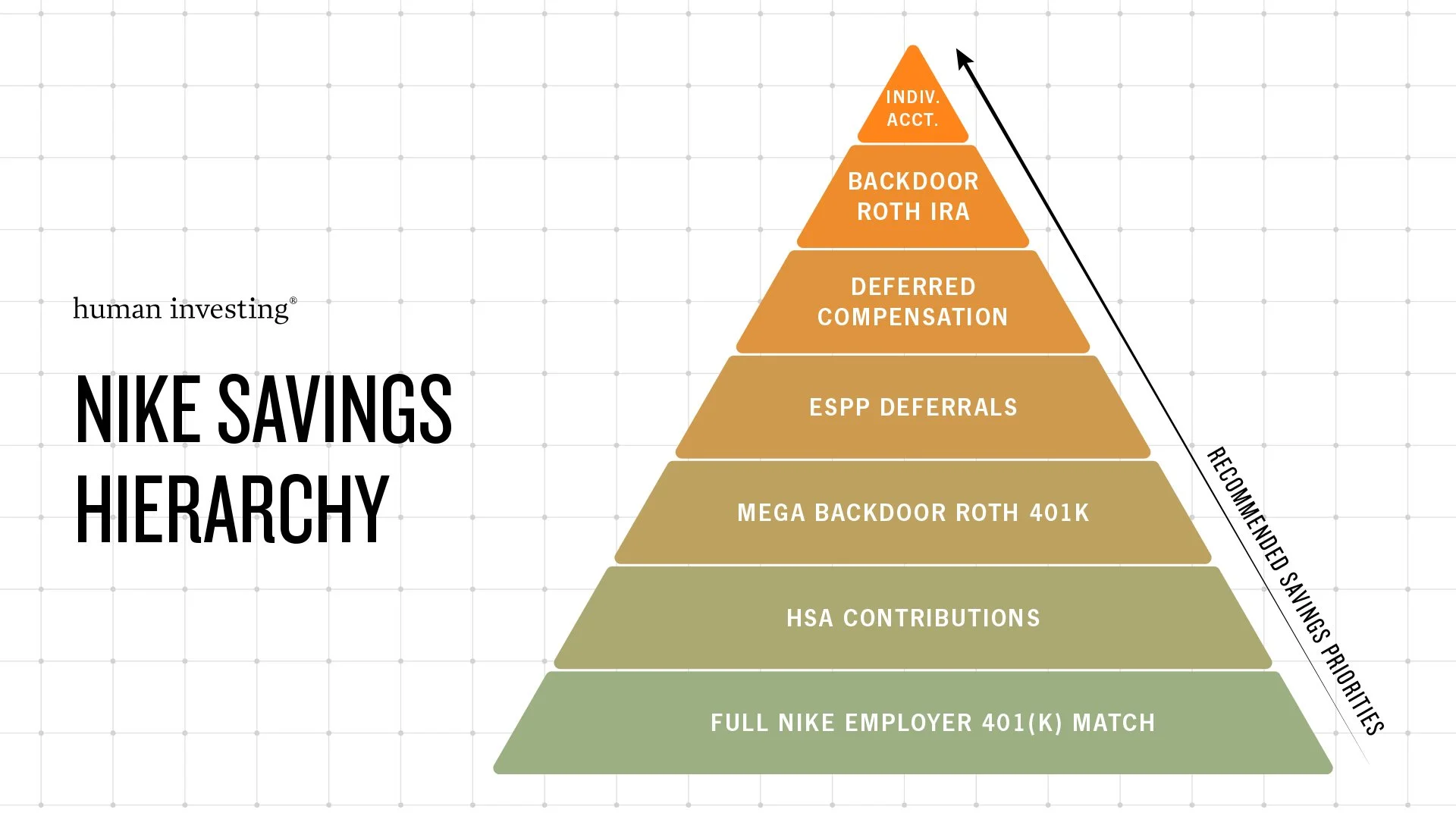
This recommendation depends on each person’s situation. Nike has a strong investment fund lineup, and you should compare that to any other place that would replace it. However, leaving your 401(k) at Nike requires more activity and maintenance since it does not have an auto-rebalancing feature, which would periodically sell funds that drift from their target allocation. For example, if the large company stock fund was targeted at 60% and grew to 64%, you should periodically bring that back to the 60% target to maintain the proper risk/return mix. Another factor to consider is the desire to make Backdoor Roth IRA contributions if you have extra funds for retirement savings.

Support when transitioning into the next job

The cash you receive from benefits like severance, PTO payout, and stock sales can help provide some comfort to your situation. While you are in transition with your job, we recommend creating a system to feel like you are receiving a paycheck replacement with your cash to reduce anxiety and bring normalcy to your day-to-day financial life. An example of this system would be taking your net benefits payout and depositing it in a savings account, then setting up bi-weekly transfers to your checking account to simulate your paychecks.

All these considerations are tied to a person’s long-term financial plan. Through financial planning projections and scenario planning, you can help determine what the next job needs to look like to achieve your goals for retirement, kids’ education, and lifestyle. It can provide you with the information to know if you need a comparable compensation package to Nike or if you could take a job with lesser pay that could be more fun or less stressful.

Being laid off from any job often creates much uncertainty, stress, and concern. With the right preparation, planning, and advice, it can be a smoother transition, and you may end up in an even better place than where you started.

If you have questions about preparing for or navigating a current layoff at Nike, please feel free to contact us at nike@humaninvesting.com or schedule time with us below.  


Related Articles

Managing Your Settlement Wisely: 5 Financial Steps to Turn a Payout into Peace, Purpose, and Generational Wealth


If you’re receiving a settlement from a life-altering event, such as personal injury, property damage, or an employment dispute, know this: you're not alone, and it is normal to ask, “What now?”

This may be the most significant sum of money you’ve ever received. But it’s more than just a windfall. It’s a crossroad. What you do next can shape your financial peace for decades to come.

At our firm, we’ve guided many families through life transitions like this one. Here are five smart, grounded steps to help you avoid common pitfalls and build a future marked by clarity, confidence, and purpose.

Step 1: Pause and Protect

Your first move? Nothing, for now. It’s normal to want to take immediate action. But when it comes to significant financial decisions, taking a beat is often the wisest choice.

What to do:

  • Park the funds in a safe, highly liquid account such as FDIC-insured high-yield savings or U.S. Treasury bills.

  • Avoid large purchases, gifts, or new ventures for at least 90 days.

  • Take time to think, grieve, and breathe.

What to watch out for:

  • FDIC insurance has limits. Coverage is capped at $250,000 per depositor, per institution. Large dollar settlements need to be spread wisely or placed in programs with extended coverage.

  • Be cautious of unsolicited “investment opportunities.” Scammers often target settlement recipients.

Smart alternative:

Beyond FDIC-insured accounts, another safe option is short-term U.S. Treasury securities. They are backed by the U.S. government, give you steady access to your money, and often provide competitive yields. The interest is also tax-free at the state and local level, which makes them a reliable choice for keeping your settlement secure.

Our take: The best first step is often no step at all. Create safety and space before making decisions.

Step 2: Build a Trusted Team

You don’t have to figure this out alone and you shouldn’t. A coordinated team can help you avoid costly mistakes and make confident, informed decisions.

When you are managing a life-changing settlement, success is not only about making smart choices. It is about making coordinated choices. The best outcomes happen when professionals work together to support your full financial picture.

Who should be at your table:

  • A fiduciary financial advisor to help design your long-term strategy, coordinate decisions, and ensure all the moving parts align with your goals.

  • A CPA to clarify your tax liability and help reduce it when possible.

  • An estate attorney to protect your assets and plan your legacy.

Why the fiduciary distinction matters:
Unlike brokers or sales-driven advisors, fiduciary financial advisors are legally and ethically obligated to put your interests first. They do not earn commissions from products. They earn trust by giving objective guidance based solely on what is best for you.

What to watch out for:

  • Conflicted advice: If someone is recommending products they are also paid to sell, they are not held to a fiduciary standard.

  • Lack of collaboration: A team that does not work together can create missed opportunities, inconsistent strategies, or unnecessary tax costs.

  • Advice in isolation: Each professional plays a role, but without coordination important details can easily be overlooked.

Our take: A fiduciary advisor serves as your financial quarterback, bringing leadership, clarity, and coordination across your team. At our firm, we embrace that role with care and seriousness. We sit on the same side of the table as you, and every recommendation is grounded in what is best for you now and in the years ahead.

Step 3: Understand the Tax Picture

The more you keep, the more you can use for yourself, your family, and the legacy you want to build.

Not every dollar from a settlement is treated the same under the tax code. Some portions may be completely tax-free, while others could create a significant tax bill if not managed carefully. Knowing the rules up front helps you make smarter choices, avoid surprises, and keep more of your money working toward what matters most.

What to know:

  • Compensation for property loss or personal injury is often not taxable

  • Payments for emotional distress, lost income, or punitive damages are typically taxable

  • Any investment gains after receiving the funds will be taxed

What to watch out for:

  • Misclassifying different portions of the settlement, leading to avoidable taxes or penalties

  • Underestimating your future tax bill, especially if you invest and grow the fund.

  • Overlooking tax-smart giving strategies, such as donor-advised funds, that can lower taxes while increasing your impact

Our take:

A proactive tax strategy is not just about reducing what you owe. It is about maximizing what you keep so you can enjoy your life, provide for future generations, and give generously to the causes you care about. As fiduciary advisors, we work closely with your CPA or bring in trusted tax partners to help you make confident decisions that reflect your values and protect your wealth.

Step 4: Create a Life-Driven Financial Plan

The goal is not just to manage your money. The goal is to use it to create a life that feels meaningful, secure, and aligned with what matters most.

This settlement creates a powerful opportunity to pause and ask deeper questions:

  • What does peace of mind actually look like for me?

  • Where do I want to live and how do I want to live?

  • How can I provide for loved ones or give generously without putting my own future at risk?

The right financial plan turns those answers into action.

What your plan should include:

  • A strong emergency reserve for flexibility and resilience

  • A clear approach to debt, housing, and insurance coverage

  • Strategies for healthcare and long-term care needs as you age

  • Defined goals for retirement income, giving, and legacy planning

What to watch out for:

  • Lifestyle creep. Small upgrades can quickly become big ones, and without intention your wealth can disappear faster than you realize.

  • Unspoken family expectations. Money can create tension if roles and boundaries are not clear.

  • Analysis paralysis. Without a plan, it is easy to get stuck, make impulsive choices, or avoid decisions altogether.

Our take:
A thoughtful plan gives your dollars direction so they serve your values, your goals, and your future. We help clients design plans that are flexible, grounded in what matters most, and built to bring clarity and confidence to every decision.

Step 5: Invest With Intention

Once your immediate needs are secure and your goals are defined, it’s time to grow your wealth thoughtfully.

A settlement is more than a chance to invest. It is an opportunity to shape the next chapter of your life and legacy. With the right strategy, your wealth can support your lifestyle, create opportunities for the next generation, and give you the ability to be generous along the way.

What to do:

  • Diversify across stocks, bonds, and other investments

  • Match your strategy to your timeline, risk tolerance, and income needs

  • Use tax-smart investment accounts like Roth IRAs, brokerage accounts, or 529 plans

  • Stay disciplined and consistent rather than reacting to fear or headlines

What to watch out for:

  • High-fee products or promises that sound too good to be true

  • Concentrating too much wealth in real estate or a single business

  • Making emotional investment choices (especially during market volatility)

Our take:

Investing done well is steady, strategic, and deeply personal. It is not always about chasing the highest return. It is about creating peace of mind and building a life that lasts. As fiduciary advisors, we help clients invest with intention so their money grows in line with their values, their freedom, and the legacy they want to leave.

You Have a Rare Opportunity

A settlement can mark a new beginning. With the right plan and trusted guidance, it can bring peace, purpose, and even lasting impact.

Our firm helps individuals and families navigate these transitions, whether your goal is to protect, grow, or give with intention.

If you or someone you love is receiving a settlement, we invite you to a complimentary 60-minute strategy session. Together we can design a plan that reflects your goals, tax picture, and values.


Disclosure: This material is provided for informational and educational purposes only and should not be construed as tax, legal, or investment advice. Examples are hypothetical and for illustration purposes only; actual results will vary. Tax laws are subject to change, and their application may vary depending on individual circumstances. Clients should consult their own tax and legal advisors before making any charitable giving decisions. Advisory services offered through Human Investing, LLC, an SEC registered investment adviser.

 

Related Articles

Saving for your Kid's College with a 529 plan
 

If you are looking for the best way to save for your kids’ future college expenses there isn’t necessarily a “one size fits all” solution. In fact there are a number of choices available, each with their own list of benefits and features. The 529 plan is probably the most common and well known option. Similar to a Roth IRA, a 529 plan offers tax-free growth as well as tax free withdrawals as long as the money is used for higher education expenses. This isn’t limited to major 4-year universities either. Most 2-year schools, community colleges, and trade schools qualify under the program.

In addition to tax free growth and tax free withdrawals, if you use your home-state sponsored plan (such as the Oregon College Savings Plan), your contributions may be deductible against your state income tax. These features make the 529 plan very attractive for those who want to maximize their savings for college.

More flexibility than before

One of the traditional drawbacks of a 529 plan was the limited flexibility in how the funds could be used. Previously, if a child did not attend college or received a scholarship, parents might have faced a 10% penalty and income tax on earnings when withdrawing the money for non-qualified expenses. However, recent changes have made 529 plans more flexible. For example, up to $10,000 per year can now be used for K–12 tuition, and up to $10,000 (lifetime) can be used to repay student loans. Most notably, starting in 2024, unused 529 funds—up to $35,000—can be rolled over into a Roth IRA for the beneficiary, provided certain conditions are met. These changes make 529 plans a more versatile option, though parents who want maximum flexibility for non-education-related expenses may still consider alternative methods.

For ultimate flexibility a parent can use a traditional brokerage account and invest the money for growth just like a 529 plan. With this option, you give up the tax benefits of the 529, but there are no restrictions on how the money is used and for whom. If the money is managed in a tax efficient manner, this can be a great alternative for many families.

Alternate saving options

One more option is a UTMA or UGMA account. These stand for Uniform Transfer to Minors Act and Uniform Gift to Minors Act. These accounts offer a middle ground between the two prior choices. On one hand, the money doesn’t have to be used for college expenses, but the account does have to be used for the benefit of the child only. There are also some tax benefits to these accounts as some of the growth may be taxed at the child’s tax rate, which is typically lower than the parent’s rate.

In summary, if you want the best plan to purely maximize college savings, a 529 is the best option. If you still want to provide savings for your kids, but aren’t 100% certain if you’ll need access to those funds down the road, then the other choices can be managed in a way to provide a very similar benefit, while providing additional flexibility.


Related Articles

How to take care of your spouse financially if something happens to you


As the person who manages most of the financial decisions in your household, it's natural to want to ensure your spouse is financially secure if you're no longer around. The financial burden on a widow can be overwhelming, especially with the lesser-known tax implications that often follow the death of a spouse. By planning ahead, you can safeguard your spouse from unnecessary financial stress.

Taking a few proactive steps now can help shield your spouse from these challenges and give them peace of mind. This guide will walk you through the financial implications of losing a spouse and what you can do today to ensure you preserve your assets for their well-being.

There are two common tax shocks you want to get ahead of:

Tax shock #1: The “survivor's penalty”

After a spouse dies, the widow is often left facing what’s called the "survivor’s penalty," which refers to higher taxes that result from a change in filing status. While you may currently file taxes jointly as a married couple, your spouse would be required to file as a single taxpayer after your death. This change can increase their tax bill substantially.

Here’s why this matters:

  • Higher Marginal Tax Brackets: After your passing, your spouse’s income could fall into a higher tax bracket due to the narrower brackets for single filers compared to married couples.

  • Reduced Standard Deduction: In 2024, the standard deduction for married couples filing jointly will be $29,200, but for single filers, it will be just $14,600. This reduction will increase the amount of income subject to taxes.

Looking ahead, it’s important to note that individual tax brackets are set to revert to pre-2018 levels in 2026, further increasing the tax burden on your spouse if you’re no longer here.

Tax shock #2: Hefty taxes on IRA distributions

If your spouse inherits your retirement accounts, such as an IRA, they’ll also face higher taxes due to Required Minimum Distributions (RMDs). These distributions are considered ordinary income, and combined with their new single filing status, could push them into an even higher tax bracket! The larger your IRA, the bigger this tax burden becomes.

What may seem like a well-planned nest egg now could become a source of financial strain later on due to taxes. By understanding this, you can take steps now to lessen the impact on your spouse’s financial future.

Firsthand example from a retired couple

When Spouse #1 and Spouse #2 file jointly, both receive Social Security and must take Required Minimum Distributions (RMDs) from their retirement accounts. Let’s look at their income and tax bill while filing as Married Filing Jointly (MFJ):

Now, if Spouse #1 passes, Spouse #2 becomes the sole taxpayer, facing a shift to the Single filing status. Spouse #2 is still required to take the same RMD amount as the beneficiary of the retirement accounts and claims Spouse #1’s higher Social Security benefit under the survivor benefit rules. However, Spouse #2 cannot receive both Social Security payments, so Spouse 2’s income is reduced. Here’s what their tax situation would look like:

Despite an almost 16% drop in income, Spouse #2's tax bill increases by over 30%, showing the impact of the survivor’s penalty on income and tax liability.

This example highlights why it’s essential to plan ahead to help lessen the financial burden on surviving spouses.

Four strategies to protect your spouse from a heavy tax burden

Fortunately, there are several strategies you can use to reduce the tax burden on your spouse in the future:

  1. Complete Tax Projections: To best plan for the future and make calculated decisions, it’s necessary to understand your expected lifetime tax bill. A comprehensive tax projection will identify your current and future tax rates, potential gaps, and overall lifetime tax obligations. This helps you make informed decisions today.

  2. Partial Roth IRA Conversions: Converting part of your traditional IRA into a Roth IRA over time can help reduce the tax impact on your spouse later. While you’ll pay taxes on the conversion now, the Roth IRA’s future growth will be tax-free, meaning less taxable income for your spouse when they inherit it.


  3. Take Advantage of the Step-Up in Basis: For non-retirement investments, your spouse can benefit from a "step-up in basis." This allows the cost basis of assets to reset to their value at the time of your death, potentially eliminating capital gains taxes if they were to sell those assets. Understanding this advantage can save your spouse from an unexpected tax bill down the road.

  4. Naming Non-Spouse Beneficiaries: Another option to reduce taxes is to name non-spouse beneficiaries for some of your retirement accounts, such as your children and grandchildren. While this can lessen the tax burden for your spouse, it’s essential that these non-spouse beneficiaries understand the new withdrawal rules set by the SECURE Act. This law requires that non-spouse beneficiaries fully distribute inherited IRA funds within 10 years, which could trigger substantial tax liabilities for them if not carefully planned. Additionally, consider adding a qualified charity as a beneficiary to your IRA for a tax-free transfer gift.

You can start planning ahead with your spouse now

Planning for your spouse's financial future can be an impactful gift. While it may be uncomfortable to think about what happens if you're no longer here, taking proactive steps now will ease your spouse’s transition during a difficult time. Here are a few key actions to consider:

Have Regular Financial Discussions: Make sure your spouse understands your financial plan, knows how to manage accounts, and is familiar with where to find important documents.

Work with a Fiduciary Financial Advisor: A financial advisor can help you develop a plan tailored to your family’s situation. By understanding your overall financial situation, an advisor can provide guidance now and assist your spouse when you're no longer there. They can also help with tax projections, Roth conversions, beneficiary updates, and staying ahead of tax law changes.

Create a Clear, Organized Estate Plan: Ensure your estate plan is up to date, including wills, trusts, health care directives, power of attorney, and beneficiary designations. This will help prevent unnecessary complications for your spouse during an already challenging time.

Be Proactive About Taxes: By planning for your spouse’s future tax obligations, you can reduce the “survivor’s penalty” and give your spouse more financial security.

You’ve worked hard to provide for your family, and planning for your spouse’s financial future if something happens to you is a vital part of that legacy. While it may seem difficult to know the "right" time to prepare, we can't predict the future. Whether you're already in retirement or facing a serious diagnosis, projecting out scenarios can make all the difference for your spouse’s security.

Don’t wait until it’s too late—start planning now to protect your loved one from unnecessary financial strain.


Related Articles

Planning Your Child's Education in Oregon With a 529 Plan
 

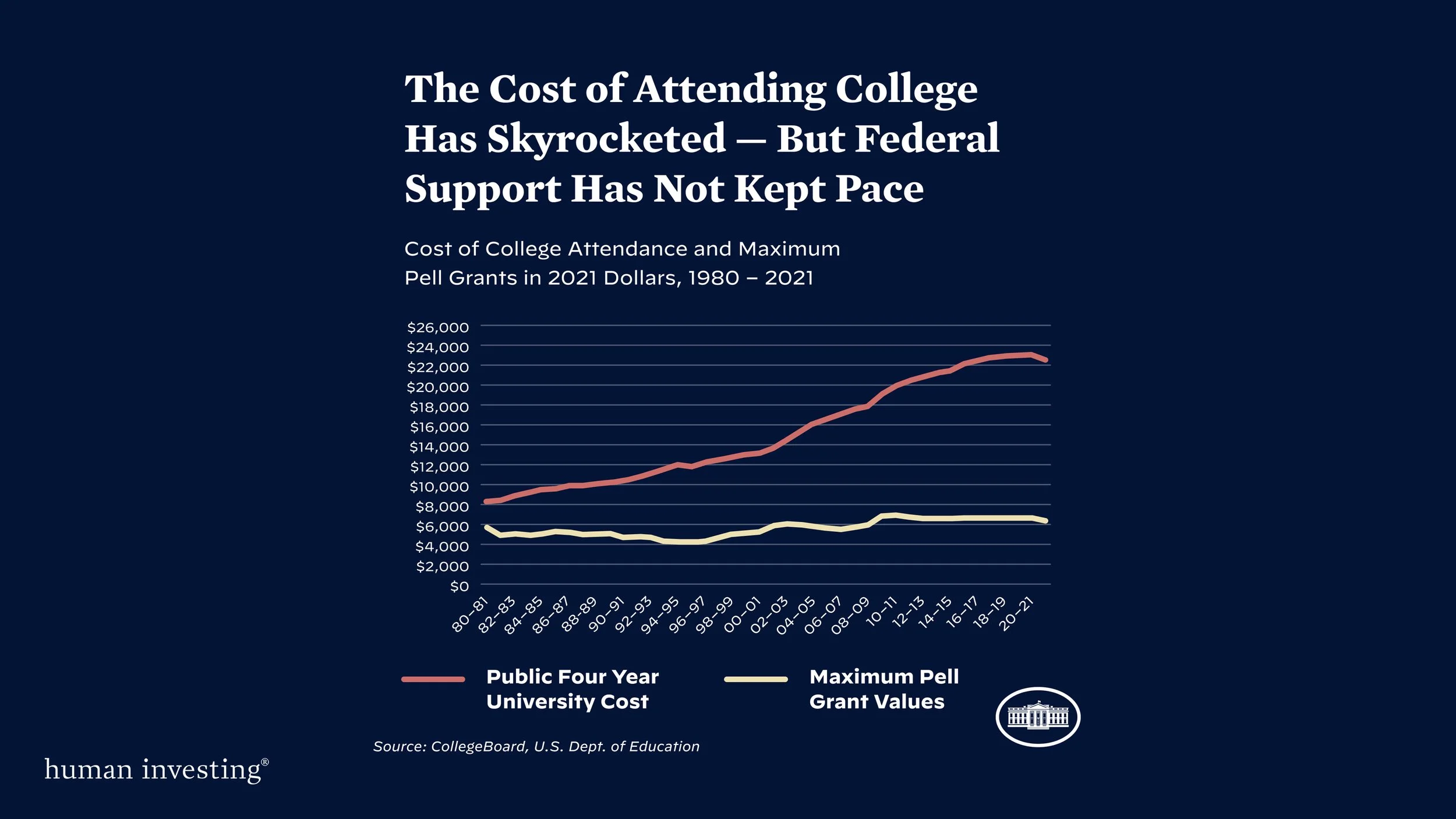
The cost of education, especially 4-year accredited university programs, continues to rise. The graphic below shows the average annual cost of college nationwide from 1980-2021 far outpacing the maximum Federal Pell Grants offered over the same time period. 

If there is an ability to pre-fund college, in whole or part, it will have lasting financial implications. Funding college early at the birth of a child or grandchild to a college savings account could reduce the future funding liability by six figures. 

In this article, we will discuss some ways you can start saving for your child’s education.

The most popular option, the 529 Savings Plan

A 529 College Savings Plan is one of the most popular options when saving for college. Not only does the money you contribute to a 529 plan grow tax-free but any distributions used for qualifying education expenses (tuition, room & board, books, computer, etc.), are tax-free as well. In the past, qualified expenses were limited to just tuition and boarding but recently the government has expanded this list. Beneficiaries of a 529 plan can also use the money to pay for trade school, community college, or even a 3-month certificate program.  

Oregon has a state-sponsored 529 Plan that allows residents to receive tax benefits for contributions they make to a plan in the state. This gives you a triple-tax benefit. Contributions to fund the account have a tax benefit, growth is tax-free, and qualified expenses are tax-free. There are also private plans that qualify under Oregon-state law. As of 2023, contributors can receive up to $300 in tax credits depending on their filing status and household income. As of 2023, families can contribute up to $17,000 annually in a 529 account. Anything after that is considered a “taxable gift” and subject to gift tax laws.  

Another feature about 529s starting in 2024 and beyond is that any leftover money up to a lifetime amount of $35,000 can be rolled over into the beneficiary’s Roth IRA.. For example, let’s look at two parents who invested $50,000 into a 529. Their child received a full scholarship to the college of their choice. The child ends up only spending $10,000 to cover other expenses during their time in college. That student can then roll over a lifetime amount of $35,000 into their Roth IRA account, as long as they have earned income and the 529 account has been established for 15 years.  

Coverdell ESAs act very similarly to 529 plans due to the withdrawals being tax-free for qualifying expenses. However, contributions are limited to $2,000 per child annually and are only available to families below certain income thresholds. 

Special accounts: Uniform Gifts TO Minors Acts (UGMA) or Uniform Transfers to Minors Acts (UTMA)

UGMA or UTMA accounts can help you save for college but aren’t just reserved for education. These accounts are savings accounts that are controlled by a parent or guardian, known as a “custodian.” You can gift up to $17,000 per year (as of 2023) in assets that are held in a custodial account until the child turns the age of majority (Age 18 or 21 depending on the state). In Oregon, the dependent cannot take over the account until they are 21.  

The custodian of the account can use this money only for the benefit of the minor to pay for things like food, education, and living situations. 

Pre-pay for college tuition and tuition discounts  

Unfortunately, in Oregon, there is no State-sponsored pre-payment plan for college tuition. There may be some private ones, but they are expensive. Some people do this in other states to pay for the full tuition during the current year rather than wait 17-18 years when prices go up even more. For your reference, here are states that offer pre-payment programs.

There is also a program known as the State and Regional College Tuition Discounts. Oregon has several schools that are members of the Western Interstate Commission for Higher Education.  

For more information about this make sure to research the WICHE site and Oregon’s student aid site.

Alternatives to college that can fast track career development

Despite the rising costs of college, there are other options to consider. College is not for everyone and you may decide not to send your student to college right away if you cannot afford to do so.  

Many high-paying and rewarding career paths do not involve a college degree like: 

  • Computer programming and coding 

  • Loan officers 

  • Pilots 

  • Plant operators and managers 

  • Graphic designers 

  • Trades like plumbers, welders, carpenters, farmers, etc. 

  • Sales reps  

  • Business owners and managers 

Community colleges, trade schools, and certificate programs are a fraction of the cost of a 4-year college program and in most cases pay well with little to no debt. Plus, 529 Plans cover these types of education programs too (certain restrictions may apply).  

Some 17-year-olds may not know what they want to do yet. They can work a job, apprentice under an expert, or even start their own business and find their passion before committing to a major program in college.  

If you need more advice, financial planners and advisors can assist you with planning for your student’s future. These laws vary from state to state so talking with a team of experts who are knowledgeable in this area is a wise choice.  

If you are looking to hire an advisor, please connect with us.


Related Articles

How to Make the Most of Your Windfalls


Many people dream of one day receiving a considerable sum of money, whether through a large inheritance, winning the lottery, or selling their business or home. Whether the windfall is expected or not, without a plan, coming into a lump sum of money can be overwhelming at first and emotionally draining once the dust settles.

We’ve all read or heard stories of lottery winners who went from rags to riches to rags again, ending in bankruptcy. [1] While most of us may not win the lottery, we may receive money from an inheritance or a gift we weren’t expecting. This news will undoubtedly stir up thoughts of grandeur on how to spend it or for those more practical, how to best protect it. Not to mention, there are also taxes to consider. It can be exciting and scary at the same time.

For these reasons and more, building a financial plan may help you avoid the pitfalls of emotional or poor decision-making by creating a roadmap. This roadmap will act as your guide, helping you stay on track and get the most out of your new-found wealth. By creating a plan, you will cover many topics that matter most to you, such as:

Assessing your short-term goals.

Has there been anything on your to-do list that you would like to check off within the next few years? Buy a more reliable car, take care of house projects, or bolster your emergency savings fund? It’s vital to assess these needs before you consider investing, as the funds necessary to cover the costs of these goals may need to remain in cash.

Paying off high-interest debt.

Do you have any debt? Our team defines high-interest debt as any loan with an interest rate of 6-8%. This is typically found in credit card debt, some student loan debt, and personal loans. It is important to aggressively pay down high-interest debt, and receiving a lump sum just might provide you with the opportunity to do so!

Building an investment plan.

Analysis paralysis can sometimes lead someone to leave their windfall as cash. Building a personalized investment plan that aligns with your goals and timeline is essential to avoid the permanent risk of holding cash. This step is one where an advisor is especially valuable to provide expertise and advice.

Treating yourself.

Receiving a windfall should not feel like a chore. As your financial plan is being built, it’s okay to add room for things like gift and travel. Not only will it make you feel good that it’s in the budget, but it will give you something to look forward to. Considering even small treats is good to do as it will help you plan to budget for bigger things like travel. According to a survey by the Harvard Business Review, 80% of people derive a greater level of happiness when spending money on experiences rather than buying material things.

You can certainly create a basic goals-based plan on your own, or you could look to hire an expert to help you with comprehensive planning. Here are three ways an advisor can help you:

1. Discuss what may be the highest and best use of your dollars.

An advisor will help you prioritize your needs and wants. While it may seem like you are set for life, without proper planning, the money can disappear fast.

2. Help decipher what is important to you.

For many, coming into a lump sum of money can be partnered with heartbreak from losing a loved one or the pain from a legal settlement. Having a discussion measuring both objective and subjective factors is essential.

3. Partner with you to help keep you accountable for your goals.

Many come into money with great intentions but fail in the execution due to a lack of responsibility, intentional or not.

See The Value of Hiring Human Investing for additional information about the advantages of having an advisor.

As always, our team is here to help. We believe receiving a lump sum requires deep consideration and understanding as it relates to your overall financial well-being. If you would like to connect with a dedicated team member to go over your options, please use this link.

[1] The Ticket to Easy Street? The Financial Consequences of Winning the Lottery


Related Articles

The Importance of a College Education
 
nathan-dumlao-ewGMqs2tmJI-unsplash.jpg

On a recent financial planning call with colleague Amber Jones and a new client of our firm, we had a chance to discuss college savings for their daughter. It is always interesting to hear how families view college for their children and grandchildren. Some consider college a necessary expense, while others view college as an investment. Regardless of your college position, I thought it would be helpful to look at unemployment levels by education and income, based on the type of education an individual achieves. The numbers paint an incredible picture. Figure 1 underscores the importance of going to college. Not only are those with college degrees employed more consistently, but their annual earnings are nearly double those with a high school degree.

  Figure 1. Employment and income by education attainment

  Figure 1. Employment and income by education attainment

In short, Figure 1 makes a good case for encouraging your children (and grandchildren) to go to college. Yes, there are dozens of college alternatives, including starting a business or going to trade school. We all know successful individuals who never stepped foot in college or tried a university and decided it was not for them. I hope this article is taken in the way it was intended—that is, if college is an option, it is an excellent investment worth the sacrifice. 

Maybe you are a grandparent trying to think of a gift for your granddaughter—fund a college savings account. Maybe you are a parent wondering if college is a good investment—the answer is yes, fund a college savings account. Or possibly you are a teenager considering going to college—do what you can to make it happen. College is a sacrifice for families and for the one that is bold enough to attend.  Nevertheless, the payoff can be significant. As far as an investment goes, I can think of no better. 

If you have questions about college, funding a college savings account, or if you just want to have a thinking partner on the topic, call us; we would love to hear from you. College comes in many shapes and sizes. For example, a four-year degree, split between community college and Portland State University, averages less than $8,000 per year. Even if loans are required to meet tuition demands, the potential return on investment is immediate and over a lifetime, sizeable.


Related Articles

How to Thoughtfully Finance a Car or any Big Ticket Purchase
 
austin-neill-fLHjTTLURYg-unsplash.jpg

It’s hard to let go of your old car. You know which car I’m talking about. The car with the window taped shut because it doesn’t roll down properly. The car with three paint jobs—each a different shade of green. The car that gets shaky after you reach 65 mph, because it was a hand-me-down from your grandma, who’s max freeway speed is 50 mph. It’s been with you through it all, but when car dealerships start advertising 0% financing and cash-back deals, you might feel yourself loosening your grip.  

Before we dig in, it’s important to acknowledge that even though good deals are currently out there, you may not need an upgrade. And that’s okay! Own your steady, functional car, and avoid instant gratification. However, sometimes things do happen that require an upgrade. Your tape job suddenly malfunctions, and your car window won’t roll up in mid-January. Or your car starts shaking at 50mph on your morning commute instead of 65mph.

When planning for a big expense, whether it’s a car or another large purchase you plan to finance, it’s best to create savings goals. But because life is both expensive and unpredictable, this post aims to discuss ways to finance a large purchase in a smart and efficient way. Here’s your list of action-items:

FOCUS ON WHAT YOU ACTUALLY need

Create a list of your needs (not your wants), and then research your options. If you need a car, what kind of car do you need? Something that can haul large objects, or carry the tiny humans safely? Used or new? Find the total cost of the car that can sufficiently meet all your needs. Avoid any options that may push you outside of your budget. Basically, don’t buy more car than you need.

Decide how to finance the purchase 

If you cannot purchase the expense in full, you have two financing options: (1) a lease or (2) a loan.  

Know that when assessing the total cost of the car, it’s important to leave room for the expense to finance the car through a loan.

  1. Lease: When you lease a car, you are paying monthly to use the car. Because this finance option doesn’t lead to car ownership, monthly payments for leases are typically lower than loan payments. However, you will not be able to ever own the car or “pay it off.” Because of this, leases will never be profitable and are best saved for professional purposes if necessary.  

  2. Loan: When you borrow an auto loan, you are paying monthly to eventually own the car. There are many loan options depending on your budget, credit score, and timeline. Most loans will have an annual percentage rate (APR). That is, the interest rate you pay on the loan. The APR will vary based on the duration of the loan, your credit score, and where you borrow from. Make sure you shop around to find the best loan that meets your needs. In short, try and find a loan with a low APR and pay it off as quickly as you can. Click here to view Rivermark’s auto loan options.

Calculate the monthly payment

In order to budget for your new expense, you need to know the amount of the monthly payment. Let’s say you want a 2020 Subaru Forester because let’s be real, if you’re a true Oregonian, you’ve thought about getting a Subaru at least once. Using data from their website, here’s the breakdown:  

Find the cost of the car: $24,495 

Pick a Finance term: 48 months

Know the APR based on your credit score: 4.19% 

Calculate the monthly cost of the car, including the APR: 

Car Calculations (2).png

Ta-dah! Your monthly car payment is estimated to be around $700, making the estimated total cost of the car $33,600.  

Let’s take a moment to catch our breath. I know this seems stressful, but don’t worry. Make sure you are taking care of your credit score and budgeting for the expense. If you take the appropriate and smart steps, you’ll be okay!  

Simulate the payment INTO A MONTHLY BUDGET

Before deciding to finance the car, take three months to see if the monthly payment fits in your budget. Whether it be through automatic transfers or manually setting money aside, try not to house the simulated monthly payment in an account used for spending purposes. If you don’t have a budget, click here for resources to get started. 

This practice will allow you to visualize how your car payment can fit into your budget. You may need to re-allocate dollars in your budget, or you might find you have more wiggle room than you initially thought!  

What are you waiting for? Get the car!

You earned this! You took the smart and appropriate steps to finance your car, so make it happen and create new memories. We are rooting for you.  


Related Articles