Posts in Financial Planning
The Importance of Portfolio Rebalancing and Market Timing
 
loic-leray-fCzSfVIQlVY-unsplash.jpg

What a season it has been.  I hope and pray that each individual and family member receiving this note is healthy and safe.  My goal over the coming months is to increase the volume of written communication.  These notes will not replace our regular scheduled tax, planning, or portfolio updates.  Instead, they will supplement those conversations and provide a financial perspective that can be communicated efficiently in writing.  The purpose of this note is to discuss our position on market timing and portfolio rebalancing.

Portfolio Rebalancing

We believe that the financial plan is the seminal document for investors seeking to accomplish long term goals. Each financial plan is prescriptive in the amount of saving and portfolio return that is required to accomplish the goals outlined in the plan.  The asset allocation decision is an important one—given it considers risk tolerance, time horizon, and financial goals[1].

The goal of rebalancing is to minimize risk and recalibrate, rather than to maximize return.  The process of rebalancing takes the imbalance that is created by certain asset classes over time and recalibrates those asset classes.  It takes the asset allocation that was originally prescribed by the financial plan and reorients the portfolio to its intended mix of stocks, bonds, and cash.

For most portfolios, recalibration should occur a few times a year.  This is particularly true in retirement accounts, given there is no tax liability for creating gains.  In trust accounts as well as individual and joint accounts, there is a sensitivity to tax gains as a possible consequence of rebalancing.  Every effort is taken to minimize tax liability in those types of accounts.  However, it can be hazardous to let the concern over taxes negate the discipline of regularly rebalancing.  I can think of too many instances where a client avoided rebalancing their account out of concerns for taxes—only to have the market go down. The tax liability for rebalancing was ultimately dwarfed by the loss of principle due to the market decline.  In short, it is rarely advisable to let the tax tail wag the investment dog.

Market Timing

The most common question I receive is, “when should we sell out?”  My typical response is never.  If an investor has a financial plan, which accounts for planning-based return expectations and subsequent asset allocation, the portfolio should always be properly positioned for risk and return.  If the goal of “selling out” is to reduce risk, the action of selling implies the original allocation was incorrect. 

In the past, there have been a few occasions where dramatically reducing risk by selling equities and raising cash makes sense.  Or, to sell a portion of the stock investment and place the proceeds in bonds.  But those reasons have to do with new information about the client situation, which prompt a change in the asset allocation. As an example, years ago, we had a client let us know that their business was struggling, resulting in the potential that their retirement account would need to be tapped for an emergency.  Liquidating equities in their account was a response to a change of plans and circumstances—this is a plan modification and not market timing. 

There is ample research dating back to the 1980s which suggests timing the market[2] or being able to predict the direction of the market is challenging at best[3].  Therefore, we believe in rebalancing “to recapture the portfolio’s original risk-and-return characteristics”[4], and we rely on the financial plan as the authoritative document to prescribe the proper mix of stocks and bonds for each client we serve.


Sources

[1] Zilbering, Y., Jaconetti, C. M., & Kinniry Jr, F. M. (2015). Best practices for portfolio rebalancing. Valley Forge, Pa.: The Vanguard Group. Vanguard Research PO Box2600, 19482-2600.

[2] Brinson, G. P., Hood, L. R., & Beebower, G. L. (1986). Determinants of portfolio performance. Financial Analysts Journal42(4), 39-44.

[3] Butler, A. W., Grullon, G., & Weston, J. P. (2005). Can managers forecast aggregate market returns?. The Journal of Finance60(2), 963-986. 

[4] Zilbering, Y., Jaconetti, C. M., & Kinniry Jr, F. M. (2015). Best practices for portfolio rebalancing. Valley Forge, Pa.: The Vanguard Group. Vanguard Research PO Box2600, 19482-2600.



Related Articles

How to be a Responsible Credit Card Holder and why it Matters
Credit Score Header.png

A credit score can be a helpful tool for your overall financial wellness. Unfortunately, rules and regulations surrounding credit scores can be complex and unclear. Read on to learn the importance of a good credit score, its components, and how to use a credit score to impact your financial health.

WHAT IS THE PURPOSE OF A CREDIT SCORE?

Put simply, a credit score is your financial report card. It allows lenders to assess your trustworthiness as a borrower. A good credit score not only grants you easier access to lower interest rates on loans, but it can also help you rent an apartment, finance a car, or pay down a mortgage. In short, your credit score helps you navigate the lending side of the financial world, and even gain greater financial success.

WHAT ARE THE COMPONENTS THAT MAKE UP A CREDIT SCORE?

Your payment history: Do you have a record of paying your bills, in full and on time? Doing so will boost your credit score. Paying bills on an inconsistent basis (or ignoring them completely) will lower your score. FYI, paying the minimum monthly payment is not paying your bills in full. Paying only the monthly minimum will negatively impact your credit score. Don’t be tricked by that sneaky number. Live within your means and pay your bills on time. Pro tip: Utilize due dates in your calendar, or use the reminders app on your phone, to remind you to pay your bills.

The amount you owe: Do you approach or reach your credit limit each month? The ratio of the amount you spend and the limit on your credit card is called credit utilization. It is best to keep this ratio high (i.e. 1:10 not 1:1). Leaving room between the amount you spend in any given month and the limit on your credit card will boost your credit score, while closely approaching your credit limit each month (or reaching it) will lower your credit score.

The length of your credit history: How long have you had a credit score? The longer the better! If you do not currently have a credit card, make sure you are responsible enough to own one before rushing to get one. Remember, it is better to be a responsible borrower for a shorter period of time than an irresponsible borrower for a longer period of time.

Your credit mix and new accounts: How many accounts do you have? Utilizing a variety of different borrowing options (i.e. a combination of a mortgage, an auto loan, and student loans) isn’t bad if necessary. In fact, it can actually be helpful! Try to keep open accounts to a minimum, even if you only use some accounts sparingly. Opening multiple accounts can cause lenders to be more suspicious, which in turn can lower your score. So, yes, you heard me. You might need to cancel that Hawaiian Airlines card, even if you save $150 every 2 years for your biannual Hawaii trip.

Aside from these factors, lenders may also look at your salary, occupation and job title, and employment history. These additional factors will not actually change your credit score, but they can be used in addition to your credit score to assess your trustworthiness.

WHAT IS A GOOD CREDIT SCORE?

By assessing each of these components, a three digit credit score is generated, ranging from 300-850. Any score over 700 is considered a good score.

credit-scores.jpg

SO, WHAT DOES IT LOOK LIKE TO BE A RESPONSIBLE CREDIT CARD HOLDER?

Sure, this information can be helpful, but how can it be applied to everyday life? Let’s look at an example.

CC Sophia 1 - cropped.png

Sophia is a recent college graduate.

She just received her first full-time job and is looking to build her credit score. She applies for a credit card that has a low credit limit and only uses it for her regular monthly payments: gas, Netflix, and her gym membership. She lives within her means, knowing she has other payments to consider, such as her student loans and auto loan.

 
CC Sophia 2 - cropped.png
 

Sophia gets used to living off of a budget.

Every month, Sophia remembers to pay her credit card bill, and pay it in full. As a young lender, it is important for her to stay on top of her monthly payments.

 
CC Sophia 3 - cropped.png

As Sophia ages, she solidifies her good spending habits.

She opens another credit card account that has a larger spending limit, and uses it conveniently for groceries, bills, and other expenses—still living within her means and paying her bills on time.

 
CC Sophia 4 - cropped.png
 

Related Articles

All her daily money habits pay off.

Her credit score has deemed her a trust-worthy lender, and she is able to lock-in favorable rates for the mortgage of her first home!


How do Elected Governments Affect the Stock Market?
 

Every four years, our clients are eager to talk about the election’s influence on their portfolios and the broader economy. And, as has been consistent over the last 20+ years, our response is dreadfully dull. Let me explain.

Generally, the stock market is apolitical, showing no preference to either Republicans or Democrats (Li & Born, 2006). Historically, Democratic administrations are associated with more expansionary policies. With a more inflationary approach in mind, Democratic administrations are also more inclined to juice the economy with Gross National Product expanding at 5%, versus 1.2% for a Republican administration in their first two years (Alesina & Sachs, 1988). 

The market cares little about the president, the Senate, or the House. As Figure 1 below highlights, an investor who placed $1,000 into the stock market beginning January of 1926 amassed significant wealth, regardless of the political leanings and party affiliation of the President. 

Figure 1

Figure 1

You might be thinking, “but this time, it’s different”. Probably not. The chart above includes years with impeached presidents, wars, crisis, and plagues, and as you can see by growth over time, the stock market cares minimally about these events. Don’t just take my word for it. Read history and periodically look at Figure 1 as a reminder.

The data we have reviewed suggests that there is almost no evidence connecting stock market performance (good or bad) with a president and their political affiliation. Consequently, households should focus on their financial plan and the rate of return necessary to achieve their goals, and less about the election and its impact on the market. 


References

Alesina, A. and J. Sachs, 1988, Political parties and the business cycle in the United States, 1948–1984, Journal of Money, Credit and Banking, 63–82.

Li, J., & Born, J. A. (2006). Presidential election uncertainty and common stock returns in the United States. Journal of Financial Research29(4), 609-622.


What Type of Life Insurance is Right for you?
 
dylan-nolte-HNXi5znlb8U-unsplash.jpg

Life Happens. Be prepared and consider buying life insurance.

But what kind? How does one navigate through the many types and attributes of life insurance products? To make things more complicated, high commissions create an unavoidable conflict of interest for life insurance agents, which can muddy the waters and lead to further consumer uncertainty.

To provide clarity, we will explore what life insurance is and provide a broad overview of the different policies that can be purchased. Someone’s lack of understanding should not get in the way of life insurance being a part of their financial plan.

WHAT IS LIFE INSURANCE?

Life insurance is an important tool to protect loved ones and/or business relationships. Most people should have some form of life insurance to provide cash flow in case of the inevitable.

A life insurance policy is a contract between a policyholder and an insurance company. In exchange for payment of premiums, the insurance company will pay a death benefit upon the death of the insured. The death benefit is a tax-free* sum of money paid to the beneficiaries of the policy, which are often family members.

If you have someone who relies on you for financial support, and you cannot self-insure, you need life insurance.

TYPES OF LIFE INSURANCE?

There are numerous different types of life insurance policies. Policies will vary in coverage, premium cost, cash value, investment risk, and flexibility. Of these differences, policies can be divided into two key groups: Term life and Permanent life.

insurance-decisions.jpg

Term — Term life insurance allows the policy owner to pay for coverage for a predetermined number of years, typically 5, 10, 20, or 30 years. For most, a term policy is the least expensive way to purchase a death benefit. The death benefit can be level or decreasing. Some will purchase a decreasing death benefit to match their decreasing mortgage debt.

Life Insurance - Term and Permanent_Page_2.jpg

Permanent — Permanent life insurance is just as it sounds. The policy owner may decide to have their life insurance policy last a lifetime (up to age 120), often requiring a lifetime of premiums payments. There are several types of permanent policies. Popular policies include Whole, Variable (VL), Universal (UL), Variable Universal (VUL), and Indexed Universal Life (IUL).

Key differences between a term policy and a permeant policy include price, length of policy, and a component called cash value. Permanent policies are traditionally more expensive. The higher premiums cover the cost of the death benefit (including administrative fees), and the remainder is added to a cash value.

Life Insurance - Term and Permanent_Page_1.jpg

Traditionally, the death benefit is used at death while the cash value can be used during the policyholder’s life. The cash value of a permanent life policy can be a tax-advantaged savings vehicle for the policy owner. Permanent policies are typically most advantageous once other tax-advantaged savings vehicles like your 401(k), Roth IRA, etc. have been exhausted. The cash value may be available to the policy owner to withdraw or borrow against. The cash value can accumulate in a variety of ways and is often distinguished by the type of permanent policy. See below for differences between common permanent policies and their cash value accumulation.

Whole Life — The insurance company takes on the responsibility to pay out a dividend which is based on the performance of an investment portfolio managed by the insurance company and their ability to keep their business expenses low.

Variable policies (VL & VUL) — The policyholder may invest the cash value in a selection of mutual fund-like sub-accounts. Variable policies provide a “variable” growth (& potential loss) of cash value as sub-accounts are connected to underlying investments.

Index Universal Life (IUL) — The policyholder may earn interest based on the performance of an equity index, think the S&P 500. While there is no actual money invested in the index, interest is credited to the cash value based on the performance of the selected index. IUL’s provide variable growth with a cap on maximum returns (cap rate). There’s also a guaranteed minimum annual return (floor rate often never less than 0). For example, an IUL has a cap rate of 8% and a floor rate of 0%. If the selected index grows by 20%, the cash value is credited a growth of 8% (cap rate), if the index loses value by -5% the cash value does not decrease due to the index (floor rate).

insurance-chart.jpg

WHAT TYPE LIFE INSURANCE IS RIGHT FOR YOU?

This is our opinion, some life insurance agents and brokers with a conflict of interest may disagree.

You are young — Do you have plans for a family? This may be a great opportunity to purchase a term life policy. The younger you are, the less expensive premium payments will be.

You are the breadwinner — Term life insurance can replace lost income during working years. Life insurance prevents your surviving spouse (and children) to forgo their standard of living and helps meet the family’s financial obligations.

You are a stay-at-home parent — While there is no income number attached to a stay-at-home parent, there is a value associated with the services they provide a family. Term life insurance covering the years when kids are young can help cover the cost of child-care, housekeeping, and other responsibilities taken on by a stay-at-home parent. 

You own a home — For many Americans, a home is one of their largest assets and debts. Purchasing a term life insurance policy with coverage lasting the length of a mortgage can cover the remaining mortgage balance.  

You are a business owner — A life insurance policy is a multifaced tool for a business owner. A policy can help pay off business debts, pay estate taxes, and fund a succession plan like a buy-sell agreement. There are many variables to consider when choosing between term and permanent policies.

You have maxed out your retirement accounts — If you have maxed out tax-deferred retirement savings vehicles, a permanent life insurance policy can provide another avenue of retirement savings. Permanent policies build a cash value that can be accessed tax-free**. We do not typically recommend this to our clients because permanent policies are often very costly. The larger price tag can include investment costs (we commonly see 1-1.5%), administrative fees, as well as surrender penalties.

You want to leave an inheritance — Do you plan to spend all your retirement dollars, yet you would like to leave heirs with an inheritance? A permanent life insurance policy will provide a lump-sum benefit to your beneficiaries no matter when you pass away (can be up to 120 years).

You have a high net-worth — Permanent life insurance is best for those who are concerned about estate taxes. A lump-sum benefit at death is distributed to heirs to pay estate taxes, rather than selling-off inheritance.

Life is complex. As such, your situation may require multiple life insurance policies for you and your family.

WE ARE HERE IF YOU HAVE QUESTIONS

There are many options for life insurance. While Human Investing does not sell life insurance policies, we do help clients find the best policy within their financial plan. Having someone to help you navigate life insurance without incentive to sell you a product has immense value. If you have questions about what type of life insurance may be best for you, or how it fits into your financial plan, please contact us at Human Investing.


*Death benefit will be tax-free if it does not violate the “transfer-for-value” rule.

**Tax-Free-withdrawals up to basis then gain taken as loan.  Also, is not a modified endowment contract.


Related Articles

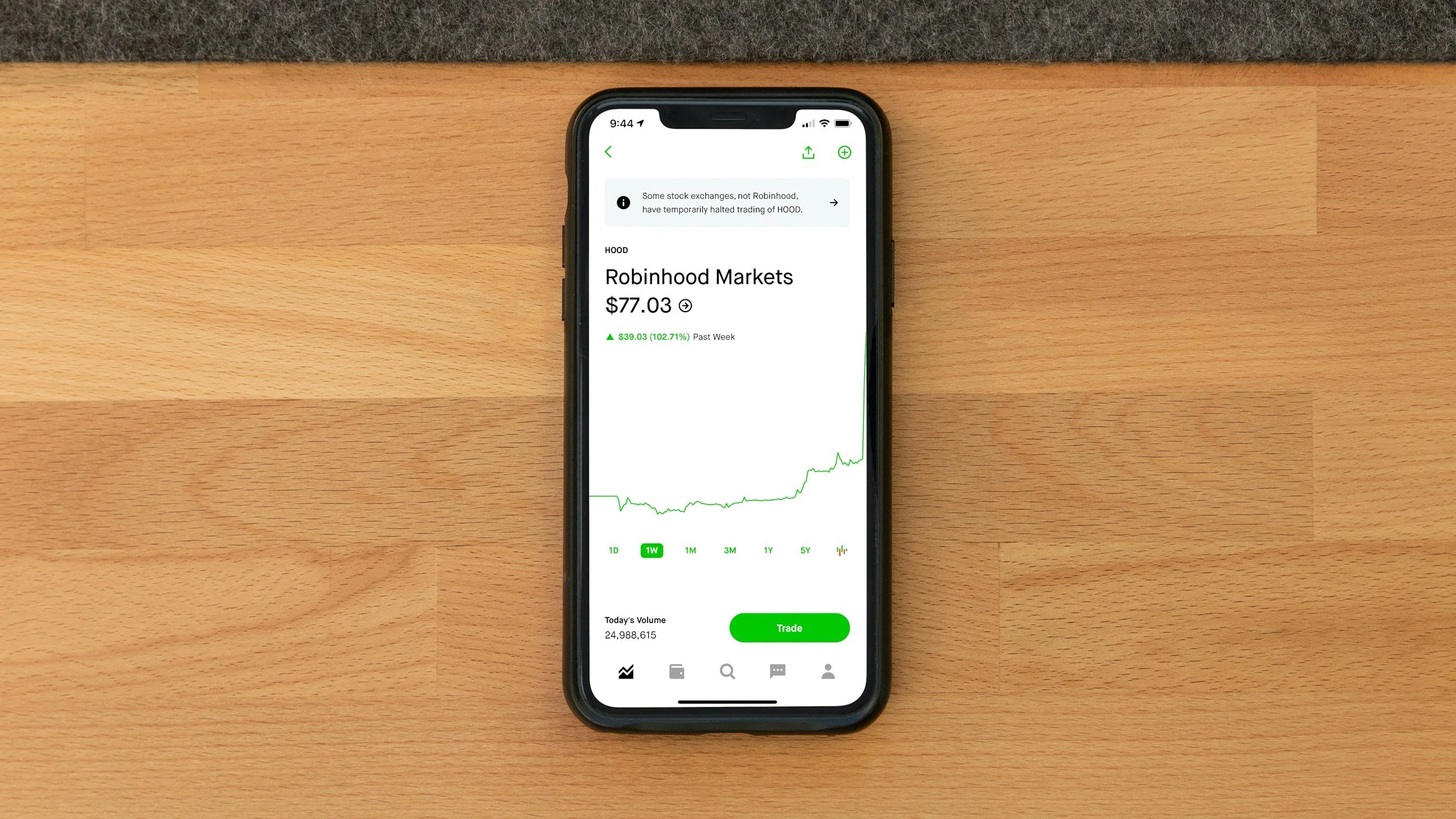
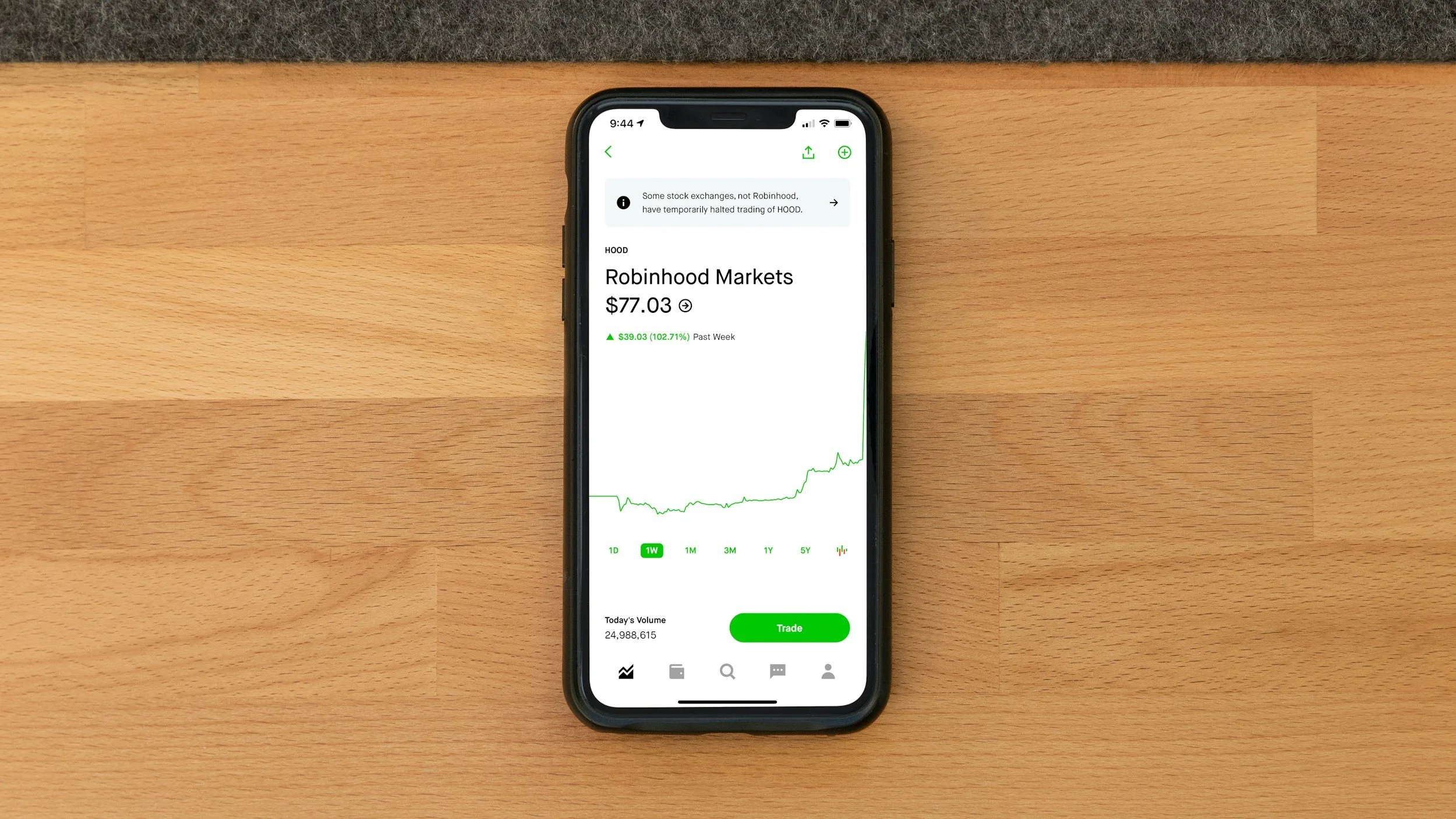
Providing Sound Advice in a World of Robinhood Investing
 

One of the interesting subplots in the finance industry during COVID-19 has been the rise of the day trader. Robinhood, an online brokerage and trading platform, acts as a proxy for many investors who are rapidly opening accounts at other brokerage firms including Charles Schwab, E*T, TD Ameritrade, Fidelity, etc.

Our firm works with thousands of employees via their company-sponsored retirement plans and has had many conversations end with a question/comment along the lines of, “What do you think of this Robinhood thing? Is it worth putting some money in there? Seems like (fill in the blank tech company) is making money! Should I buy some?”. So, I felt compelled to address the question(s) and provide some context around where a speculative trading account fits into a greater financial plan.

THE MAJOR PLAYERS

Source: Piper Sandler

Source: Piper Sandler

E*TRADE: more users opened accounts in the month of March than any full year on record.

Charles Schwab: 1 million new accounts so far in 2020.

Robinhood: 3 million users opened accounts in Q1 2020. For perspective, there have been 13 million accounts opened at Robinhood since its founding in 2013.

The GROWING appeal OF DAY TRADING

The barrier of entry has never been lower to open an account and buy shares of publicly traded companies. Because many individuals are at home, trading is as cheap and accessible as ever, and some firms have incentive offerings (like a free share of stock when you open an account). Pair that with the stock market reaching its low point for the year on March 23rd and having one of its fastest recoveries ever (in other words the last 5 months have been a winning proposition for many investors), and you get to the point where we are today.

YCharts1.png

Today could be a euphoric place for an investor owning stocks since March. To me, euphoria looked like TMZ coming out with a trading subscription service… yikes. Stocks have only gone up, and popular tech companies have led the way. Kudos to those who might have doubled their money on a company like TESLA, but the last 5 months do not paint a realistic picture of what investing looks like over the long haul.

the emotional rollercoaster of Owning single stocks

When talking about owning a single company, I like this example. Owning a company like Amazon over the last 10 years seems like a no brainer (today). If you had invested $10,000 10 years ago, it is worth over $268,000 today. However, when you see that over the last 10 years, an investor would have had to hold through down periods of -25% over 5 times to get to where the stock is today. In other words, the stock was down 25% of its high over 5 times. Holding a company through those periods can be difficult, emotional, and in my opinion, is an objective way of capturing what owning a stock (even one that has performed as well as Amazon) is like.

AMZN_chart (2).png
AMZN_chart (3).png

Investing advice for smarter day trading

Whether you are someone who has already played around, are thinking of dipping your toe in the water, or your ego is already as big as ever because you’ve been a successful trader for the last 5 months, here is some advice on what it looks like to invest in your long-term plan vs. speculating.

Boundaries, Boundaries, Boundaries: If you are going to buy a stock on your own, don’t have it impact your overall investment strategy and long-term plans. What does that mean? Invest a dollar amount that you would feel comfortable taking a 100% loss on.

A positive outcome can mean… many things: Recently the Winklevoss twins (yes those Winklevoss twins) were quoted saying that Elon Musk is going to mine gold on asteroids orbiting the Earth, thus decreasing the value of gold and increasing the value of bitcoin (I promise this isn’t fake). One scenario is that their theory is wrong but in the next 5 years, owning bitcoin could be a profitable trade. In the same light, if you have owned a technology company or a fund that tracks technology companies since March, you have probably made money. Does this make you the next great market predictor? Most likely not. At Human Investing, we have a saying "process over results". So, in these situations, whether or not your account is checking up on your process is equally or more important.

Trading Journal: If you are seriously interested in the market and having a brokerage account, a trading journal is imperative. If you have a prediction, write it down, track it, and review your track record. It’s not a bad idea to do this for a few weeks to test the waters before you open an account.

Small Losses Can Lead to Long-Term Positive Outcomes: Here’s a hypothetical, stay with me. You read this post, you open an E*TRADE account, and deposit $200. You end up buying a few stocks and start following the market. You are following investing influencers on social media, listening to podcasts, and even watching CNBC in the morning. Then life happens. You get a little bored, lose track of your password, reset your password, and lose track again (this version of you doesn’t have LastPass 😊). Six months go by, and you see that your $200 is now $50. As a byproduct of this experience, you realize that you are better off opening up a ROTH IRA at Vanguard contributing $100 a month into an age-based target-date fund because you now care more about retiring comfortably. Your $150 loss on your account made you realize:

  1. You are not interested in picking stocks and it isn’t easy.

  2. You educated yourself about the market, the benefits of a ROTH IRA, and moved the needle on helping yourself retire.

Time will tell if this Robinhood movement is a fad or a long-term trend. Either way, if you have questions, want to grab coffee via zoom and talk markets, or talk longer-term planning, our team is here to be a resource.

Other Articles You Might Enjoy On This Subject

* Inside Story On Robinhood

* WSJ video on Robinhood


Related Articles

How to Avoid the Investing Cycle of Emotions
 
alice-donovan-rouse-UweNcthlmDc-unsplash.jpg

Do not let your emotions get in the way of making smart investment decisions.

It is difficult to separate emotions from reality. We often view the world through the lens of whatever emotion we are experiencing, and unchecked emotions can give rise to suboptimal financial decisions.

My role as a financial advisor allows me to have many conversations focused around money. Through these conversations over the last 12 months, I have witnessed the gambit of the emotional response to the stock market and its volatility. What I discovered is that an individual’s emotional response tends to be heightened by three things:

  1. The more zeros at the end of their account balance.

  2. The amount of negative news consumed.

  3. The greatest of which, whether they have taken the time to build a financial plan.

In his book The Behavioral Investor, psychologist and behavioral finance expert, Dr. Daniel Crosby reminds us that our emotions can’t be trusted when it comes to making investment decisions.

“The fact that your brain becomes more risk-seeking in bull markets and more conservative in bear markets means that you are neurologically predisposed to violate the first rule of investing, “buy low and sell high.” Our flawed brain leads us to subjectively experience low levels of risk when risk is actually quite high, a concept that Howard Marks refers to as the “perversity of risk.” – Dr. Daniel Crosby

Like the stock market, our emotions are cyclical. This cycle of emotions experienced as an investor can range from pure euphoria to utter despondency (lack of hope).

Source: Russell Investments

Source: Russell Investments

This emotion is often not dictated by the investor, rather it is the investor’s response to the market. The wild thing is, we have seemingly experienced all of these emotions over the last 12-month period. Compare the cycle of emotion to the S&P 500 over the last year.

S&P 500 1 Year as of 8.19.2020

Is it a coincidence that these two images almost mirror each other? I don’t think so.

It is completely normal to have an emotional reaction to your finances. Your account balances are often in direct relationship to your future financial freedom and well-being. However, it is only when an investor acts on these emotions do they get themselves in trouble.

Investor’s making short term emotional changes to their investments hurt their chances at long-term returns. A study conducted by DALBAR, Inc. discovered that over the last 30 years, the average mutual fund investor underperformed the market by almost 6%! Their finding is that investor’s change investment strategies too often to realize the inherent market rates of return.

Here are some action steps for avoiding emotional investment decisions:

  • Look inward — Take an introspective look to acknowledge your emotional response over the last 12-month market cycle. Will you emotionally make it through another market drop? Right now is the time to build self-awareness, because the reality of the market is not IF it will have another correction, but rather WHEN.

  • Look outward — Do you have someone to help you make wise financial decisions throughout life’s many emotions and seasons? Someone, to stand between your emotions and your finances? This is one of the many ways a financial advisor can add value to your comprehensive financial well-being.

  • Look forward — Does your risk profile align with your financial plan? Are you taking on too much risk (or, too little)? Take some time today to review your holistic investment strategy and consider making any changes while the market has rebounded since its market low on March 23rd.

Our team at Human Investing realizes your family’s financial well-being is just as much “human” as it is “investing”. Let us know how we can help, contact us at Human Investing or call at 503.905.3100.


Related Articles

What is the Secret to Successful Investing?
 
financial-success.png

Through the end of 2019 and dating back 20 years, the S&P 500 returned 6.1%, as described in Table 1 below. During that same time period, a balanced account consisting of 60% stocks and 40% bonds returned 5.6%, while the “average investor” returned just 2.5%.

Table 1

Table 1

The “average investor”, according to JP Morgan and Dallbar, is any investor investing in mutual funds. The report shows the flow of mutual fund buying and selling. The use of mutual funds is the best way to perform a field experiment and infer approximate returns for those buying and selling mutual funds. 

It is implied that those buying mutual funds are more individuals, households, and smaller institutions. Larger institutional clients typically own the investments directly.

So, what’s the deal with the average investor returns?

Why don’t more people invest 100% of their money into the S&P 500 or something similar? The short answer is that while any investor can put their money into the S&P 500, few are able to hold through the ups and downs.

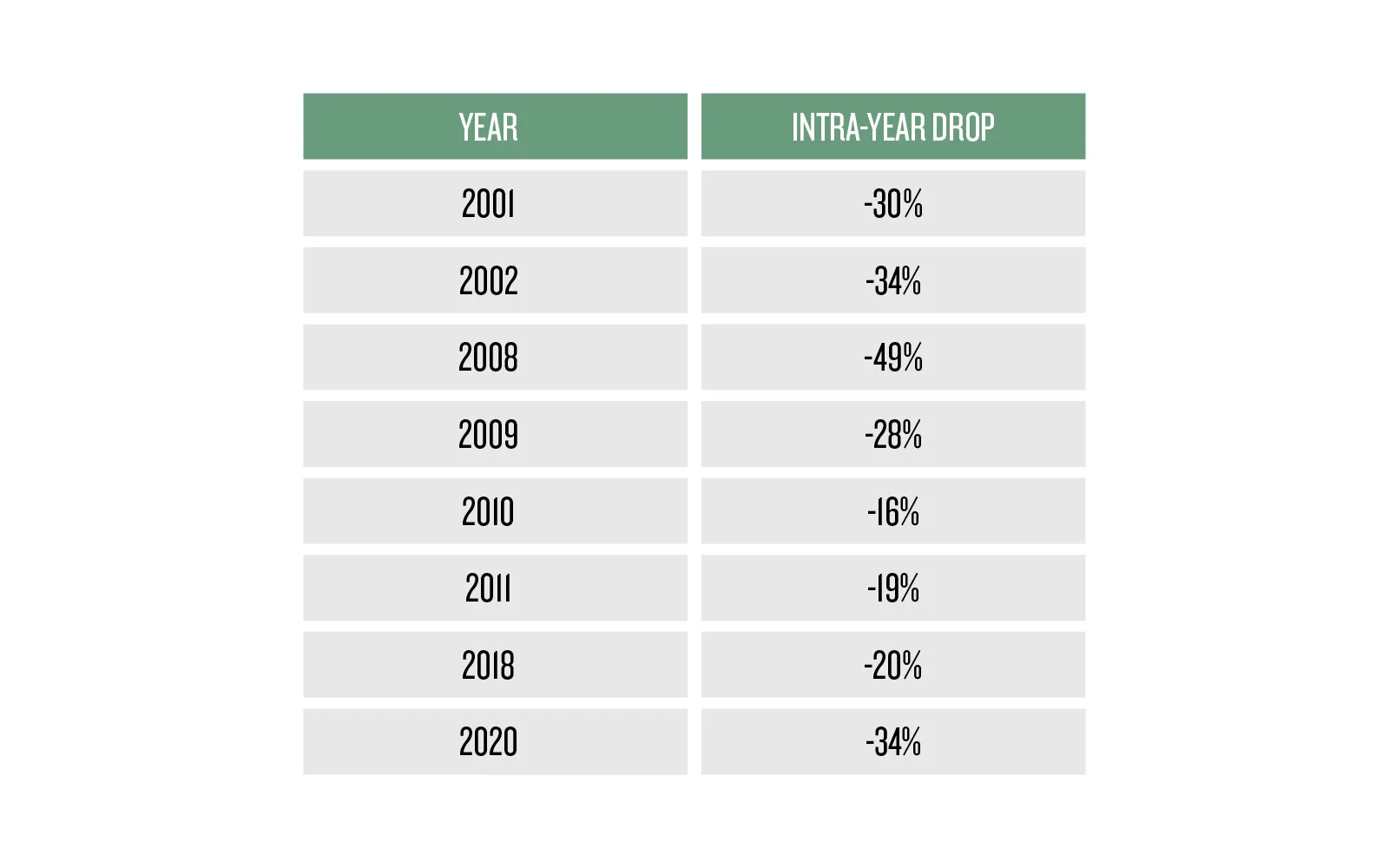
Table 2

Table 2

Looking at Table 2 (using the same 20-year time period), the S&P 500 has seen intra-year drops, that were on average nearly 14%. Investors owning just the S&P 500 would have had to hold tight over those 20 years to achieve the 6.1% return, which is easier said than done. To be sure, there is so much that goes into selecting an allocation for a portfolio. But given the times we are in, I thought it would be useful to lay out a framework for successful investing.

  1. Diversify — In my nearly 24 years of advising clients, I have seen just a few that have been 100% invested in equities. Since 1950, the average all-stock portfolio return was a little over 11%. Interestingly, a 50% stock and 50% bond portfolio for that same period yielded just under 9%. Although an investor may not have the temperament for an all-stock portfolio experience (because of the volatility described in Table 2), they can still save and invest. Through a balanced portfolio, investors can experience a fraction of the expected volatility while still achieving solid returns.

  2. Plan — It baffles me that so many investors focus on the return of the stock market. From my point of view, the only number that should matter is the return an investor needs to achieve their stated goals. Recently, we ran planning calculations for a client that needed 5.5% returns to make all of her financial goals come to fruition. Since working with Human Investing, she has achieved a 6% net return, allowing her to achieve all of her goals. Investors are best off spending time developing a plan and then building a diversified portfolio to achieve those plans. 

  3. Stay in the market — Since your financial plan serves as your road map to achieve your financial goals, it is imperative to stick to the plan. Following the plan means staying invested even when the world appears to be falling apart. But, what if you decide not to follow the plan and get out of the market? It may not be so much about the getting out of the market but about getting back in. Table three describes the negative impact of market timing. Although market timing can be costly, the greater challenge may be the decision on when to get back into the market.

  4. Investing is forever — Successful investors have a forever time frame they measure in a lifetime, not a day. The accelerating adoption of day trading, market timing, and other gambling-like tendencies go against everything I have ever read and learned about successful investing. Take, for example, Warren Buffett, whom many consider the greatest investor of our generation. He has amassed 95% of his wealth after the age of 65. Although I would place Buffett near the top of the list as the greatest investor of our generation, a key contributor to his wealth accumulation has been the length of time he has spent investing. This is a crucial lesson for those who look to get rich quickly and bypass the hard work of saving and investing over a lifetime.

Table 3

Table 3


Related Articles

Equity Returns Are in Your Favor: The Positives Outweigh the Negatives
 
michal-parzuchowski-GikVY_KS9vQ-unsplash (1).jpg

“Stocks are too risky for me.”

“You shouldn’t invest anything in stocks unless you’re prepared to lose all of it.”

“Investing is just another form of gambling.”

I have heard these concerns and many other reasons why people are nervous about investing, particularly in stocks. The ups and downs of the stock market can be difficult to stomach. This year, we saw one of the fastest drops in history as COVID-19 hit the world. The S&P 500 was down just over 30% from the beginning of 2020. Then stocks rallied back. At the end of July, the S&P 500 was positive for the year 2020. This is a wild ride no matter how you look at it.

The fear of short-term losses in investing is referred to as “myopic loss aversion”. The idea is that the fear of short-term losses scares investors away from riskier assets like stocks. As such, investors tend to invest more conservatively than they should, resulting in lower long-term returns.

Long-term stocks are a wonderful tool to grow your assets above the rate of inflation. Growing your savings and spending power over time is attractive, and for many it is essential to achieve their financial goals. The volatility of stocks along the way? No one looks forward to that. 

How risky are stocks in any given year?

If we look at historical returns for the S&P 500, a curious picture emerges:

s&p 500.jpg

Since 1937, the S&P 500 has had a positive return in 63/83 years, or 76% of the time. For reference, that is a solid “C” and a passing grade in any class I have taken.

For example, pretend you put $100 in the stock market on January 1 every year. In years with a positive return (76% of the time), on average you would see that $100 grow by 19.61% to $119.61. In years with a negative return (24% of the time), you would see that $100 shrink by an average of -12.19% to $87.81. Long-term, the odds are in your favor to grow your assets.

Invest with a Stable Foundation

There are certainly risks to owning stocks. It is important to ensure you have an emergency fund  to cover unexpected job loss or life expenses. It is also important to determine how much risk you can handle, both financially & emotionally, so you are not tempted to panic and sell when you see your account balance go down. A financial plan may be helpful to illustrate the dangers of investing too conservatively or too aggressively and may help to determine the risk that makes best sense for you.

If you need help understanding the risks and benefits of investing in equities, please contact our team at Human Investing. 


Related Articles

Financial Literacy Starts Young: Knowledge that Pays
 

Demand for better financial literacy is going up

Financial Literacy is the understanding of financial concepts which guides good money decisions in everyday life.

The backdrop of personal finance is having a structure for how to act. We usually refer to this as a financial plan. A financial plan helps to allocate money, a limited resource (for most of us), to unlimited alternatives.

Financial literacy can help parents make a difference

The United States is the largest economy in the world however, Standard and Poor’s Global Financial Literacy Survey reveals that it is the 14th in the world in Financial Literacy at approximately 57%.

By age 7, most children begin to grasp that money can be exchanged for goods and represent value. For example, understanding that 5 pennies equals 1 nickel, as a University of Cambridge research on “Habit Formation and Learning in Young Children” discovered.  Starting at age 7 or 2nd grade, a child is ready for more instruction and guidance around money concepts. In the same way that children learn language from their parents, they can and do learn money habits from their parents but need exposure and  instructive conversations. Moreover, children need the opportunity to practice with money, or forms of money, that have different representations of value.

Financial literacy can lead to responsible decision making

Parents have the ultimate authority and responsibility to begin educating on financial concepts from a young age. Parents should be aware not to rely on the education system to teach the basics or complexities of personal finance, as it is not required to graduate in many states (ex: Oregon).

To help empower parents with the knowledge and tools to provide a great foundation for personal finance, let us refresh ourselves of the basics of what children can learn and apply early in their formation. Always remember to keep it simple.

Start with an approachable framework

The four basic functions for allocating money is to Spend, Save, Invest, or Give. A guideline to start with is a 30/70 rule: save, give and invest 30% while spending the remaining 70%. To create a basic guideline for our kids (and possibly even ourselves), let’s break each of these functions down.

The heart of giving

Let’s start with giving, since many of us have experienced that if it is not given up front, it may not be given at all. This is important in establishing an altruistic worldview (selfless concern for the wellbeing of others) but also in teaching an abundance mindset (always more to go around) as opposed to a scarcity mindset (only so much and never enough). Giving can immensely impact a child’s desire to be a force for good and help others, which is the foundation for business. When banking a dollar per week from allowance, even with this small amount, it can be a great place to start the heart-healthy habit. Ask your child what they care about and who they would like to help with their giving, it may surprise you.

The necessity of saving

A similar principle will prove necessary for saving. It is much easier to set aside some money prior to spending to ensure you will have something left over when needed. Having adequate savings can keep you from being subject to predatory lending or missing out on an opportunity. It is equally important to help kids understand that saving is not the same as investing. It is important to have money working for you, not just set aside and available to you.

The value of investing

The importance of investing is compounding interest and seeing your hard-earned dollars multiply for you in a way that seems effortless but requires patience and self-control.

Setting money aside to help a child invest in a company like Disney or Nike, something they can tangibly see and enjoy, is a great learning lesson. This could be done through your taxable investment account or in their own UTMA (child’s investing account).

If the former idea is too involved or the money is not available for buying actual shares of companies, consider offering your child a “matching program” when they invest in the “Parent Company”. In the same way, consider offering your child interest (growth) for leaving their savings with you. They may need a greater incentive to understand the concept and value of having their money grow. Based on the child’s age, show them a toy that costs $1 and a toy that costs $10. They could spend their $1 weekly allowance collecting numerous low cost and low value toys, or they could save and potentially even grow their dollars to achieve a valuable toy more quickly. This would help provide the incentive to invest those dollars rather than spend them or even save them.

Lastly, teach the rule of 72. An investment that grows 7% annually will double in just over 10 years (72/7=10.2). An investment that grows by 10% annually will double in just over 7 years (72/10=7.2).

The discipline of spending

A great place to start is needs and wants. How much should be allocated to needs and what is left for wants. A rule of thumb is 50% for needs and 20% for wants. Without a credit card line, this is much easier to do when working on a cash basis. Until kids are old enough to have expenses like cell phone, auto insurance, gas, it will be difficult to break out needs versus wants. Until then, spending will be all one category at 70%. Once the child is a high schooler, they will experience more reasoning between needs and wants. What is left over is available for “fun money”.

It will be important to discuss the topic of credit versus debit as credit cards are a form of debt and borrowing from an institution will have numerous negative effects on saving and investing.

Another concept to teach when considering spending is discounts and coupons. When paying less for a specific item, you have more left over for other items or for saving, investing, or giving. One of the best places to teach this is looking at a specific product at the grocery store (candy bars!) and comparing prices, those on sale and those that are not and the impact of spending less to keep more.

The compounding benefits of financial literacy

Financial literacy, like investing, has compounding benefits especially when starting young. It is invaluable to model and have conversations around money with your children. No need for perfection, but the goal is to make progress and provide opportunities to learn.

This article was inspired from a presentation by Mac Gardner, CFP®, author of “The Four Money Bears”.


Related Articles

New Standards Set by the SEC on Transparency and Conduct for all Advisors
oliver-schwendener-uOGG7PerNf4-unsplash2.jpg

Human Investing is celebrating. Why? We have good news for you. While we’ve always been transparent at Human Investing, the rest of the industry is now required to catch up.

A new rule took effect on June 30th, designed to help provide investors with a transparent look at their investment professionals.

The U.S. Security and Exchange Commission (SEC) enacted the Regulation Best Interest rule which requires all Advisors and Brokers to provide their retail clients with Form CRS (an acronym for Client Relationship Summary).

Our firm has been promoting transparency with our clients for a long time. As a fiduciary, that’s what we stand for. We have experienced transparency leads to greater trust and better results with our clients and within our team. We are now excited to see that the rest of the industry is required to do the same. If you are working with an advisor, or plan to work with an advisor, this impacts news for you.  

The intent of the Form CRS is to address the first PILLAR of the SEC’s three-part mission:

  1. Protect investors 

  2. Maintain fair, orderly, and efficient markets 

  3. Facilitate capital formation 

Regulation Best Interest and Form CRS were created with the intent to help investors protect themselves. Form CRS accomplishes this by requiring advisors to communicate information that an investor should know (e.g. conflicts of interest and how your advisor gets paid) in a clear standardized format. This new rule isn’t a panacea for all industry ills, however, the transparency provided by Form CRS will help investors better educate and protect themselves.   

We also hope that transparency will affect wide change in our industry for the benefit of the investor. The impact of transparency we hope for is described well in Ray Dalio's book Principles.  

"Radical transparency fosters goodness in so many ways for the same reasons that bad things are more likely to take place behind closed doors." - Ray Dalio.  

So, what exactly will you be able to learn about your advisor via Form CRS? 

  • The types of services a firm offers — are there services they offer that you aren't receiving?

  • The fees and costs you will have to pay for those services — this is especially important because there are many different fee structures

  • Conflicts of interest a broker or adviser may have — an estimated $17 billion is spent annually on conflicted advice for retirement savings in the US

  • The required standard of conduct associated with the services a firm offers 

  • Whether a firm and its financial professionals have reportable legal or disciplinary history

  • Key questions to ask your financial professional

Want to learn about your financial advisor? Here is a link to the SEC's search engine of Form CRS - Form CRS Search Engine. See Human Investing’s Form CRS here.

If you have a question about Form CRS or you are interested in having a clear, transparent conversation about your financial plan, please contact us at Human Investing.  We're here to help! 


Sources:

www.investor.gov

https://www.sec.gov/Article/whatwedo.html

https://obamawhitehouse.archives.gov/blog/2015/02/23/effects-conflicted-investment-advice-retirement-savings


How to Thoughtfully Finance a Car or any Big Ticket Purchase
 
austin-neill-fLHjTTLURYg-unsplash.jpg

It’s hard to let go of your old car. You know which car I’m talking about. The car with the window taped shut because it doesn’t roll down properly. The car with three paint jobs—each a different shade of green. The car that gets shaky after you reach 65 mph, because it was a hand-me-down from your grandma, who’s max freeway speed is 50 mph. It’s been with you through it all, but when car dealerships start advertising 0% financing and cash-back deals, you might feel yourself loosening your grip.  

Before we dig in, it’s important to acknowledge that even though good deals are currently out there, you may not need an upgrade. And that’s okay! Own your steady, functional car, and avoid instant gratification. However, sometimes things do happen that require an upgrade. Your tape job suddenly malfunctions, and your car window won’t roll up in mid-January. Or your car starts shaking at 50mph on your morning commute instead of 65mph.

When planning for a big expense, whether it’s a car or another large purchase you plan to finance, it’s best to create savings goals. But because life is both expensive and unpredictable, this post aims to discuss ways to finance a large purchase in a smart and efficient way. Here’s your list of action-items:

FOCUS ON WHAT YOU ACTUALLY need

Create a list of your needs (not your wants), and then research your options. If you need a car, what kind of car do you need? Something that can haul large objects, or carry the tiny humans safely? Used or new? Find the total cost of the car that can sufficiently meet all your needs. Avoid any options that may push you outside of your budget. Basically, don’t buy more car than you need.

Decide how to finance the purchase 

If you cannot purchase the expense in full, you have two financing options: (1) a lease or (2) a loan.  

Know that when assessing the total cost of the car, it’s important to leave room for the expense to finance the car through a loan.

  1. Lease: When you lease a car, you are paying monthly to use the car. Because this finance option doesn’t lead to car ownership, monthly payments for leases are typically lower than loan payments. However, you will not be able to ever own the car or “pay it off.” Because of this, leases will never be profitable and are best saved for professional purposes if necessary.  

  2. Loan: When you borrow an auto loan, you are paying monthly to eventually own the car. There are many loan options depending on your budget, credit score, and timeline. Most loans will have an annual percentage rate (APR). That is, the interest rate you pay on the loan. The APR will vary based on the duration of the loan, your credit score, and where you borrow from. Make sure you shop around to find the best loan that meets your needs. In short, try and find a loan with a low APR and pay it off as quickly as you can. Click here to view Rivermark’s auto loan options.

Calculate the monthly payment

In order to budget for your new expense, you need to know the amount of the monthly payment. Let’s say you want a 2020 Subaru Forester because let’s be real, if you’re a true Oregonian, you’ve thought about getting a Subaru at least once. Using data from their website, here’s the breakdown:  

Find the cost of the car: $24,495 

Pick a Finance term: 48 months

Know the APR based on your credit score: 4.19% 

Calculate the monthly cost of the car, including the APR: 

Car Calculations (2).png

Ta-dah! Your monthly car payment is estimated to be around $700, making the estimated total cost of the car $33,600.  

Let’s take a moment to catch our breath. I know this seems stressful, but don’t worry. Make sure you are taking care of your credit score and budgeting for the expense. If you take the appropriate and smart steps, you’ll be okay!  

Simulate the payment INTO A MONTHLY BUDGET

Before deciding to finance the car, take three months to see if the monthly payment fits in your budget. Whether it be through automatic transfers or manually setting money aside, try not to house the simulated monthly payment in an account used for spending purposes. If you don’t have a budget, click here for resources to get started. 

This practice will allow you to visualize how your car payment can fit into your budget. You may need to re-allocate dollars in your budget, or you might find you have more wiggle room than you initially thought!  

What are you waiting for? Get the car!

You earned this! You took the smart and appropriate steps to finance your car, so make it happen and create new memories. We are rooting for you.  


Related Articles