Posts in Retirement Essentials
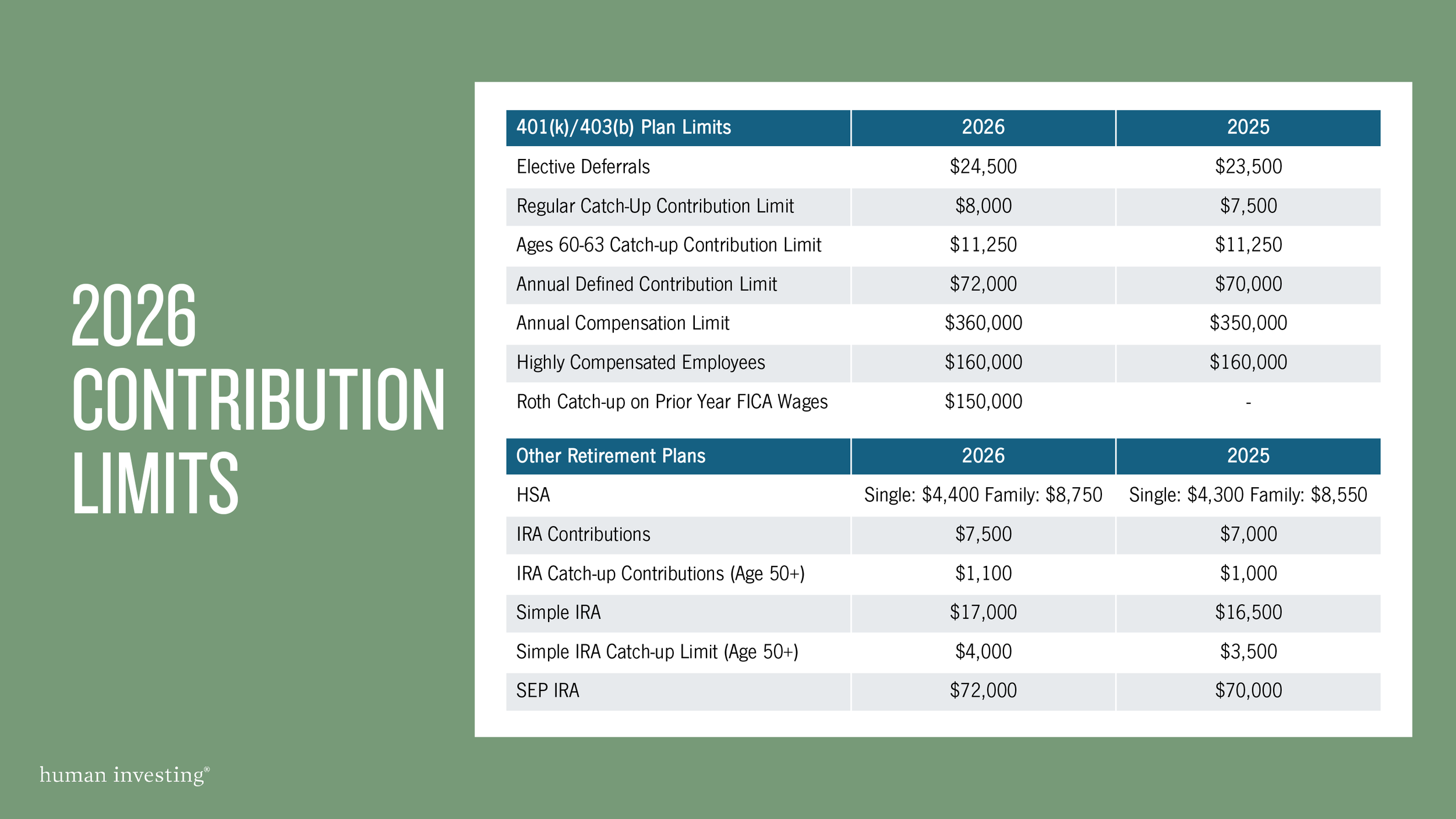
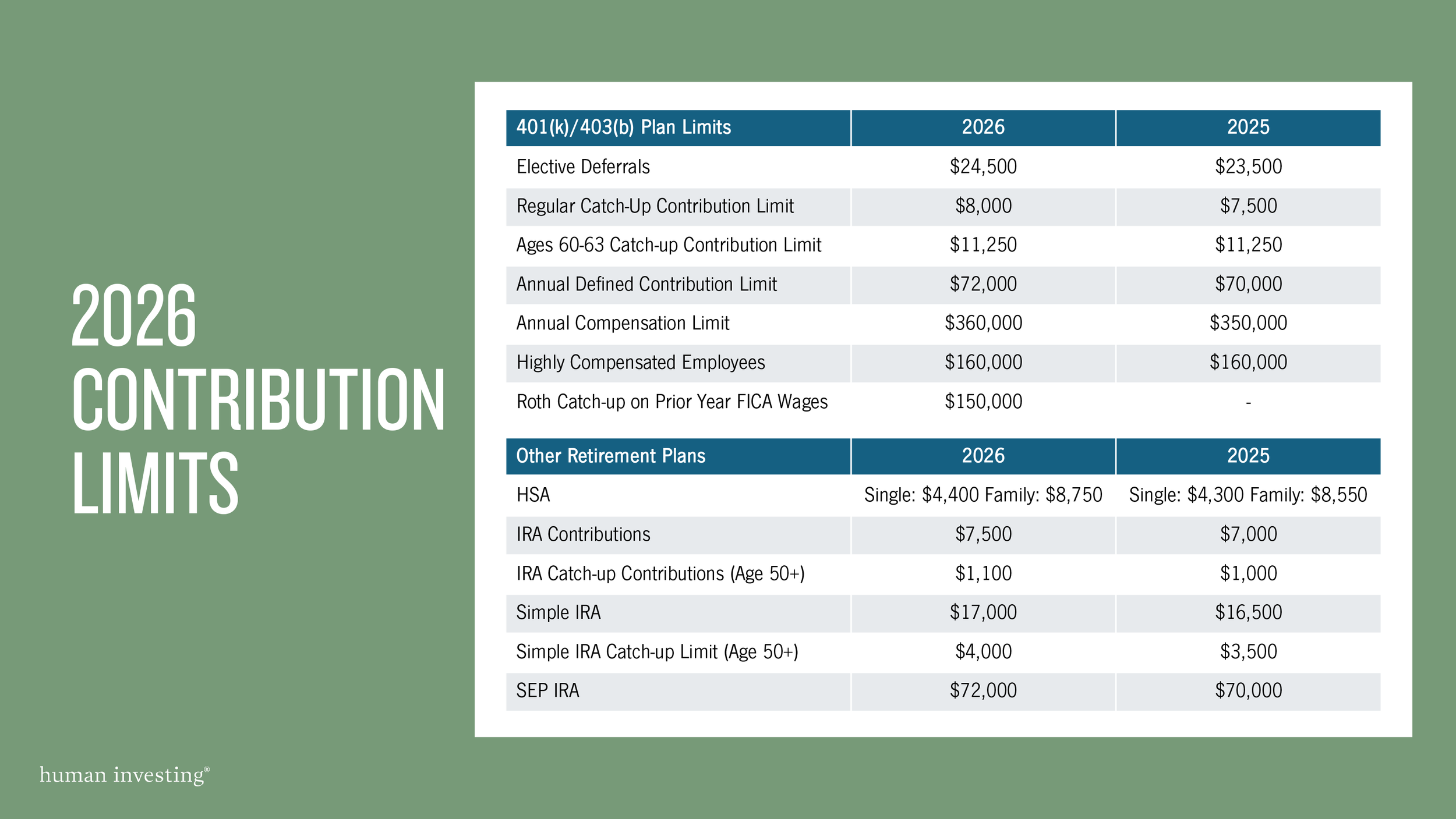
The IRS has Increased Contribution Limits for 2026
 

There is more good news for retirement accounts this year. The IRS has released the updated contribution limits for 2026, and several of the adjustments will allow investors to save even more. As you can see below, these new limits continue the trend of expanding opportunities for retirement savers.

Last year, we highlighted the new SECURE 2.0 rule introducing a higher catch-up contribution for employees aged 60, 61, 62 and 63. For 2026, that enhanced “super” catch-up window remains in place, giving late-career savers another year to take advantage of the increased limit.

How do these changes impact your savings in the upcoming year? Are there any changes you should be making? Schedule a time to meet one-on-one with our team. We look forward to working with you in 2026!


Related Articles

Why an IRA Makes More Sense in Retirement Than Your 401(k)
 
bahador-z6qLnIF1zl8-unsplash.jpg

401(k) plans are powerful tools individuals can use to save and invest for retirement. I would argue that with high individual contribution limits, tax advantages, and employer contributions, a 401(k) is the best tool to save for retirement. In fact, we love 401(k)’s so much as a savings tool we wrote the book on it - Becoming a 401(k) Millionaire (actually Peter Fisher our CEO did).

While 401(k)'s have helped answer the question "How to save for retirement?", they do not answer "How to turn retirement savings into retirement income?". That’s where Individual Retirement Accounts (IRAs) enter the picture. IRAs provide flexibility in retirement that towers above 401(k) plans in three key areas: investment selection, distribution strategy (taking money out), and tax efficiency.

Building an Investment strategy for retirement

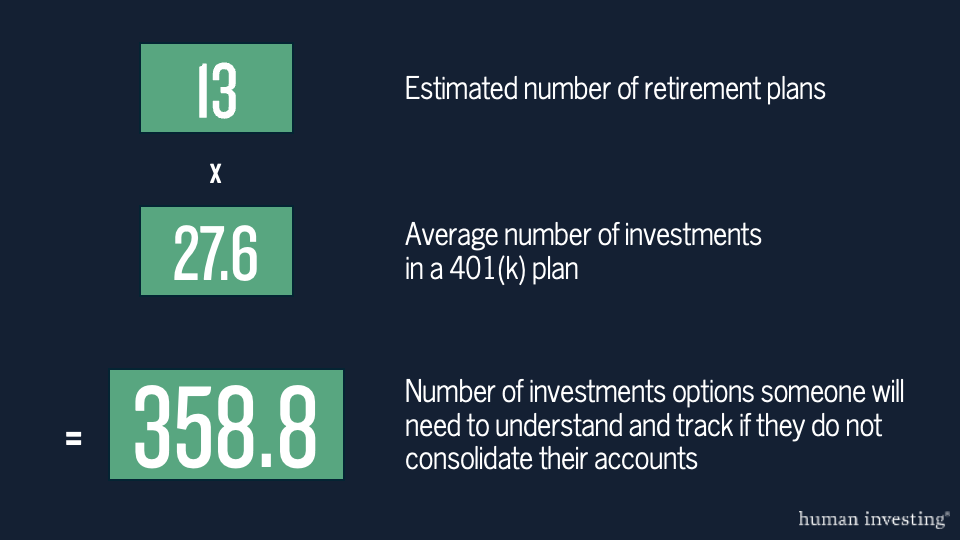
Utilizing investment options that align with your retirement goals and needs is important for a successful financial plan. According to Vanguard, the average 401k plan has 27.6 investment options for employees to choose from¹. This is a positive for 401k investors to avoid choice overload, but not always optimal for distributions. Compared to a 401(k), IRAs provide for much greater flexibility on the types of investment options available. The flexibility of investment options in an IRA can help to build a customized investment strategy to align with someone's retirement needs/goals. The shortlist of investments an IRA can hold are Individual Stocks, Mutual Funds, Exchange Traded Funds (ETFs), Bonds, US Treasuries, CDs, and Annuities.

Strategizing Distributions

Saving money in a retirement account is not a means to an end. There is a purpose to it, and for most the goal is retirement. We put money into a retirement account so that we may withdraw it someday when we are no longer receiving a paycheck. When building an efficient distribution strategy, flexibility is key.

While most 401(k) plans can administer distributions in retirement, there is often less control of how the money comes out of your account. As an example, let's assume you have two different investment options inside of your 401(k) account. One investment is geared for growth and the other for conservation (short-term needs).

With a 401(k), there is less flexibility than an IRA when choosing which investment you can choose to sell to take a cash distribution. Let’s say 50% of your 401(k) is in your growth investment and the other 50% is in your conservative. For every $1,000 you take out of your 401k, $500 will come from the sale of your Growth Investment and the other $500 from your conservative investment.

What happens when your growth investment loses 10-20% of its value due to normal market volatility? When you need your next distribution, your 401k will sell both the conservative investment as well as the growth investment (whose value has just decreased). By taking money out of a 401(k) during normal market volatility, you are violating the first rule of investing: buy low, sell high.

If 401(k) distributions are an entrée, an IRA is an a la carte. With an IRA you can choose which investment to sell to fund your distribution needs. If your growth investment has lost some of its value, you don't have to sell. You can use more of your conservative investment while you wait for the market to rebound. While in a good market where your growth investment increases in value by 10-20%, an IRA gives you the flexibility to sell high on your growth investment.

Tax efficiency

If not taken into consideration, taxes can squander someone's retirement account balance. It is important to withhold and pay the correct amount as you take withdrawals from your tax-deferred retirement account. Here is how 401(k)’s and IRA’s differ with regards to tax withholding:

For 401(k) distributions, the IRS requires a mandatory withholding of 20% for Federal Income Tax purposes. The account holder can request more to be withheld federally, but not less. The account holder can also withhold applicable state income tax. For example, say the account holder needs to withdraw $1,000 (net) from their 401(k). The plan provider will make sure there is 20% withheld for federal tax purposes. For every $1,000 needed, the account holder will withdraw $1,250 (The calculation: $1,000 ÷ 0.8 = $1,250). This mandatory withholding can be very convenient. However, what happens if taxes owed in retirement are less than 20%? The extra withholding will likely come back to you as a return once you file taxes. Unfortunately, there may be an opportunity cost. By withdrawing too much, the tax-deferred compounding growth on these dollars is lost.

An IRA provides flexibility to withhold (or not withhold) at a lesser amount to avoid selling unnecessary investments from a retirement account. If the federal tax owed is 11%, 11% can be withheld from the IRA. This saves the account holder 9% or $126 from being withheld, comparing to the 401k example above ($1000 ÷ 0.89 = $1,124). If this account holder withdrawals $1,000 each month, there is an additional $1,512 withheld each year. IRA’s provide a higher level of efficiency with the flexibility in tax withholdings.

Account Type Matters

Which account is right for you in retirement? Well, it depends. If you are you planning to retire earlier than age 59 ½, 401k plans offer some advantages (See "Rule of 55"). For most, however, an IRA makes sense. An IRA can provide superior flexibility to someone in retirement that cannot be matched by company-sponsored retirement plans like 401(k) plans. This is not a knock on 401(k)’s, rather a promotion of the benefits provided by an IRA. Consider the pros and cons of different account types to make sure they match up with your investment goals.

Sources

 1 The Vanguard Group, How America Saves Report - 2025.


Related Articles

When Everything Feels Risky, are U.S. Treasuries Still the Answer?


Every few years, a familiar worry resurfaces: Can we still trust U.S. Treasuries?

It’s a fair one. Fiscal deficits are rising. Government debt dominates the headlines. Political theatrics are hard to ignore. These concerns are understandable.

But this piece is not a dismissal of those worries. It aims to weigh them against the steady role Treasuries continue to play in global markets and in investors’ portfolios.

Because the key, as always, is to separate signal from noise. And noise is never in short supply.

U.S. Treasuries are often described as “risk-free.” Of course, no investment truly is, but no other assets have earned that reputation as convincingly. Their strength is structural: deep markets, global demand, and the dollar’s central role in international finance. These aren’t passing features. They’re foundational pillars of a system that continues to hold.

WE’VE BEEN HERE BEFORE

Concerns about the national debt are nothing new. In the mid-1980s, Congress passed the Gramm-Rudman-Hollings Act in response to growing fears of a looming fiscal cliff.¹

That was nearly 40 years ago.

Since then, warnings have echoed: interest rates would skyrocket, the dollar would collapse, foreign buyers would flee. But none of those predictions played out in a sustained way. Interest rates stayed low for decades. The dollar remained strong. Treasuries continued to anchor global portfolios.

THE OTHER SIDE OF THE LEDGER

Most debt conversations focus on the total amount owed, but it would be wise to consider both sides of the ledger. An equally important story is the government’s ability to repay what it owes.

The United States has a broad and resilient tax base, drawing revenue from some of the world’s most profitable corporations and wealthiest individuals. In 2024, over 94 percent of federal revenue came from income, payroll, and corporate taxes.²

That revenue base gives the government something that matters more than the size of its debt: flexibility. The capacity to raise more if needed. This is a critical ingredient in maintaining trust and stability in U.S. Treasuries.

That doesn’t make debt a non-issue. But it puts the conversation in better context.

THERE IS NO SUBSTITUTE

Some point to shifting foreign ownership of Treasuries as a sign of trouble. But the truth is, global capital needs a home that is safe, liquid, and capable of absorbing trillions in flows. There are few alternatives.

That’s why central banks, sovereign wealth funds, and even the U.S. tri-party repo market continue to rely on Treasuries. ³,⁴ It is not because of short-term politics. It is because no other asset plays the role as effectively or as consistently.

Foreign holdings may ebb and flow with trade dynamics or currency shifts. But the long-term, strategic demand? It’s still there.

HIGH DEBT DOES NOT GUARANTEE CRISIS

Japan offers an interesting counterpoint. With a debt-to-GDP ratio over 250%, more than double that of the United States.⁵,⁶ And yet, its financial system remains stable, and interest rates are close to zero.

This is not to suggest that debt is irrelevant, but it serves as a useful reminder that high debt levels, on their own, do not lead to crisis. The surrounding structure, including credibility, strong institutions, and consistent demand, matters just as much, if not more.

Could Treasuries someday lose their special status? In theory, yes. Anything is possible. But if that day ever comes, it will likely coincide with a much broader breakdown in global order. In that kind of environment, the safety of any asset would be in doubt.

That’s not a prediction. It’s simply an observation about the scale of disruption required to unseat the U.S. Treasury market.

A WARNING FROM ‘THE BOND KING’

Not everyone views Treasuries as the unshakable anchor they once were. Even some of the most seasoned investors are questioning the long-term role of U.S. Treasuries.

Jeffrey Gundlach, CEO of DoubleLine Capital and one of the most influential fixed income investors of the past two decades, has voiced serious concerns. In a June 2025 interview, he offered this warning:

“There is an awareness that the long-term Treasury bond is not a legitimate flight-to-quality asset.”⁷

He points to shifting dynamics: the dollar falling during selloffs, long bond yields rising after rate cuts, and growing concern over rising interest costs. As low-yield bonds mature, they are being replaced by debt with much higher yields. According to Gundlach:

“The interest expense for the United States is untenable if we continue running this budget deficit and continue to have sticky interest rates.”

Gundlach raises legitimate questions. But even he stops short of calling Treasuries broken. His concern is about strain, not collapse. The system is being tested, not undone.

While the pressures are real, rising interest rates and persistent deficits, they are not set in stone. Policy can change. Priorities can shift. The system still has tools it can use.

And this is where perspective matters.

Markets are noisy. Bad news sells. Loud warnings travel further than quiet resilience. But alarm does not erase the quiet strength of systems that continue to function.

Even Gundlach points to stress, not failure.

Which brings us back to what still works.

STILL DOING THEIR JOB

Treasuries aren’t immune to worry, however they continue to serve their purpose. They provide liquidity, offer stability, and act as a counterbalance in times of uncertainty.

We’re seeing that play out again in real time. Renewed tensions with Iran have reminded investors what uncertainty feels like. Once more, yields have dropped and the dollar has strengthened. These are clear signs of a flight to safety.

Even amid rising deficits and political noise, Treasuries continue doing what they’ve always done: deliver reliability in a world that often falls short.

References:

  1. U.S. Congress. Balanced Budget and Emergency Deficit Control Act of 1985 (Gramm-Rudman-Hollings Act). Public Law 99–177, 99th Congress, December 12, 1985.

  2. U.S. Department of the Treasury. “Government Revenue.” Fiscal Data – America’s Finance Guide.Accessed June 20, 2025.

  3. Board of Governors of the Federal Reserve System (U.S.). “Rest of the World; Treasury Securities Held by Foreign Official Institutions; Asset, Level [BOGZ1FL263061130Q].” FRED, Federal Reserve Bank of St. Louis. Accessed June 20, 2025.

  4. Federal Reserve Bank of New York. “Tri-Party Repo Data Visualization.” Federal Reserve Bank of New York. Accessed June 20, 2025.

  5. U.S. Department of the Treasury. “National Debt and Debt-to-GDP Ratio.” Fiscal Data – America’s Finance Guide. Accessed June 20, 2025.

  6. World Economics. “Debt-to-GDP Ratio: Japan.” World Economics. Accessed June 20, 2025.

  7. Jeffrey Gundlach, interview with Bloomberg, “Gundlach on Treasuries, Gold, Fed, AI, Private Credit, Trump,” June 11, 2025.



Disclosure: Advisory services offered through Human Investing, an SEC registered investment adviser. This material is for informational and educational purposes only and is not intended as investment advice, an offer, or a solicitation to buy or sell any securities. Past performance is not indicative of future results. All investments involve risk, including the potential loss of principal. Any third-party opinions or sources cited are believed to be reliable but are not guaranteed for accuracy or completeness. Please consult your financial professional before making any investment decisions.

 

Related Articles

The IRS Has Increased Contribution Limits for 2022
 

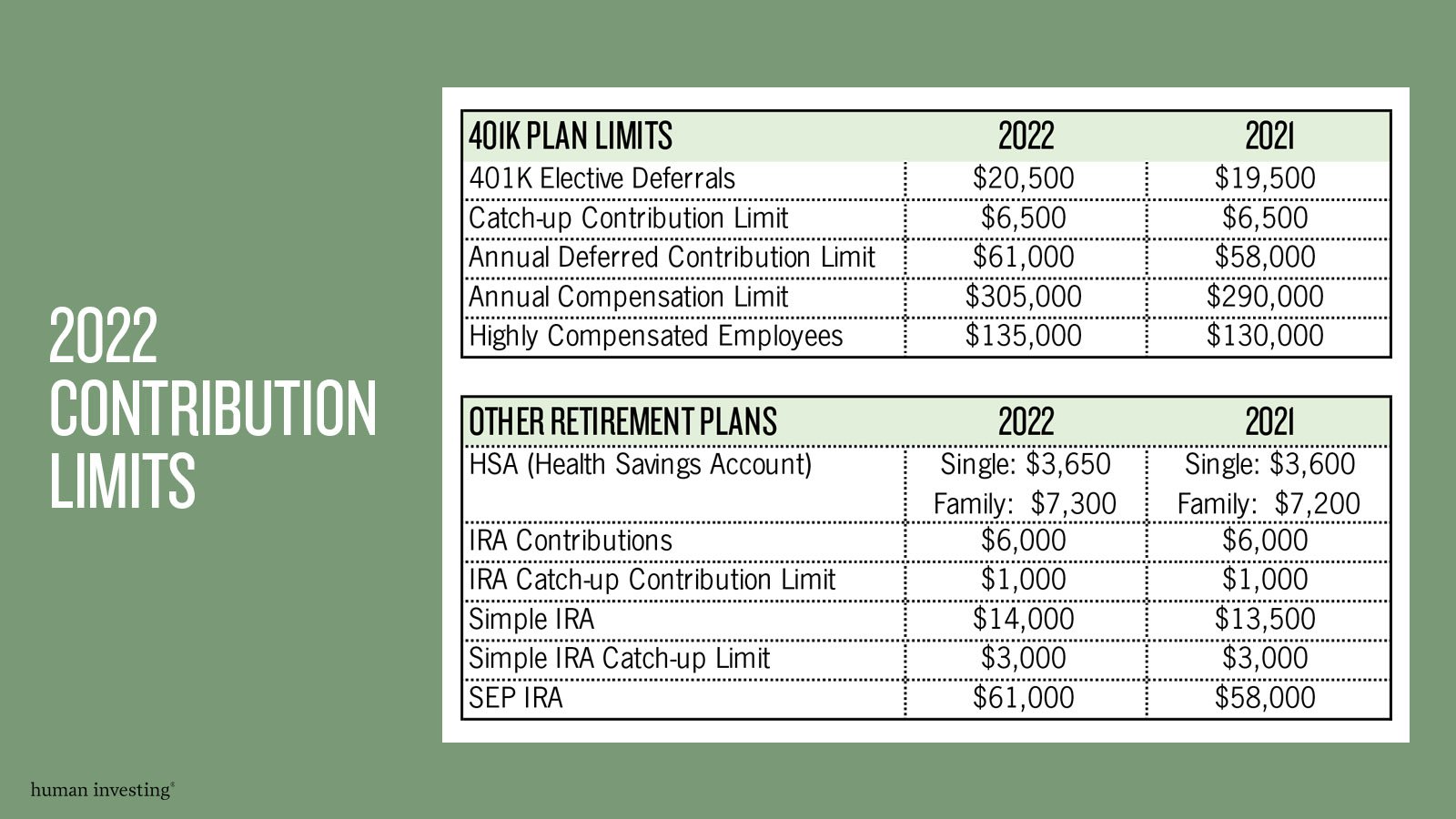
There is good news for retirement accounts! The IRS has increased the contribution limits for the upcoming year. As you can see below, an important change for 2022 is that 401(k) elective deferrals increased from $19,500 to $20,500. That’s not all! Please see below for the applicable updates for the coming year:

How do these changes impact your savings in the upcoming year? Are there any changes you should be making? Use this link to schedule a time to meet one-on-one with our team. We look forward to working with you in 2022!


Related Articles

What Individual Companies are Inside my Target Retirement Funds?
 

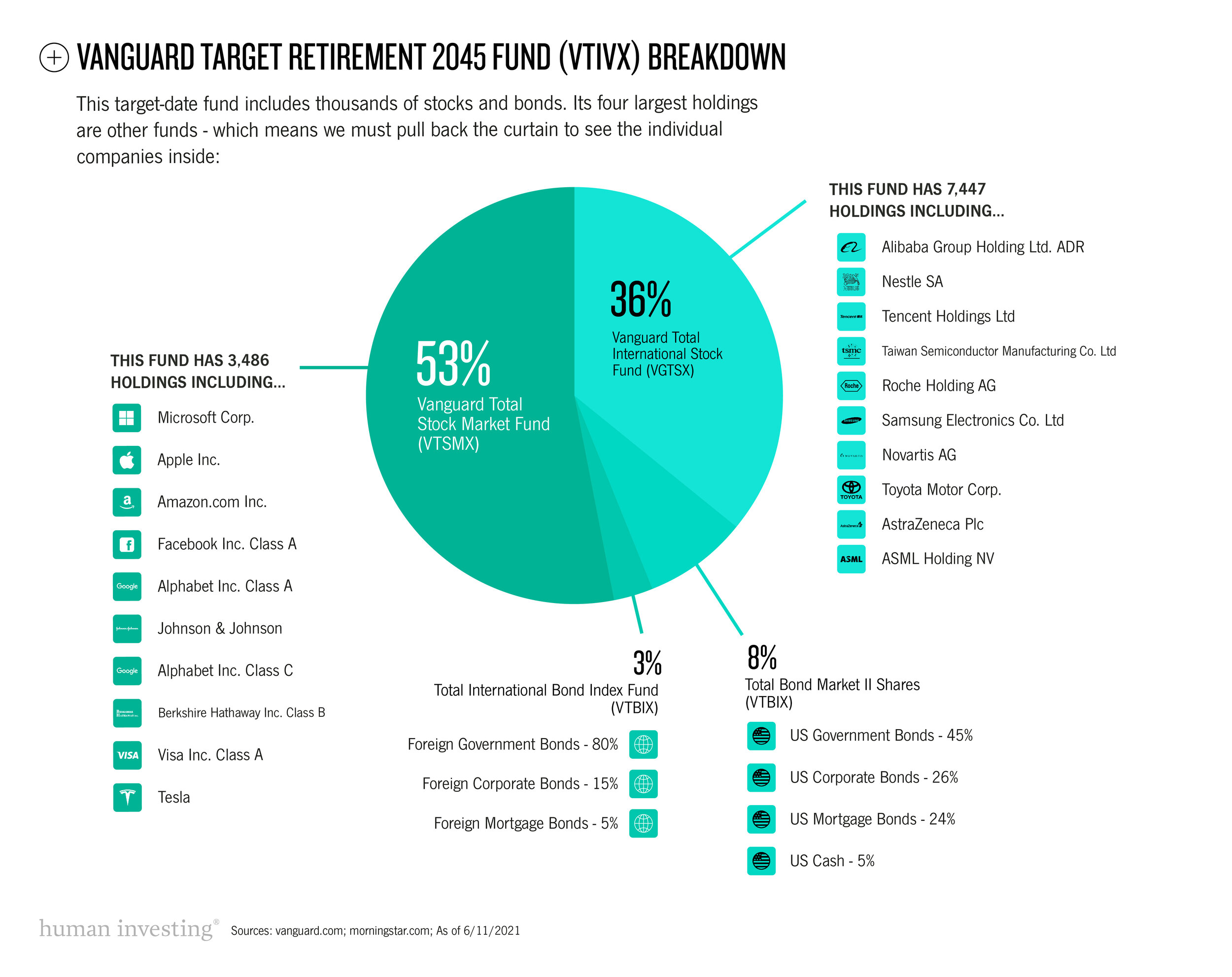
When you pull back the curtain to see what is inside a target-date fund, there are thousands of individual companies. To help visualize some of the top holdings, we created a graph that illustrates the Vanguard Target Retirement 2045 Fund (VTIVX).

Vanguard Index v2 - 2021-01.jpg

Over time, target-date funds adjust their holdings and asset allocation (stocks/bonds/cash) based on your retirement age. But for now, we hope this snapshot clarifies some of the largest companies inside the Vanguard Target Retirement 2045 Fund. 


How Did My 401K Account Handle the 2020 Uncertainties?
 

In March, we were inundated with updates about the coronavirus and the unknown ramifications to follow. In the same month that the NBA was postponed, children were sent home from school, toilet paper fled the grocery store shelves, the US stock market had three of the worst days in US history.

Behind the scenes

Unlike the year 2020, your 401(k) account is routine and emotionless. If there is no user interference (yes, that is you), your account will continue to invest in the stock market every paycheck. A 401(k) account can help alleviate market-timing decisions by adopting an investment strategy called dollar-cost averaging. Instead of waking up in the morning and deciding “is today a good day to buy some stock?”, your 401(k) systematically makes those timing decisions for you.

To review the ease of these timing decisions, I wanted to show investors what happened if you made a $50.00 contribution to your 401(k) account every paycheck during 2020. In this scenario, we assume employees were paid every two-weeks (starting on January 3, 2020) and invested in the Vanguard Target Retirement 2055 (VVFVX) fund.

Slowly building a foundation

These dollars represent the trading value of the Vanguard Target Retirement 2055 (VVFVX) on specific days. In this exercise, the lowest trading price was $31.16 on March 20th, and the highest trading price was $48.55 on November 27th.

vffvx_net_asset_value.jpg
vffvx_net_asset_value-2.jpg

Thank you, automation.

As you can see, the best time to invest in the stock market this year (March) was also arguably the most uncertain and scary time to be an individual investor. From a February 21st paycheck to a March 6th paycheck, the price of this target date fund dropped 9%. From a March 6th paycheck to a March 20th paycheck, the price dropped 21%.

When prices were falling, your 401(k) account bought shares at a lower price without panicking, consulting the news, or making impulsive decisions. For that reason, we should give 401(k) accounts a standing ovation for being a reliable, unemotional investment vehicle this year.

Let 2020 be a reminder that if your boxes are checked, outsourcing and automating your account is one way to ease your emotions.


Related Articles

2021 Contribution Limits
 

A lot has changed in 2020, but contributions limits will remain relatively consistent going forward. The IRS recently announced the 2021 contribution limits. The most notable change specific to retirement plans is that the annual deferred contribution limit will increase from $57,000 in 2020 to $58,000 in 2021.

Here are the applicable updates for the coming year.

2021 Contribution Limits.png

Please let us know if you have any questions. We look forward to working with you in 2021. Take good care.


Related Articles

Health Savings Accounts - The Total Trifecta
 
pexels-karolina-grabowska-4386464.jpg

Health Savings Accounts (HSA) made the roster of tax-deferred accounts. For this reason, these accounts can be a favorable component in a financial plan both today and in the future (65+ years old). HSA accounts were first introduced in 2003, and since then, their utilization among employees and employers has grown meaningfully. In order to be eligible to participate in an HSA – an employee must be covered by a High-Deductible Health Plan (HDHP) and not be enrolled in Medicare or other health coverage. Like an employer-sponsored retirement plan, a Health Savings Account offers benefits for both employees and employers. As such, their increased popularity is hardly surprising.

While there are many benefits of HSA accounts, we must also recognize that switching from a PPO plan to an HSA often results in more out-of-pocket medical expenses during the year. Yes, we agree that sounds unappealing. However, there is always more to the story.  

Benefits of HSA accounts to Employees

  • The account is portable. Contributions to HSA need not be used in the tax year they are made. Additionally, if an employee changes jobs, the account is still accessible.  

  • Health Savings Accounts do not impose income limitations. Unlike IRAs, highly compensated individuals are still eligible to participate in these tax-deferred accounts.

  • Health Savings Accounts provide a trifecta of tax savings:

    • Employee contributions are federal-tax deductible.

    • Federal tax on investment earnings is deferred until withdrawal.

    • All withdrawals (including earnings) used to pay for qualified healthcare costs are free from federal taxes regardless of when they are made.

  • Dollars contributed to an HSA are both literally and psychologically compartmentalized for medical expenses.

Benefits of HSA accounts to Employers

  • The time and money employees spend on healthcare is often more efficient with an HSA. This seems intuitive because unlike an FSA, employees have ‘skin in the game’.

  • Employer contributions to their employees’ HSA accounts are exempt from FICA taxes. In 2020, the combined FICA rate is 7.65% which is not insignificant.

  • Offering an HSA plan further diversifies the benefit offerings for their employees.

Hierarchy of Retirement Savings

For those with an employer-sponsored retirement plan and an HSA account, there is a hierarchy for where to best save one’s dollars. This hierarchy assumes the employee does not have significant debt and has also created an emergency savings fund.

  • First Priority: Take full advantage of the 401k employer match. Free money!

  • Second Priority: Maximize your HSA contributes and invest your dollars for the future.

  • Final Priority: If you have extra earnings, contribute the maximum to a 401k plan or a Roth IRA.

Here is an example scenario of the three-step hierarchy above:

  • Sophia’s employer matches 50% up to 6%. Melissa should contribute 6% to her 401k plan, and her employer will contribute 3%. Free money – check.

  • Next, Sophia should maximize her annual HSA contribution. Trifecta of tax savings – check!

  • Finally, Sophia can contribute additional funds to her 401k plan to maximize her annual contribution and/or contribute to a Roth IRA.

Withdrawal Rules

There are early withdrawal restrictions for Health Savings Accounts to ensure individuals are using their account for the intended purpose: paying for medical expenses. Specifically, HSA’s incur a 20% penalty and income tax on any amount withdrawn before age 65 that is not used for medical expenses. That said, an HSA account should be opened with the pure objective of saving and paying for inevitable health expenses throughout one’s life.

When you have your inevitable health care expenses, you can also pay out-of-pocket and keep the receipts for tracking your deductible. From a long-term growth and tax perspective, this may be advantageous if you have extra savings in your bank account.  

Investment Strategy

Most HSA accounts have a minimum cash balance required. Once you have saved the minimum cash balance, the additional dollars can be invested. The investment strategy within your HSA account will vary depending on your financial landscape, but often the investment strategy is aligned with your other retirement accounts – like a 401k or an IRA.

Prioritize your health

It is absolutely imperative to acknowledge that HSA dollars should be spent on health and wellbeing as needed. As exciting and opportunistic it is to imagine a future tax-deferred balance, health today must be prioritized. We do not work in the health sector, but at Human Investing we have a team of financial advisors who are committed to ensuring your medical costs are accounted for in a strategic manner.  


Related Articles