Posts in Retirement Planning
Four Unique advantages of Social Security
 
blog image.jpg

Social Security is something we contribute to all our working years, so why don’t we know much about it? What sets it apart from other retirement benefits? I want to briefly share some of the characteristics that make Social Security unique and helpful for retirement planning purposes.

Social Security Includes Spousal Benefits

Social Security spousal income is a benefit provided to married couples. If you have a working income that is less than 50% of your spouse’s normal retirement age benefit, a spousal benefit will be added to your Social Security income to make it equal to 50% of your spouse’s income. Even with no working income (homemaker), 50% of the spouse’s normal retirement age income will be received.

To receive this increase in income, the higher-earning spouse must start their benefits before the spousal payments begin. Check your eligibility for spousal benefits here.

Two more things to note:

  • There is no benefit to delaying spousal income after normal retirement age as it does not continue to grow.

  • If the spouse with the higher income predeceases the spouse with the lower income, the surviving spouse will receive the higher of the two incomes for the rest of their life. For example, let’s say Joe has a social security benefit of $2,800 per month, and his wife, Shirley, has a benefit of $1,400 monthly. At Joe’s death, Shirley will receive $2,800 per month rather than $1,400 per month.

Social Security income is not fully taxable

If you are Married Filing Jointly and have a combined income below $25,000 in 2021, you will not owe taxes on social security benefits. If your income is between $25,000 and $34,000 in 2021, 50% of benefits will be subject to taxation. With income over $44,000 in 2021, a maximum of 85% of benefits will be taxable. Social security income is not subject to Oregon state income tax.

Social Security Income varies based on retirement age

You can start taking social security retirement benefits at the age of 62, but if you are able, it is best to delay taking benefits until normal retirement age (typically age 66). Furthermore, delaying benefits until the age of 70 is even more advantageous, as your income will continue to increase by a certain percentage (based on birth year) until then.

Remember: If benefits are claimed before normal retirement age, half of the benefits will be withheld if income is over $18,960. Benefits will be recalculated at normal retirement age, but it is more beneficial to delay taking social security if someone is planning to work. After reaching normal retirement age, unlimited earned income will not reduce your social security income.

Social Security Income is protected from inflation

Each January the IRS/SSA increases benefits by the amount of inflation experienced over the previous year. These cost-of-living adjustments (COLA’s) are credited even when delaying benefits to a later age. The most recent cost of living adjustment was 1.3% in January 2021. The average estimates over a long period of time are 2.6% annually.

Things to note when applying for benefits:

  • Ensure you have Federal withholdings taken from your benefits, often at 12%.

  • Remember, your Medicare Part B premiums ($148.50 per check) will be deducted from your benefit if you are over age 65.

  • Apply online at www.socialsecurity.gov, by phone at (800) 772-1213, or in person at a Social Security office using the office locator. If you have any questions about social security benefits, please schedule a time to chat.

References:

www.ssa.gov

The Baby Boomer’s Guide to Social Security, Elaine Floyd, CFP®

 

Related Articles

Biden's New Tax Proposals and What They Mean For You
 

With each presidential election comes a slew of new tax proposals and changes that are sometimes difficult to decode. News outlets mix proposed and enacted laws, furthering the stress that comes with determining how they will affect your taxes.

The biggest takeaway from Biden's new tax law proposals is that those who earn under $400,000 of income per year should not expect to face an increase in taxes. In fact, they are likely to see more tax credits that will help reduce their tax liability. However, those who make above $400,000 could be significantly affected by several of the proposed tax law changes.

Below is an outline of the administration’s current proposals that may become laws in the coming tax seasons based on your yearly income.

for THOSE WHO MAKE BELOW $400,000

What’s been enacted: The Dependent Care Tax Credit.

Eligible childcare expenses increased from $3,000 to $8,000 ($6,000 to $16,000 for multiple dependents) and the maximum reimbursement rate has increased from 35% to 50% for a maximum credit of $8,000. It is refundable for the 2021 tax year. If you pay for childcare services in 2021 for children 12 and under, you can claim those expenses in tax credits up to $16,000.

blog pic 1.png

The Child Tax Credit has temporarily increased from $2,000 to $3,000 per child ages 6-17, and $3,600 per child aged 0-5 for the 2021 tax year. There will also be monthly payments made from July to December 2021. Half the total credit amount will be paid in advance with the monthly payments, while the other half will be claimed on the tax return that you will file next year. For example, if a single filer with an AGI of $60,000 had one 13-year-old child, they would receive $250 per month from July to December and $1,500 as a credit on their 2021 tax return.

blog pic 2.png

The increase (i.e., the extra $1,000 or $1,600) is gradually phased-out for joint filers with an AGI of $150,000 or more, head-of-household filers with an AGI of $112,500 or more, and all other taxpayers with an AGI of $75,000 or more. At $440,000, couples will phase out of the tax credit entirely.

What’s been proposed: First-Time Homebuyer’s Tax Credit reinstated for up to $15,000 in refundable credits.

You may not have owned a home within the last 3 years to qualify for this credit. You must make no more than 160% of the area median income, and the home’s purchase price must be no more than 110% of the area median purchase price. You could claim this credit for primary residences purchased after Dec. 31, 2020.

for Those Who Make Above $400,000

What’s been proposed: Increased income tax

Currently, the top individual income tax rate is set at 37% on earnings above $622,050 ($518,400 for those filing single). The new proposed rate is 39.6% for earnings above $400,000.

blog pic 3.png

What’s been proposed: The 6.2% Social Security payroll tax on income above $400,000.

For 2021, the maximum limit on earnings for withholding of Social Security tax is $142,800. This proposed tax law would result in the 6.2% tax continuing on earned income over $400,000 in addition to the 6.2% tax on earned income up to $142,800. The income between $142,800 and $400,000 would not be subject to this tax. For example, if $450,000 is earned, $50,000 will be taxed at 6.2% resulting in $3,100 paid in SS tax on top of original cap of $8,853.60.

blog pic 4.png

What’s been proposed: Long-term capital gains and qualified dividends be taxed at a rate of 43.4% on income above $1,000,000.

Long-term capital gains above $501,600 ($445,850 for those filing single) is currently taxed at 20%. In addition, they are proposing the elimination of the step-up in basis for transferred assets.

What’s been proposed: Restoration of the limitation on itemized deductions (ie. mortgage interest, charitable contributions, property taxes, etc.) for taxable income above $400,000.

This means your itemized deduction amount would be reduced by the lesser of 3% of AGI in excess of $400,000 or 80% of your itemized deductions. The state and local tax deduction limit of $10,000 could also be removed, allowing for additional deductions in state and local taxes paid above $10k. For example, a person has $750,000 of taxable income, and their itemized deductions total $75,000. 3% of their taxable income above $400,000 = $10,500, 80% of itemized deductions = 60,000. Since the 3% calculation is the lesser of the two, their itemized deduction amount of $75,000 is then reduced/lowered by $10,500, resulting in $64,500 of itemized deductions.

blog pic 5.png

What’s been proposed: Pass-through deductions removed for taxpayers earning more than $400,000.

For business owners of a Sole Proprietorship, Partnership, S-Corporation, and certain trusts and estates, the Section 199A pass-through deduction for qualified businesses could be up to 20%. The maximum deduction is the lesser of 20% of an owner’s QBI, or 20% of taxable income, excluding any net capital gains. If it were to pass, this deduction would no longer be available if the taxpayers net income were above $400k.

What’s been proposed: Estate and Gift Tax exemption rates for assets may be brought back to 2009 rates.

For 2021, the unified federal gift and estate tax exemption is $11.7 million per individual. The tax rate on cumulative lifetime gifts in excess of the exemption is a flat 40% (applicable to taxable amounts above $1 million made while still alive). The estate tax exemption for Married Filing Jointly (2009): $7,000,000. For those filing Single (2009): $3,500,000. The maximum gift tax rate (2009): 45%

BUSINESS AND CORPORATE TAXATION

What’s been proposed: Increased corporate income tax from 21% to 25-28%.

While this may not directly affect your taxes, it may affect any assets you have in company stocks or potential dividends depending on how the corporation decides to deal with the increase in tax.

What’s been proposed: Minimum tax on corporations with $100 million or more in book income.

Corporations would be taxed on the greater of their regular corporate income tax rate or have a 15% minimum tax imposed on them.

It is important to remember that all proposed tax law changes would need to be reviewed and enacted by Congress in order to become official tax law. All proposed law could potentially be revised or eliminated.


What Individual Companies are Inside my Target Retirement Funds?
 

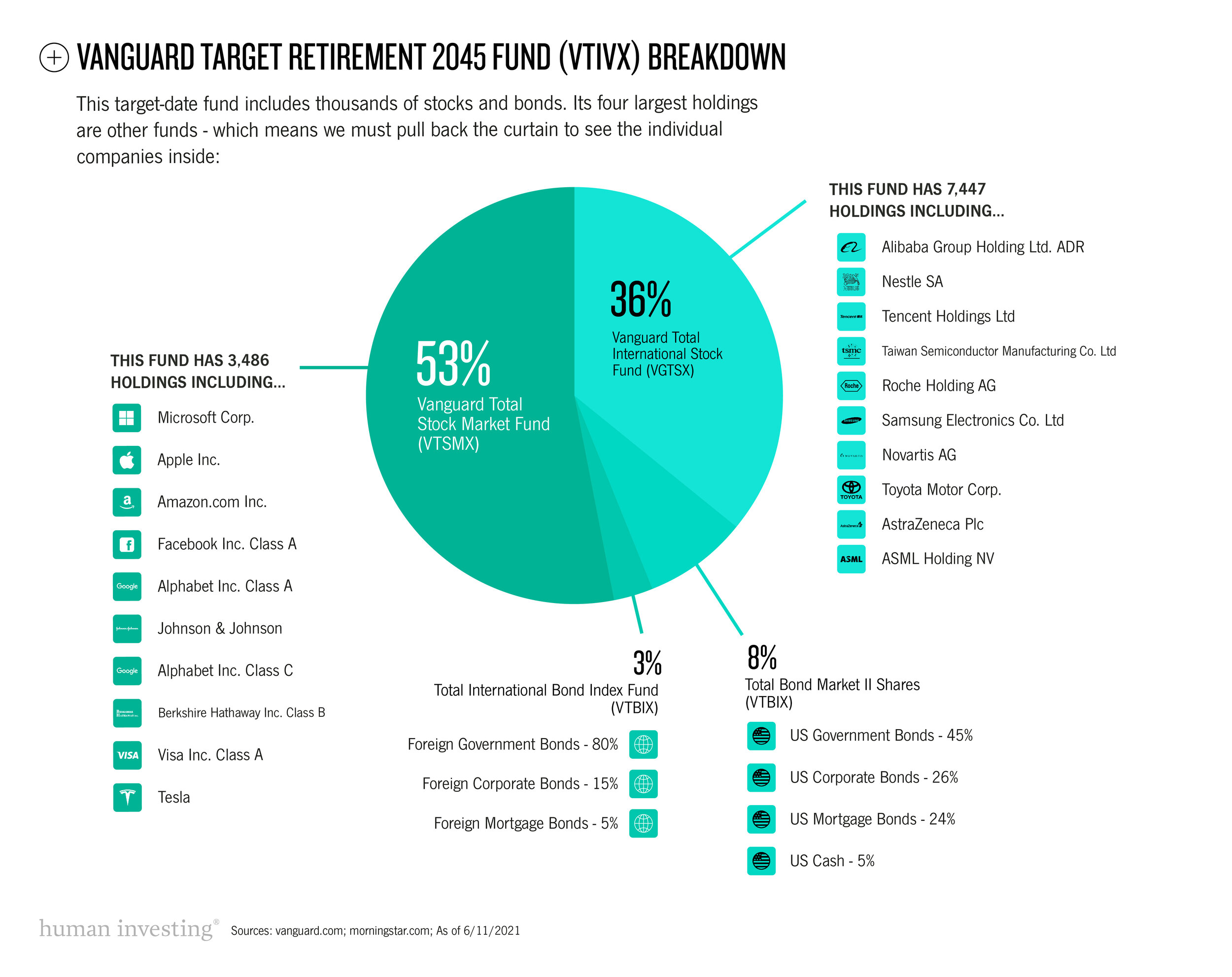
When you pull back the curtain to see what is inside a target-date fund, there are thousands of individual companies. To help visualize some of the top holdings, we created a graph that illustrates the Vanguard Target Retirement 2045 Fund (VTIVX).

Vanguard Index v2 - 2021-01.jpg

Over time, target-date funds adjust their holdings and asset allocation (stocks/bonds/cash) based on your retirement age. But for now, we hope this snapshot clarifies some of the largest companies inside the Vanguard Target Retirement 2045 Fund. 


The 3 Questions to Ask to Build a Solid Retirement Income Plan
 

Saving for retirement can seem straightforward compared to the daunting task of converting your hard-earned savings into retirement income.

When building a retirement income plan knowing what questions to ask will potentially save you money, lower your overall tax bill, and provide you peace of mind. Here are three questions you should ask when building a retirement income plan, as well as some considerations:

Question 1: What sources are available to you?

There are many ways to fund retirement. Thus, no retirement plan looks the same. To begin to understand how you will fund retirement, give yourself a quick assessment. What sources are available to you and how much?

retirement-income-01 copy.jpg

What you should consider: Simplicity in retirement. This can be achieved by consolidating retirement accounts such as your employer-sponsored retirement plans into an IRA. See - Why an IRA makes more sense in retirement than your 401(k)

Question 2: When do you plan on receiving income from your different sources?

There are a lot of unique planning opportunities regarding when to start receiving your sources of income. Knowing when to access these different sources can provide efficiency, lower taxes paid, and increase your retirement income.

 The IRS and Social Security Administration have imposed rules that coincide with specific ages. Familiarizing yourself with these key rules and ages associated with accessing popular income sources can help you begin to answer the question of “When?”. Here are some key ages to consider when building a retirement income plan around these popular sources -

Tax-deferred accounts (401(k)/403(b)/IRAs):

  • Age 59.5 - you can’t access tax-deferred dollars without a 10% early withdrawal penalty before age 59.5. The IRS does highlight some exceptions to the 10% penalty for premature withdrawals.

  • Age 72 (or age 70.5 if you were born before 1951) – The IRS requires that an individual withdraws a minimum amount of their retirement plans (i.e. an IRA) each year starting in the year they reach age 72. This requirement is known as a required minimum distribution or an RMD. Account-holders that do not take their full RMD will be faced with a stiff excise tax equal to 50% of the RMD not withdrawn.

Social Security:

Most Americans can begin claiming Social Security retirement benefits as early as age 62, or as late as age 70. Once you stop working, it can be tempting to claim Social Security as soon as possible to subsidize your income. However, it’s often strategic to delay Social Security as long as possible. The longer you delay claiming your Social Security benefit the greater your guaranteed inflation-adjusted monthly benefit will grow (up to age 70). Factors that should be considered when creating a plan around Social Security are life expectancy, other sources of retirement income, and spousal benefits.

retirement-income-02 copy.jpg

What you should consider:

  • Which sources you will draw first?

  • Should you delay social security as long as possible?

  • How long each source will last?

Question 3: What are the tax implications of accessing your retirement income sources?

Not all income sources are taxed at the same rate. Take the time to understand your applicable taxes and build a tax-sensitive retirement income plan to prevent paying unnecessary amounts to the government.

retirement-income-03.jpg

What you should consider:

  • The tax implications of the aforementioned RMD’s. RMD’s can unknowingly force you to pay a higher than necessary tax bill once you are forced to take required withdrawals.

  • A tax bracket optimization strategy that provides savings on your overall retirement tax bill. This can be especially beneficial in the early years of retirement. Learn more about Tax Bracket Optimization here.

The misfortune of not having a retirement income strategy.

Heading into retirement without an income strategy is financially precarious. To illustrate the benefit of creating an effective plan, we are sharing a hypothetical example.  Meet Charlie and Frankie:

  • Charlie (age 61) and Frankie (age 60) live in Oregon and each plan to retire when they turn age 62.

  • Charlie has $1,000,000 in a 401k/traditional IRA.

  • Frankie has $250,000 in a 401k/traditional IRA.

  • They have $150,000 in joint accounts.

  • At age 67 Charlie and Frankie are eligible to receive $2,990/month and $2,376/month, respectively.

  • Their annual income goal during retirement is $90,000.

In the following charts, we compare the impact of an efficient retirement income strategy to one that is not. The only thing that is different in the two scenarios is the consideration of when to draw specific sources and the associated tax implications. Unfortunately, when managed inefficiently the couple is only able to maintain their target annual income for 26 years. Additionally, the inefficient strategy forces the couple to pay an additional $129,000 tax over 30 years when compared to a more efficient strategy.

 
inefficient-retirement-income.jpg
efficient-retirement-income.jpg
 

Assumptions: 4% investment rate of return on all accounts. No additional contributions are made to investment accounts. Taxes include both Federal and Oregon State income tax.

This is one of the most important financial decisions you can make.

Taking the time to thoroughly answer these questions can provide long-term value.

Engaging with a financial planning firm can be helpful if you are not fully confident in making a retirement income plan. Working with the right financial planning firm for your unique situation can be the difference between a carefree retirement and a stressful one. To learn more about how we think about serving clients through comprehensive financial planning, check out our services here.


Related Articles

How Some Millennials are More Resilient during Financial Shocks
 

According to most research, although millennials are considered the most highly educated generation, we are the least informed when it comes to our financial decisions. Not only do we lack financial literacy, but pre COVID-19, 63% of millennials felt anxious when thinking about their financial situation, and 55% felt stressed when discussing their financial situation. I imagine COVID-19 has negatively impacted those figures even further.

There are many factors that affect our personal financial stress levels, but historically, the financial industry has felt inaccessible to those who lack financial literacy and/or feel insecure about their financial situation. How are we supposed to learn if we lack access to knowledge?

SAVINGS APPS TO SAVE THE DAY

I love the concept of savings apps, because it improves accessibility of investing and saving for a large population. Basically, if you have a smart phone and a few extra dollars, you can be a saver. A study conducted in 2019 found that individuals who used savings apps kept better track of their finances and were more resilient when faced with a financial shock. However, accessibility without education can be hazardous. So, here are two recommended savings apps that provide learning and saving opportunities.

  • Mint is a free app powered by INTUIT (think Turbo Tax) that houses all of your financial information in one place. Mint uses a holistic view and budgeting tools to find extra savings for you. Not only do they provide you with custom savings tips, but they also have a hub of resources, ranging from building a grocery budget to investing advice, so you can learn along the way!

  • Digit has the same philosophy as Mint: find savings within your current financial situation. With this philosophy, Digit analyzes your current income and expenses and then lets you know what you can afford to save. They invest your dollars in FDIC insured account using a portfolio based on your risk level and comfortability. You are also able to attach these savings to a specific goal – emergency savings, honeymoon, a doggo—you name it. There is a monthly cost of $5, but you do receive 1% annual bonus savings every three months.

NOT FEELING IT? FOLLOW THEIR SAVING PHILOSOPHIES

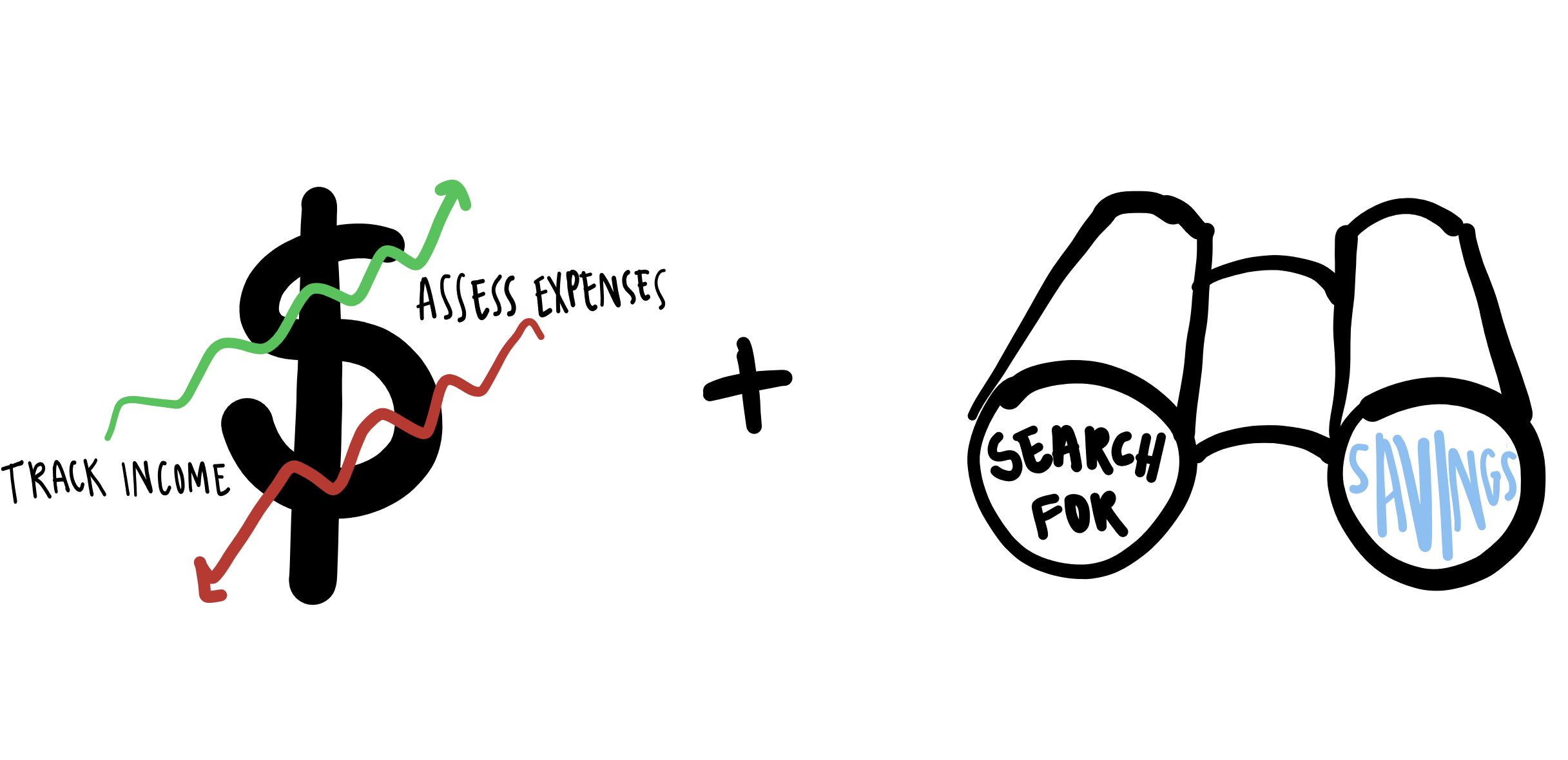
It’s okay if you don’t vibe with the savings app world. But if you do want a better grip on your finances, follow the philosophy behind the savings apps:

  1. Keep track of your income.

  2. Assess your spending habits.

  3. See where you can save.

savings blog doodle23.png

For me, that looks like walking past the gluten-free bakery every so often instead of into it (which is usually the case) and saving the extra $5. At the end of the month it can make a difference (Don’t believe me? See how much you can save by ditching your morning coffee here).

Finally, allow yourself to interact with financial resources without being too hard on yourself. The purpose of these apps is not to be a report card. The purpose is to empower you to make thoughtful decisions that will improve your financial health. If you have questions, check out our Financial Wellness Center or reach out! We are here for you.


Related Articles

Retirement Income Planning: PERS Benefit Options
 

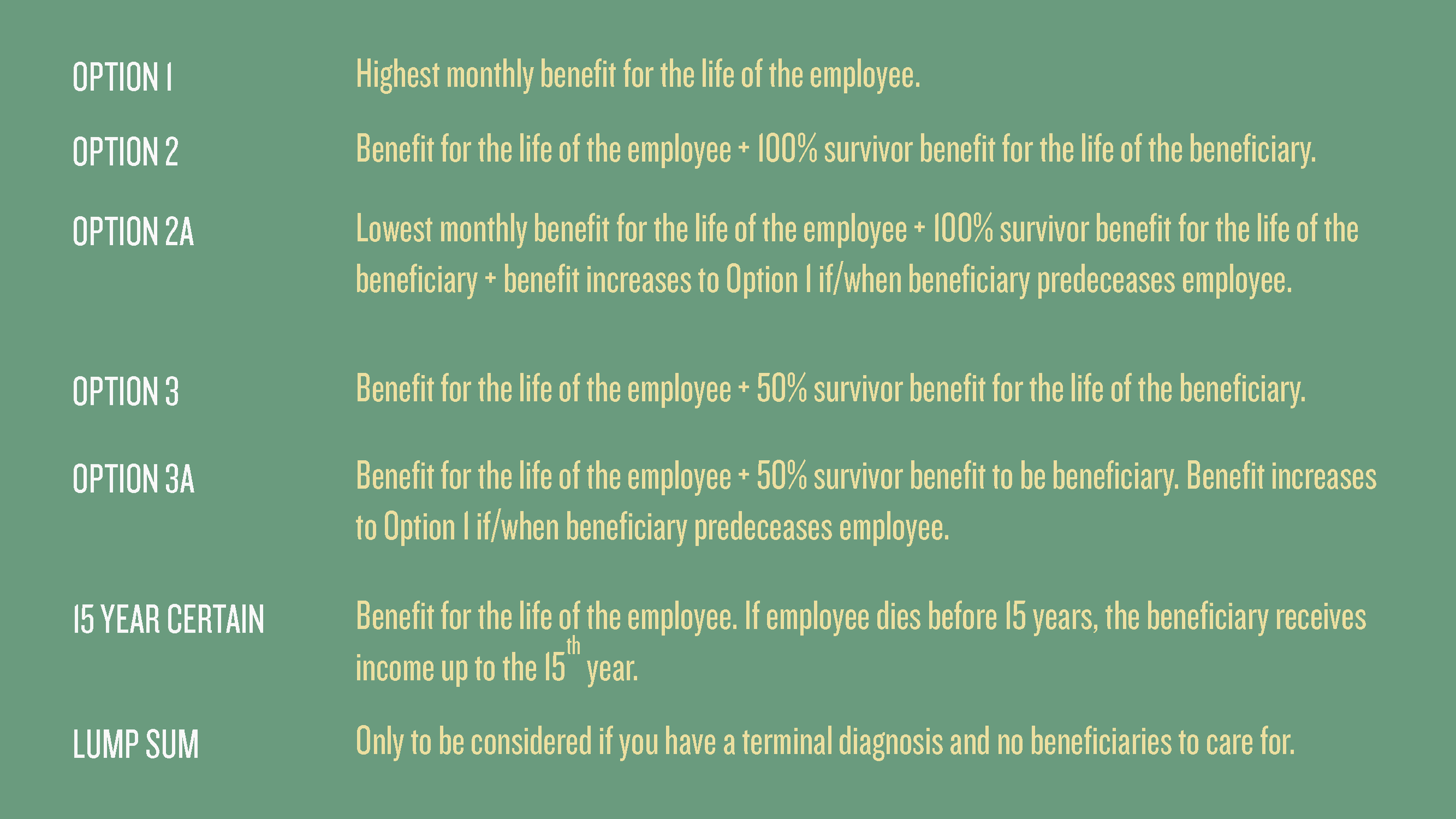
Are you retiring from PERS soon? Provided below is a concise breakdown of the most common benefit options and what they mean.

PERS BENEFITS OPTIONS.png

Often it makes the most sense to receive a lesser monthly benefit while protecting your loved ones with a survivorship option. Comparatively, it is like paying insurance monthly to ensure there is income for your beneficiary if you should die prematurely.

There are many more factors to consider, but a written estimate and analysis in coordination with your financial plan will provide a platform for deciding the best option for you and your family.


Related Articles

How Did My 401K Account Handle the 2020 Uncertainties?
 

In March, we were inundated with updates about the coronavirus and the unknown ramifications to follow. In the same month that the NBA was postponed, children were sent home from school, toilet paper fled the grocery store shelves, the US stock market had three of the worst days in US history.

Behind the scenes

Unlike the year 2020, your 401(k) account is routine and emotionless. If there is no user interference (yes, that is you), your account will continue to invest in the stock market every paycheck. A 401(k) account can help alleviate market-timing decisions by adopting an investment strategy called dollar-cost averaging. Instead of waking up in the morning and deciding “is today a good day to buy some stock?”, your 401(k) systematically makes those timing decisions for you.

To review the ease of these timing decisions, I wanted to show investors what happened if you made a $50.00 contribution to your 401(k) account every paycheck during 2020. In this scenario, we assume employees were paid every two-weeks (starting on January 3, 2020) and invested in the Vanguard Target Retirement 2055 (VVFVX) fund.

Slowly building a foundation

These dollars represent the trading value of the Vanguard Target Retirement 2055 (VVFVX) on specific days. In this exercise, the lowest trading price was $31.16 on March 20th, and the highest trading price was $48.55 on November 27th.

vffvx_net_asset_value.jpg
vffvx_net_asset_value-2.jpg

Thank you, automation.

As you can see, the best time to invest in the stock market this year (March) was also arguably the most uncertain and scary time to be an individual investor. From a February 21st paycheck to a March 6th paycheck, the price of this target date fund dropped 9%. From a March 6th paycheck to a March 20th paycheck, the price dropped 21%.

When prices were falling, your 401(k) account bought shares at a lower price without panicking, consulting the news, or making impulsive decisions. For that reason, we should give 401(k) accounts a standing ovation for being a reliable, unemotional investment vehicle this year.

Let 2020 be a reminder that if your boxes are checked, outsourcing and automating your account is one way to ease your emotions.


Related Articles

It might be time to Maximize your Intel SERPLUS Deferred Compensation Plan
 

Perhaps now more than ever, it makes sense to increase your deferral to the SERPLUS deferred compensation plan. The following chart compares current tax rates to the proposed tax rates by the new administration.

Web 1920 – 1.png

Though we are uncertain when the tax changes will be implemented, we do know that tax rates will increase. If taxes increase, your deferred compensation benefits may become even more important for your tax planning.

TAP INTO Significant Tax and Income Benefits

Deferred compensation plans provide an opportunity to receive less income today in order to pay less taxes on that income when received in the future. When making annual deferred compensation elections, you have the choice of a 5-year, 10-year, or lump sum payment at retirement (when employment with Intel ends). If you plan to retire at 62, you could elect to receive distributions for 10 years from your SERPLUS plan to stretch out your income and realize it in a lower tax bracket until age 72. With this plan, you have deferred compensation income providing for your first 10 years of retirement. In your early 70’s, social security and required IRA distributions will supplement your steady income stream, and eventually replace your deferred compensation income.  

Spreading deferred compensation income out over 10 years allows you to take it in a lower tax bracket, like 21% for Federal and State combined or 24% combined after 2025. This tax deferral would provide for a tax reduction between 23% and 35%. In a hypothetical scenario, $50,000 contributed per year over 15 years would total $750,000 (without earnings computed). The income deferral could provide $172,500 in tax savings in a conservative example and $262,500 in savings in a more generous example. That is real money in your pocket rather than in the Federal and State governments. 

In the peak earning years of your life, with your 401k maxed out and not providing enough tax deferral and future income, the SERPLUS deferred compensation plan is a great tool to help increase both.

Cash Flow Considerations AND SOLUTIONS

If you do participate in the plan, your current take-home pay will decrease.  If cash flow becomes tight, there are opportunities within your employee benefits that could help provide the needed funds. It may be advisable to sell some company stock (ESPP, RSUs) to supplement your monthly income so that you can participate in the plan and defer income. Keep in mind, your election made in 2020 on salary is for the 2021 income year, whereas the bonus election is for the bonus paid in 2022. A portion of the bonus could be especially important to defer in 2022 considering the proposed tax changes. 

Questions ABOUT YOUR INTEL BENEFITS?

If you have questions about making deferred compensation elections, please schedule a call.


When it Comes to Market Volatility, Don't Rely on Your Emotions, Rely on Your Financial Plan
 
adrian-FrSEEdYr418-unsplash.jpg

Recently I received a note from a longtime Human Investing client. He was following up on a discussion we had back in March, where he, like others, was concerned about where the market was headed. Here is a mostly intact version of what he said:

I just wanted to thank you and acknowledge your sound advice eight months ago when everything was running off the edge. Since then, we are up more than $250K (17%) and above where we were then. The reality is that had I pulled out, I would not have gotten back in before missing most of the bounce back. Hindsight can be wonderful when you do not make the wrong decision!  My friend, who sold out in March, is still hanging onto the belief that we are headed down again. Who knows the future.

A Discussion Goes a Long Way

The purpose of this note is not to take a victory lap for the advice we dispensed. Instead, it highlights how a discussion can help put investing in perspective in a tense market moment. This client has 50% of their portfolio in safe investments, like high-credit quality bonds and cash. The remaining portion is in broadly diversified equities. Despite having enough cash and bonds on hand to live a decade without having to touch their equities, they had a concern. The discussion with this client revolved around whether they needed more than ten years of cash and bonds to live and focused less on market timing. In the end, it was the client who decided to hold tight, not me. I was the one who removed myself from the emotion of the situation and was there to ask the right questions. 

Throughout my career, my role in the client’s life has evolved. In the mid-90s, we were providing stock recommendations and picking money managers. Today, we rely on trading algorithms from Morningstar and low-cost index funds from Vanguard and Barclay’s. The quantitative work has shifted from money management to financial planning and tax planning/compliance. This work is done by my colleagues at Human Investing: Andrew Gladhill, CFA, Marc Kadomatsu, CFP, Amber Jones, CPA, and Luke Schultz, CPA. On the flip side of the quantitative work is qualitative research, which involves non-numerical data. Qualitative research comes from our interaction with clients and hearing about their feelings, emotions, and opinions. These qualitative insights are paramount to a successful retirement plan. Some might argue that emotion and opinion can derail the best of financial plans. This is at the heart of the above quote. Quantitatively, the client was in great shape, but their “in the moment emotions” almost derailed a great retirement plan. 

Dalbar Inc. provides performance information on the “average investor”. Figure 1 is a chart I have tracked for years. One of the many reasons why the “average investor” does so poorly versus the returns of various asset classes and stock/bond mixes is due to their emotions. Having someone to talk to about these thoughts and feelings can be helpful.  If the plan permits and valid concerns arise from the discussion, then changes can be made.  However, if the change is not rooted in probability and the financial plan, there is the potential that the decision being made can be harmful.

Figure 1

Investing over the long run

It is interesting to see the S&P 500, dating back to the year I started in the financial services profession. Figure 2 depicts much relevant information. Most notably is the long term upward trending line during my career. If we went back to the early 1900s, the chart would look similar—lots of ups and downs with a trend line that moves up over time. 

Figure 2

Sometimes, the drops in the market happen gradually—as do their recoveries (as was the case in 2000). Other times, market volatility stems from “counterparty risk,” which was the case in 2007 when the housing market and credit created uncertainty. In the most recent case, the severe volatility was brought upon by fear from a pandemic and an uncertain future. Regardless of the reason, volatility is a natural part of investing in the stock market. My observation is that volatility is permanent. Surprises (both up and down) are common. The financial plan, which is a quantitative document developed by credentialed experts, can be worth its weight in gold. It can act as a financial roadmap when you feel lost—and provide an advisor like me the data-points to dispense proper advice during anxious moments.


Consistency is Key When Fighting the Dad Bod and Growing Your Investments
 
cyril-saulnier-TsVN31Dzyv4-unsplash.jpg

On September 1st, my beautiful wife and I welcomed our new son into the world. His arrival has brought our family much joy during this season. Like all newborns, he has also brought sleepless nights, an abundance of comfort food, and disruption to our schedules and disciplines. As a result, I am here to tell you from personal experience the “dad bod” is real (find out if you have a dad bod here).

As I begin the journey to get back in shape, exercise and clean eating seem more difficult than ever before. Had I maintained my regimented sleep, diet, and exercise schedule throughout the entire pregnancy, returning to my baseline wouldn’t be as challenging. In physics, we call this inertia. In finance, we call this the compounding effect.  

Like most things in life, there is a compounding effect on our actions. 

  • Consistency in showing up to work → proficiency at your job. 

  • Consistency in showing up in the lives of loved ones → richer relationships. 

  • Consistency with a sustainable diet and exercise plan → greater physical health. 

  • Consistency in following a prudent investment strategy → increased net worth. 

Consistency is integral to the compounding effect

The inverse is also true. Disruption is a detriment to the compounding effect, a truth for our fitness as well as our investment accounts. To quote Charlie Munger, Warren Buffet's partner at Berkshire Hathaway —“The first rule of compounding is to never interrupt it unnecessarily”.

I would argue that someone’s consistency often has a greater impact than their effort and resources. Take the following example of two investors: 

  • Investor A - saves $2K/year from age 26-65.  

  • Investor B - saves $2K/year from age 19-26 and stops there.  

  • Both achieve a 10% annual return.*  

At age 65, who ends up with more money?  

  • Investor A: $883,185  

  • Investor B: $941,054 

By saving and investing $2,000 at the beginning of each year from age 26 to 65 (39 total years), Investor A can expect to have a final balance of $883,185. Investor B only saves for 8 years but starts to save earlier in life than Investor A. Investor B benefits by taking advantage of 46 years of compounding growth, finishing with a balance of $941,054.

What Investor B lacks in consistency of contributions, they make up for in consistency of not interrupting the compounding effect on their investment account. I know you are probably curious, what would happen if Investor B did not stop contributing at age 26? Investor B’s account balance would be $1,902,309. Once again consistency wins out.

Start now and stick with it

  • There are no shortcuts to saving for retirement and fighting the "dad bod". Starting can be difficult and sometimes painfully slow, however, the long-term results can be powerful. 

  • The easiest advice to give is “never get off track.” However, like your sleep schedule with a newborn, there are some things you cannot control. It is important to know how to reassess and get back to work.  

  • Building anything valuable and defensible takes time, effort, and energy. Build a plan today.  

If you want to compare notes on raising a newborn, see baby photos, or discuss the impact of consistency when building a prudent financial plan, please reach out. We are here for you.

*This is for illustrative and discussion purposes only. Investment results will vary.


Related Articles