Combating the investing FOMO (and FOBI) in all of us
 

In a recent interview Jason Zweig, a personal finance columnist for the WSJ, had a quote that resonated with me.   

  "Emotional discipline is the single hardest thing about the investment game."   

After accumulating over 30 years of writing and thinking about investing and personal finance, Jason points to emotion (not market valuations, stock picking, or market corrections) as the most difficult part of investing.  As financial advisors, we witness the struggle of emotional discipline firsthand. Recent news (and noise) around tech stocks, housing prices, federal spending, cryptocurrencies, inflation, and interest rates have made it more difficult for investors to maintain this discipline.  

are you an investor facing FOMO or FOBI?  

This lack of emotional discipline manifests itself typically in one of two ways:   

  1. Fear of Missing Out (FOMO) in the market. If you are 15 years old, FOMO is seeing your friends doing something without you on social media. If you are an investor, FOMO is the internal dialogue of “I see my neighbor making money on ____, I need to buy ___.” Someone who has FOMO tends to follow the crowds. FOMO can lead an investor to think their rate of return is a benchmark for their success rather than achieving a return needed for a successful financial plan.

  2. Fear of Being In (FOBI) the market. FOBI is the internal dialogue of “I have seen how this story ends. I need to sell ____.” Someone who has FOBI likely listens to news sources who make a profit off pessimistic news. Note: It is easy to push the sell button, it is always harder to get back in.  

FOMO and FOBI may seem different, however, both are ultimately trying to guess where the market will go next and are speculative in nature. Let 2020 be a great reminder that it’s difficult to predict how the market or a particular investment will do year to year.  

Periodic Table of Investment Returns from the last 20 years

One of my favorite charts to illustrate the difficulty to predict short-term performance is "The Periodic Table of Investment Returns". This graph ranks the annual returns of popular asset classes from best to worst over the last 20 years.   

Source: Blackrock; Past performance is no guarantee of future results. The information provided is for illustrative purposes and is not meant to represent the performance of any particular investment. Assumes reinvestment of all distributions. It is…

Source: Blackrock; Past performance is no guarantee of future results. The information provided is for illustrative purposes and is not meant to represent the performance of any particular investment. Assumes reinvestment of all distributions. It is not possible to directly invest in an index. Diversification does not guarantee a profit or protect against loss.

An investor experiencing FOMO is likely paying attention to the top row, the best-returning asset classes over the last 20 years. This investor is likely trying to guess what will be the highest performing asset class in the coming year.  

Meanwhile, an investor experiencing FOBI is likely paying closer attention to the bottom rows, with a specific focus on larger market selloffs like 2001, 2002, and 2008. A FOBI investor is worried about being invested in the wrong asset class and will try to avoid the worst-performing asset class in the coming year.  

The Periodic Table of Investment Returns reminds me of three investing truths:   

  1. It can be dangerous to try and guess what is next. Consider US small-cap stocks (Sm Cap – in light green), which had the highest average annual return over the 20 years. While small-cap stocks were the best performer they also showed the widest variance in outcomes. Guessing right in 2003 would have provided a positive return of 47.3%. Guessing wrong in 2008 would have provided a negative return of 33.8%. 

  2. Past performance is not an indicator of future returns. Making investment decisions based on recent performance (e.g., looking at 1, 3, and 5-year returns) can be detrimental to an investment portfolio.  International’s performance as a prime example (Int’l – in yellow), over the five years from 2003-2007 international was the best performing asset class by a long shot. International seemed like the sure thing. Unfortunately, the investors who followed international’s high returns were greeted with a brutal 43% selloff in 2008.   

  3. Portfolio diversification is the answer to combating FOMO and FOBI – See “Div portfolio” in purple along the middle rows.  Diversification is an investment strategy that aims to maximize a level of return for the risk desired. Diversification accomplishes this by strategically spreading money across different types of investments.   

 A diversified portfolio helps investors maintain emotional discipline. Diversification can avoid the fear of missing out on the next hot investment. Owning more of the market will naturally provide more opportunities to not miss out on the growth of specific sectors or individual investments. Diversification can also temper being fearful of being in the market and owning the next big loser. Diversification disperses your dollars across many asset classes, which means if one company is a dud it will not sink the ship.  

If you struggle with emotional discipline when investing, congratulations you are a human. If helpful, please use The Periodic Table of Investment Returns as a great reminder that emotional discipline is difficult. Putting a plan in place along with proper diversification can help investors make smart long-term decisions.



Related Articles

Hello Speculation, My Old Friend
 

The term speculation[1] has been on the steady decline since 1840. The decline in use is somewhat surprising given the current market environment where speculation runs rampant. In recent weeks, our team inked a well-thought-out article about the speculation du jour titled, The Big Short: Volume II Starring $GME . Interestingly, they could have been writing about any of the past's speculations—like the Dutch Tulipmania in the 1630s and the roaring 20s that ran up to the 1929 crash. More recently, tech stock speculation reached a fevered pitch in the 2000s and was followed by an equally thrilling run-up in housing which peaked in Q1 2007.

“Speculation is easy to spot, but it is difficult to understand what brings speculative environments to an end.”

Memory Lane (1995-2000)

Speculation in technology stocks lasted for six years. Money managers and even the Federal Reserve Board Chairman Alan Greenspan noted the overall frothiness of the markets. In his 1996 public address, Chairman Greenspan pondered, "but how do we know when irrational exuberance has unduly escalated asset values…?" From 1995 to 2000, the Nasdaq grew sixfold (see Figure 1 below). Over several years, beginning in March of 2000, the tech-heavy Nasdaq stock index lost nearly 80% of its value. Even the "blue chip" tech stocks of the day: Cisco, Intel, and Oracle, fell fast. But because they had well established and viable business', they crawled from the rubble and thrived. But the road to recovery took 15 years as the Nasdaq crossed through its previous market peak set in March of 2000 in April of 2015.

Figure 1

Figure 1

Reason for the speculation?

As was the case leading up to the peak of the .com era, much of today's speculation has been brought about by venture capital (VC) investment. Key statistics surrounding VC investment are at or near all-time highs. This includes deal activity, VC-backed IPO's, and VC-backed M & A. You can learn more about VCs and speculation here. The influence of M & A on the market dynamics is meaningful—particularly for retail investors who see what VCs are doing and want a piece of the action. In the book, The Psychology of Money, the author notes that "people have a tendency to be influenced by the actions of other people who are playing a different financial game than they are." VC investors are some of the most sophisticated investors in the world.  Simply put, VC investors are playing a different financial game than most people who want to get a piece of their action.

One reason for concern is that a mass of money is being put into the capital markets, including VCs, with a speculative bent. This changes the market's disposition. The stock market can quickly turn from a place to save for retirement and invest for college to a casino or dog track, where a quick buck can be made. The bottom line is that investing and speculating are not the same thing. In the last 25 years, the most successful investors I have observed have relied on simple truths to accumulate their wealth. They make their money by saving and investing over a lifetime. To be sure, some speculators hit it big, and those will be the stories you hear about. Others, as is the case with most speculative investments, will lose everything.

Access, Gamification, and Human Nature

This go-around, the rise of speculative investing seems to have a social appeal. With stock trading commissions at zero and gamified investment platforms, both access and the fun factor are present at levels I've never seen before. On the one hand, I'm thrilled that more people are interested in the capital markets. But I wonder if tools and access make investing more like a casino or betting app than serious investors' tools to achieve lifelong financial goals. If investing is being marketed to fulfill all your dreams in a couple of keystrokes, why wait a lifetime?

It is human nature to want a piece of what is working—after all, who wouldn't?  We all know someone who made their money quickly. For every person who made an easy buck and won the lottery, millions of us are going to need to do it the hard way. Yes, the wet blanket approach to investing—like spending less than what you earn and putting a little away each month to an emergency fund. Forgoing a slice of your paycheck today so that you have something to live off when you are no longer generating an income from your labor. Driving the same old car so the payments you would otherwise have with a new car can go to your child's college savings account. I know what some of you may be saying, "he just doesn't get it." Maybe not, but what is true is that if investors do not choose a path, it will be selected for them. Or if not, they may bounce around from one path to another, making for a very emotional and disjointed investing experience. One path has a high probability of success because it relies on disciplined saving and investing behavior over a lifetime. The other approach is speculative, looks fun, is incredible to talk about, and has social equity—but unfortunately has a fractional probability of success.

Tesla and bubbles

There are plenty of speculative investments that will make an article like this seem out of touch and tired. Maybe so. Take the electric car manufacturer who recently booked its first full year of profits. Yep, the investor and media darling Tesla is worth $800 billion and just turned a profit in 2020 for the first time since it was founded in 2003. The only issue is that it is not from selling cars. The bulk of their profit comes from selling regulatory tax credits, not from selling cars. Read more about Tesla here. This is fine, and I own a few Tesla shares inside my low-cost Vanguard S&P 500 index fund. The point in sharing a story about Tesla is not to shame those that own the stock, nor is it a knock on the product as they make a good car. Instead, it highlights the influence of VC money and corresponding expectation for speculative investing and returns.

Dr. Olivier Blanchard, the most cited economist in the world, penned a 1979 masterpiece where he said this,

"Self-ending speculative bubbles, i.e., speculative bubbles followed by market crashes, are consistent with the assumptions of rational expectations. More generally, speculative bubbles may take all kinds of shapes. Detecting their presence or rejecting their existence is likely to prove very hard."

If speculation were a person, I would write it a letter. It would be short. It would go like this, "As for our families and how we advise Human Investing clients, we view each dollar as hard earned and essential to a well thought out financial plan. There is no play money or money we can afford to lose. As such, we are not much for speculation." Sincerely, your wet blanket.

[1] Merriam-Webster defines speculation as “a risky undertaking.” Thesaurus notes it is a “theory, guess, risk, or gamble.”


Related Articles

The 3 Questions to Ask to Build a Solid Retirement Income Plan
 

Saving for retirement can seem straightforward compared to the daunting task of converting your hard-earned savings into retirement income.

When building a retirement income plan knowing what questions to ask will potentially save you money, lower your overall tax bill, and provide you peace of mind. Here are three questions you should ask when building a retirement income plan, as well as some considerations:

Question 1: What sources are available to you?

There are many ways to fund retirement. Thus, no retirement plan looks the same. To begin to understand how you will fund retirement, give yourself a quick assessment. What sources are available to you and how much?

retirement-income-01 copy.jpg

What you should consider: Simplicity in retirement. This can be achieved by consolidating retirement accounts such as your employer-sponsored retirement plans into an IRA. See - Why an IRA makes more sense in retirement than your 401(k)

Question 2: When do you plan on receiving income from your different sources?

There are a lot of unique planning opportunities regarding when to start receiving your sources of income. Knowing when to access these different sources can provide efficiency, lower taxes paid, and increase your retirement income.

 The IRS and Social Security Administration have imposed rules that coincide with specific ages. Familiarizing yourself with these key rules and ages associated with accessing popular income sources can help you begin to answer the question of “When?”. Here are some key ages to consider when building a retirement income plan around these popular sources -

Tax-deferred accounts (401(k)/403(b)/IRAs):

  • Age 59.5 - you can’t access tax-deferred dollars without a 10% early withdrawal penalty before age 59.5. The IRS does highlight some exceptions to the 10% penalty for premature withdrawals.

  • Age 72 (or age 70.5 if you were born before 1951) – The IRS requires that an individual withdraws a minimum amount of their retirement plans (i.e. an IRA) each year starting in the year they reach age 72. This requirement is known as a required minimum distribution or an RMD. Account-holders that do not take their full RMD will be faced with a stiff excise tax equal to 50% of the RMD not withdrawn.

Social Security:

Most Americans can begin claiming Social Security retirement benefits as early as age 62, or as late as age 70. Once you stop working, it can be tempting to claim Social Security as soon as possible to subsidize your income. However, it’s often strategic to delay Social Security as long as possible. The longer you delay claiming your Social Security benefit the greater your guaranteed inflation-adjusted monthly benefit will grow (up to age 70). Factors that should be considered when creating a plan around Social Security are life expectancy, other sources of retirement income, and spousal benefits.

retirement-income-02 copy.jpg

What you should consider:

  • Which sources you will draw first?

  • Should you delay social security as long as possible?

  • How long each source will last?

Question 3: What are the tax implications of accessing your retirement income sources?

Not all income sources are taxed at the same rate. Take the time to understand your applicable taxes and build a tax-sensitive retirement income plan to prevent paying unnecessary amounts to the government.

retirement-income-03.jpg

What you should consider:

  • The tax implications of the aforementioned RMD’s. RMD’s can unknowingly force you to pay a higher than necessary tax bill once you are forced to take required withdrawals.

  • A tax bracket optimization strategy that provides savings on your overall retirement tax bill. This can be especially beneficial in the early years of retirement. Learn more about Tax Bracket Optimization here.

The misfortune of not having a retirement income strategy.

Heading into retirement without an income strategy is financially precarious. To illustrate the benefit of creating an effective plan, we are sharing a hypothetical example.  Meet Charlie and Frankie:

  • Charlie (age 61) and Frankie (age 60) live in Oregon and each plan to retire when they turn age 62.

  • Charlie has $1,000,000 in a 401k/traditional IRA.

  • Frankie has $250,000 in a 401k/traditional IRA.

  • They have $150,000 in joint accounts.

  • At age 67 Charlie and Frankie are eligible to receive $2,990/month and $2,376/month, respectively.

  • Their annual income goal during retirement is $90,000.

In the following charts, we compare the impact of an efficient retirement income strategy to one that is not. The only thing that is different in the two scenarios is the consideration of when to draw specific sources and the associated tax implications. Unfortunately, when managed inefficiently the couple is only able to maintain their target annual income for 26 years. Additionally, the inefficient strategy forces the couple to pay an additional $129,000 tax over 30 years when compared to a more efficient strategy.

 
inefficient-retirement-income.jpg
efficient-retirement-income.jpg
 

Assumptions: 4% investment rate of return on all accounts. No additional contributions are made to investment accounts. Taxes include both Federal and Oregon State income tax.

This is one of the most important financial decisions you can make.

Taking the time to thoroughly answer these questions can provide long-term value.

Engaging with a financial planning firm can be helpful if you are not fully confident in making a retirement income plan. Working with the right financial planning firm for your unique situation can be the difference between a carefree retirement and a stressful one. To learn more about how we think about serving clients through comprehensive financial planning, check out our services here.


Related Articles

The Big Short: Volume II Starring $GME
 
image.jpg

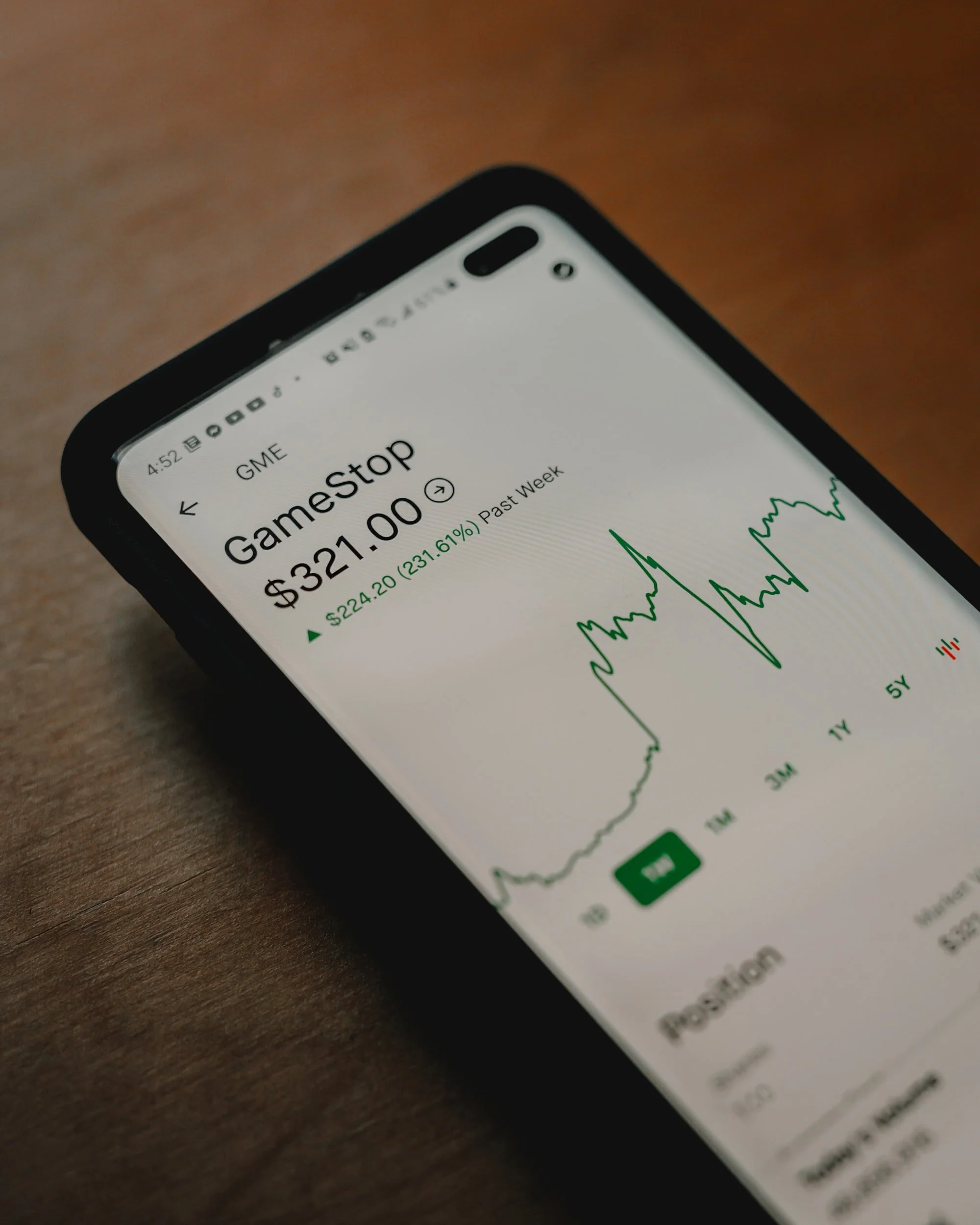
Last week GameStop went viral as a topic unlike anything I’d seen in my 10 years at Human Investing. Probably just like you, I googled “Gamma Squeeze”, had someone two degrees of separation from me divulge they had been a part of wallstreetbets, and now have significantly more money, and felt like I was watching a version of March Madness play out real-time in the financial markets.

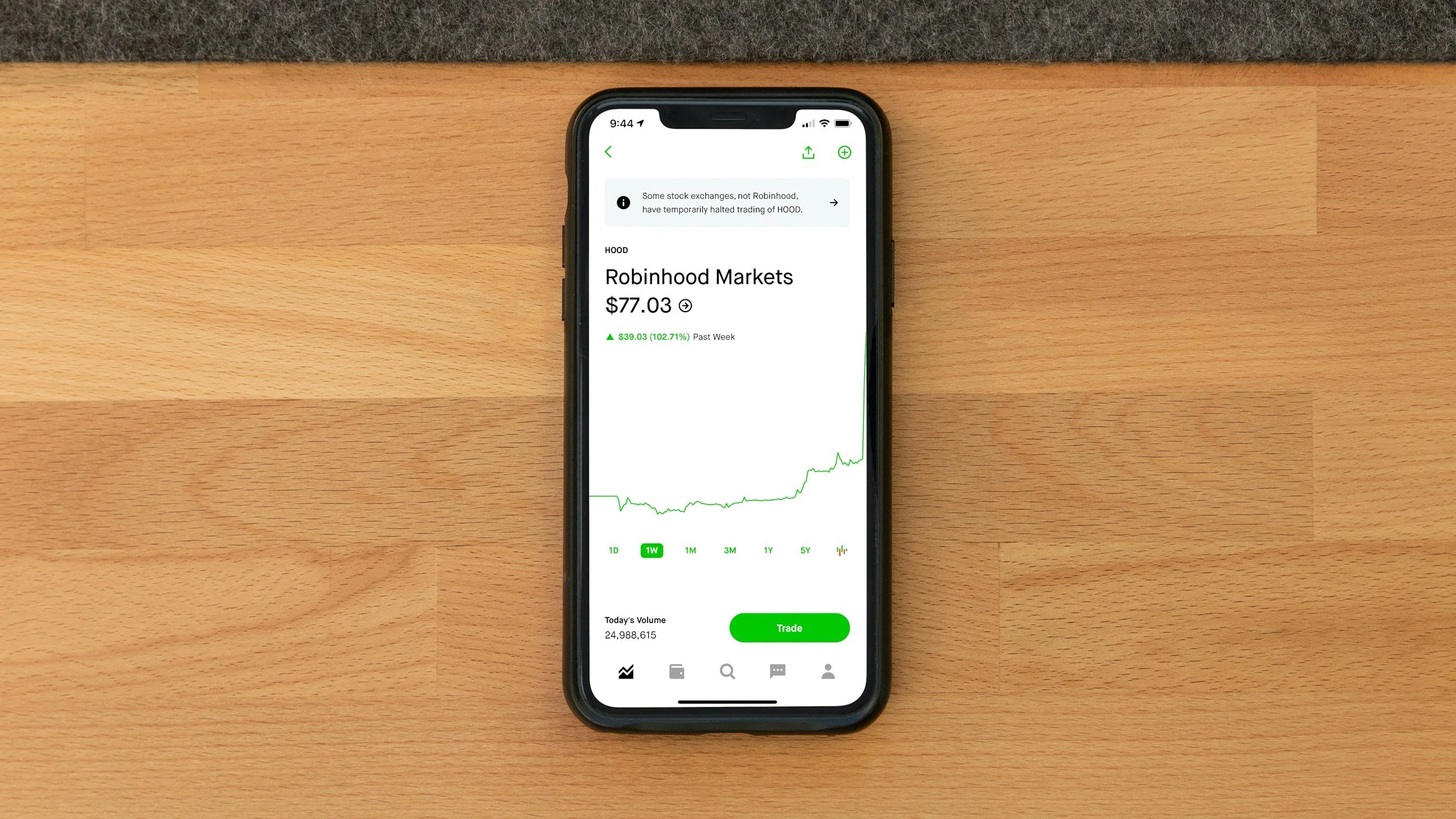
With the introduction of free trading and the gamification of trading stocks with apps like Robinhood, this past week was the culmination of many factors colliding (more on that later). Different than in The Big Short (2008 Real Estate Crisis) where select hedge funds were taking advantage of large investment banks being overleveraged in the housing market, this time it was retail investors taking advantage of hedge funds overleveraged in GameStop. If Michael Lewis or someone else isn‘t writing this book already I’d be shocked, and I can’t wait for the movie too.

Most of the questions our team has been fielding this week looked like a version of:

  • Why GameStop?

  • Why now?

  • Explain this to me like I’m 5

  • Is this a one-time occurrence or is something like this going to be happening more frequently?

  • And probably most importantly what does this mean for me, my investments, and the markets as a whole?

To help me answer some of these questions I’ve enlisted our head analyst, Andrew Gladhill. In our office known as Glads. For those of you who haven’t spoken with Glads or seen his work, he’s a CFA and anyone who knows him would most likely have him on their Who Wants to be Millionaire “phone a friend” shortlist. Maybe most importantly, one of the ways Glads makes our team better is being able to take complex topics and break them down in very digestible terms. Take it away!

Some key terms you need to know

Shorting

The short answer: Shorting is betting that a price will go down (not up), and you benefit as the price goes down. For example, if you short a stock trading at $20, and it goes down to $15, you have made $5.

The long answer: Shorting works through a few steps:

  • Step 1 – you borrow the stock today from someone who holds the stock (Let’s call them Emily) with a set date you must return the stock back to Emily. Emily lends you the stock because Emily charges you interest.

  • Step 2 – you sell the stock today (say for $20)

  • Step 3 – you must return the stock to Emily, plus interest (say $1) buying it at the current market price to do so (say $15)

  • In this example, you have made $4 (Sold for $20, bought for $15, charged $1 interest)

Why do you short? Because you believe something is overvalued, and you want to profit from when the price goes down.

short-selling copy.jpg

Short Squeeze

The short answer: When a shorted position has the price increase, those who are shorting it (the shorters) are forced to buy the position, driving the price up further.

The long answer: If the price rises on a short position, the shorter starts losing money. They can either hedge their losses by buying the stock before the return date, or wait to buy and hope the price falls. Remember, the shorter must return the stock to the original owner by a set deadline. Because the price of the stock can rise higher and higher, the shorter’s potential loss is limitless.

So a short squeeze is when the price of a company goes up because lots of people are buying a heavily shorted stock, increasing the price. The rise in price causes some shorters to close out their positions, which involves buying the stock. More buying activity causes the price to increase, causing greater losses for the shorters. If the price rises high enough, the losses get large enough that more shorters are forced to close out their short position to avoid having their total portfolio value go negative. This creates a positive feedback cycle of buying activity, pushing the stock price even higher.

cycle.jpg

Why WAS Gamestop ($GME) TARGETED?

The Short answer: GME had an unusually high amount of shares sold short, allowing the short squeeze to be possible. Retail investors gathered online & decided to try to make it happen.

The Long Answer: Short float is the number of shares sold short (borrowed & then sold) that have not yet been repurchased. Gamestop had a short float over 100%, meaning some shares of Gamestop had been lent out more than once. This happened because many believed Gamestop (a retail video game store) was the next Blockbuster and would go out of business. The share price would go to $0 a share, and they would profit from the price dropping. Some retail investors noticed the high short float on GME in an online community known as reddit wallstreetbets (aka WSB, aka retail investors). The retail investors saw an opportunity for a short squeeze due to the large short interest, and GME being a relatively small company.

The retail investors planned to force a short squeeze on GME. The retail investors would buy up as many shares of GME as possible, driving up the price. The retail investors would hold their shares, drying up the supply, pushing the price up even further. All this upward price movement would force a short squeeze, driving the price up even further, and the positive feedback cycle would result in astronomical price increases for GME as the short squeeze hits. Retail investors will be able to sell their shares at high prices to the shorters forced to closing out their position.

Why was trading restricted?

The short answer: Companies that execute trades (brokerages, i.e. Robinhood) must have money to cover trade differences with clearing firms (the back end companies that finalize trades) as collateral. The rapid, unexpected movement in GME brought some brokerages ability to do that into question, and they had to pause the trading until they could secure more funding.

The long answer: When you sell or purchase a stock, that trade isn’t finalized until settlement, which is 2 days later. This time is used to verify the transfer of cash & the security purchased. It’s like when you deposit a check at the bank, the bank makes sure the check clears before you can withdraw cash. Clearing firms finalize stock transactions. The brokerages (i.e. Robinhood, Fidelity, Schwab, e-Trade) are required by law to maintain cash deposits as collateral with clearing firms to cover any losses. The required deposits by the clearing firms for the brokerages went up because GME was having higher price volatility. Some brokerages had to pause trading in GME while they secured enough funding to make the deposits required by the clearing firms. The financial system rarely handles meteoric rises in stock prices in such a short amount of time, and certain parts of the system that normally work so smoothly we never think about them suddenly brought trading to a screeching halt.

what does this mean for me and my portfolio?

Thank you, Glads. This story and its ramifications are certainly not finished. As more details come out it will continue to paint a clearer picture of what it means for investors over the past week and looking forward as well. To bring this all home and answer the question, “what does this mean for me and my portfolio” a few thoughts:

While Gamestop took up all the headlines this past week, for most investors it had little to no impact on their portfolio. For example, the Vanguard Total Stock Market Fund (VTI), is a staple in many retirement accounts across the country, the fund was down 3.59% last week (in line with the market). GameStop contributed a positive 0.04% return to the fund (basically nothing!) despite being up nearly 655% on the week, a bi-product of how small of a company GameStop is relative to other companies in the fund that truly move the needle.

vanguard.jpg

So should I get in?

Should you open up a trading account in preparation of the next public short-squeeze? The boring/correct answer is this is not the forum to be giving specific financial advice for your specific situation. If you’re truly speculating about that and want to talk to it through, PLEASE sign up for a Calendly link with one of our advisors and they are happy to talk with you about it.

My favorite book I’ve read in the past few months is The Psychology of Money by Morgan Housel. It’s one of the best (in my opinion) personal finance books because it focuses on behavior (potential controllable actions) rather than guessing what’s the next best stock is. He has an entire chapter devoted to the topic of, “People have a tendency to be influenced by the actions of other people who are playing a different financial game than they are.” This is the case for most people saving for retirement when thinking about GameStop, shorting, and what we’ve seen in the news. It’s Human to feel like you missed on an opportunity with GameStop and to want to hit it big on the next trade. But most likely that’s not your game.  Most likely your game (and mine too) involves saving and investing for a long time, letting compounding interest take care of the rest, and maybe most importantly staying out of your own way. And while that game doesn’t create the same headlines, as Housel writes in a different chapter it can create a different type of headline to aspire to.


Related Articles

How Some Millennials are More Resilient during Financial Shocks
 

According to most research, although millennials are considered the most highly educated generation, we are the least informed when it comes to our financial decisions. Not only do we lack financial literacy, but pre COVID-19, 63% of millennials felt anxious when thinking about their financial situation, and 55% felt stressed when discussing their financial situation. I imagine COVID-19 has negatively impacted those figures even further.

There are many factors that affect our personal financial stress levels, but historically, the financial industry has felt inaccessible to those who lack financial literacy and/or feel insecure about their financial situation. How are we supposed to learn if we lack access to knowledge?

SAVINGS APPS TO SAVE THE DAY

I love the concept of savings apps, because it improves accessibility of investing and saving for a large population. Basically, if you have a smart phone and a few extra dollars, you can be a saver. A study conducted in 2019 found that individuals who used savings apps kept better track of their finances and were more resilient when faced with a financial shock. However, accessibility without education can be hazardous. So, here are two recommended savings apps that provide learning and saving opportunities.

  • Mint is a free app powered by INTUIT (think Turbo Tax) that houses all of your financial information in one place. Mint uses a holistic view and budgeting tools to find extra savings for you. Not only do they provide you with custom savings tips, but they also have a hub of resources, ranging from building a grocery budget to investing advice, so you can learn along the way!

  • Digit has the same philosophy as Mint: find savings within your current financial situation. With this philosophy, Digit analyzes your current income and expenses and then lets you know what you can afford to save. They invest your dollars in FDIC insured account using a portfolio based on your risk level and comfortability. You are also able to attach these savings to a specific goal – emergency savings, honeymoon, a doggo—you name it. There is a monthly cost of $5, but you do receive 1% annual bonus savings every three months.

NOT FEELING IT? FOLLOW THEIR SAVING PHILOSOPHIES

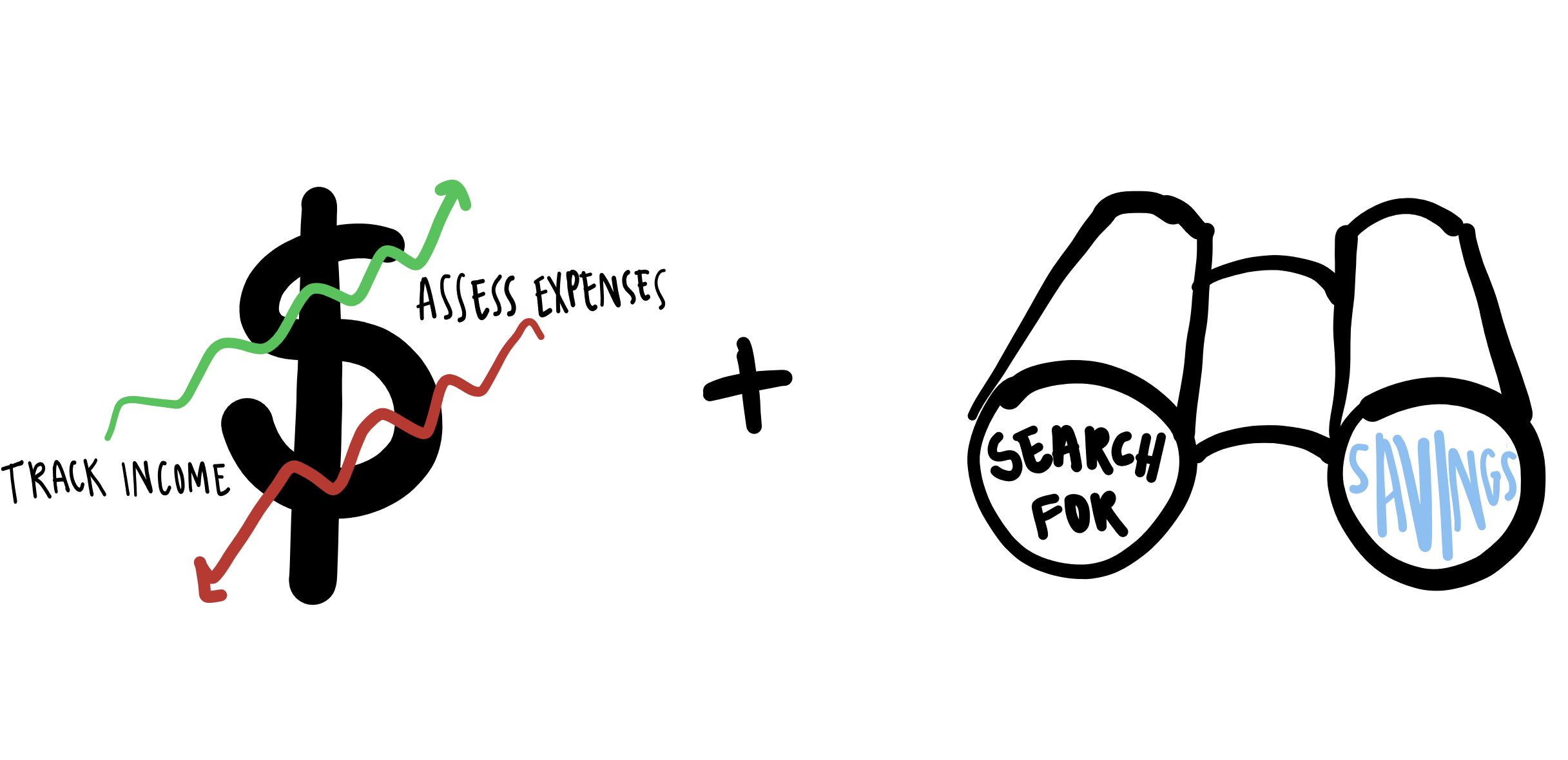
It’s okay if you don’t vibe with the savings app world. But if you do want a better grip on your finances, follow the philosophy behind the savings apps:

  1. Keep track of your income.

  2. Assess your spending habits.

  3. See where you can save.

savings blog doodle23.png

For me, that looks like walking past the gluten-free bakery every so often instead of into it (which is usually the case) and saving the extra $5. At the end of the month it can make a difference (Don’t believe me? See how much you can save by ditching your morning coffee here).

Finally, allow yourself to interact with financial resources without being too hard on yourself. The purpose of these apps is not to be a report card. The purpose is to empower you to make thoughtful decisions that will improve your financial health. If you have questions, check out our Financial Wellness Center or reach out! We are here for you.


Related Articles

What Is a Fiduciary?
 
trust.jpeg

A fiduciary is defined as an individual or a legal entity, such as a financial advisor. The fiduciary takes on the responsibility and has the power to act in the interest of another. This other person is called a beneficiary or principal—we call them member, human, or client.

A fiduciary financial advisor (which is all we have at Human Investing) cannot sell products that charge or pay commissions.

When a member works with a Human Investing financial advisor, the client gives the advisor their trust and expects recommendations to be made with honesty and good faith in keeping with their best interests. This may not always be the case with a non-fiduciary advisor.

The Fiduciary Standard

All Human Investing employees are required to abide by the fiduciary standard. When a financial advisor has a fiduciary duty, they must always act in the beneficiary's best interest.

Financial advisors fall into two buckets: fiduciaries and non-fiduciaries. Surprisingly, not all financial advisors have a requirement to put member's interests first. Worse yet, some advisors and their firms can be dually registered, swapping back and forth between fiduciary and non-fiduciary roles.

Suitability Standard vs. Fiduciary Standard

Financial professionals who are not fiduciaries are held to a lesser standard known as the "suitability standard." What this means is that the recommendation from a non-fiduciary only needs to be adequate.

Other Watch Outs When selecting an Advisor

If an advisor states that they have FINRA Series 7, 6, or 63, that means they are licensed to sell products for commissions. An advisor would only have those licenses for two reasons: 1) to sell commission products or 2) collect commissions from products they (or someone else) have sold.

There are many individuals and firms that say they are financial planners and do financial planning. But did you know that many of the people that say they are financial planners are not trained in the process and profession of being a financial planner? Individuals responsible for member financial planning are CERTIFIED FINANCIAL PLANNERS™. A CERTIFIED FINANCIAL PLANNER™ certification is “the standard of excellence in financial planning. CFP® professionals meet rigorous education, training and ethical standards, and are committed to serving their clients' best interests today to prepare them for a more secure tomorrow.”


Related Articles

Retirement Income Planning: PERS Benefit Options
 

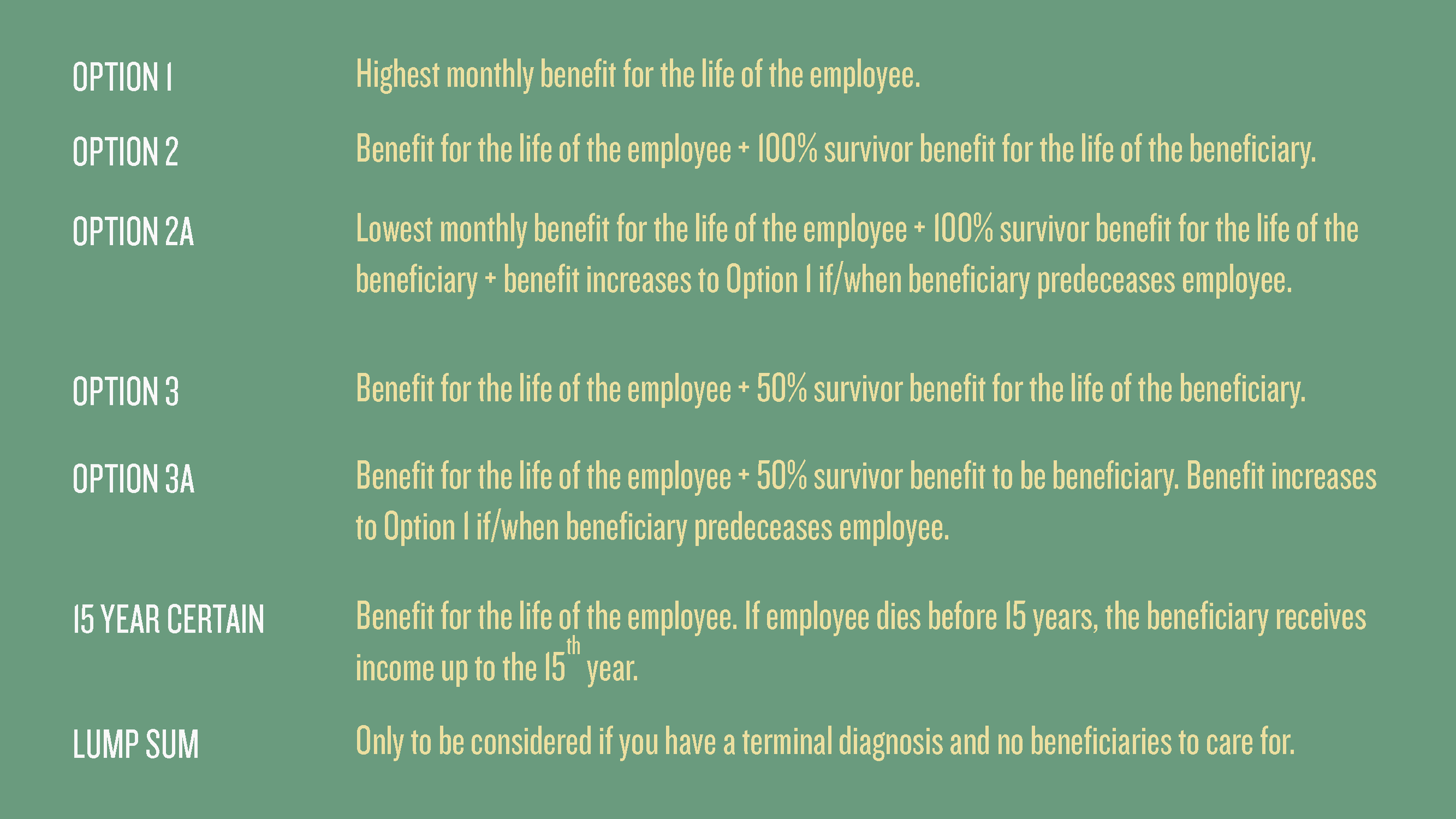
Are you retiring from PERS soon? Provided below is a concise breakdown of the most common benefit options and what they mean.

PERS BENEFITS OPTIONS.png

Often it makes the most sense to receive a lesser monthly benefit while protecting your loved ones with a survivorship option. Comparatively, it is like paying insurance monthly to ensure there is income for your beneficiary if you should die prematurely.

There are many more factors to consider, but a written estimate and analysis in coordination with your financial plan will provide a platform for deciding the best option for you and your family.


Related Articles

Charts of the Year
 

As 2020 comes to an end, our team is sharing seven charts that help summarize some of the puzzling financial activity we experienced this year. We have been including these charts in our group education meetings as visual aids to help explain 2020’s market volatility. For the readers who did not attend one of these meetings, we made this post for you to reference in the future.

1 sp500.jpg
2 sp500.jpg

2020 was a year that represented a disconnect between the stock market and the economy for many investors. On one hand, the stock market (represented by the S&P 500) is up over 14% this year. On the other hand, many local businesses and industries have been devastated by the pandemic. Investors had a difficult time sorting out those two facts, especially between late March and September.

In order to rationalize 2020 market returns, we look to the five largest companies in the S&P 500 (in chart 1 and 2) that have led the charge in terms in performance. Specifically, these five companies are Microsoft, Apple, Amazon, Google, and Facebook. Compared to industries like airlines, hotels, and restaurants, these five companies were able to offer services and be agile in the pandemic. Couple that with those five companies making up over 21% of the stock market (the largest piece of the pie chart in the last years) and you can create a narrative of why the market has performed well while areas of the economy have struggled.

3 robinhood.jpg

Repeat after me, past performance does not guarantee future results. It’s important to remember that now more than ever because 2020 produced some impressive returns. Combine that with 2020 being a year where Robinhood investors, or in other words younger investors who had more free time on their hands, became interested in the stock market, options trading, crypto currencies, and other investments. What’s interesting about 2020 is that many of the names or asset classes that people are familiar with or use every day happened to be some of the best performers of the year. Years like this don’t always play out this way, but Peter Lynch’s quote of “Invest in what you know” certainty paid off this year with individual’s taking products that they own/use frequently and investing in them. The above provides a sampling of some of top performers of 2020. As you can see you probably interact with of these line items daily. 

4 sp500.jpg

While what we have experienced nationally (and globally) this year has been unprecedented, in the context of the last 40 years of market returns it is not abnormal. Since the start of 1980, the S&P500 (excluding dividends) has returned an annualized 9%. Despite having average intra-year drops of 13.8%, the market has finished positive 75% of the time. Short-term market volatility has paved the way to long-term investment returns, and 2020 has proven no different.

For us investors, this is a reminder to remain invested through the market turbulence. Patience is a requirement for long-term success. Warren Buffet said it best with his quote, 

“The stock market is a device for transferring money from the impatient to the patient.” - Warren Buffet

5 sp500.jpg

This chart illustrates the consequences of hitting the “panic button” when we experience market turbulence. If we buckle up and hang on tight, there is potential to see long term growth versus throwing on the parachute and cashing out (hitting that proverbial panic button). 

6 interest rates.jpg

Opportunists unite. With historically low interest rates, many people have taken this opportunity to refinance their mortgages. By refinancing their mortgages, individuals and families have improved monthly cash flow, decreased the amount of interest paid over the life of their loan (often saving tens of thousands of dollars over a 15-, 20-, or 30-year period), and shortened the length of their mortgage. To join the rest of the opportunists, see our post Refinancing Your Mortgage: A How to Guide

7 unemployment.jpg

In March alone, the number of initial unemployment insurance (UI) claims increased by more than 3,000% as businesses closed to slow the spread of the coronavirus. People have suffered this year, and none of us will look back at this time and wish we did less.

This graph focuses on unemployment, but we know that hospitalizations, closures, and fear also increased in the first half of 2020. In a time of desperation, our communities responded to the suffering in an inspiring way. Specifically, the number of small charitable donations ($250 or less) increased 19.2% over the first six months of 2020 compared to 2019. You know someone who has been unemployed this year, and you also know someone who used dollars to alleviate some of the widespread grief.

We hope these visuals help you digest some financial information from this past year. We don’t know how 2021 will unfold, but we do know that market timing is dangerous and most of the time impossible. Staying the course is candidly a boring investment strategy, but one that typically yields the best results.  


signature-HI Team.png
 

Related Articles

How Did My 401K Account Handle the 2020 Uncertainties?
 

In March, we were inundated with updates about the coronavirus and the unknown ramifications to follow. In the same month that the NBA was postponed, children were sent home from school, toilet paper fled the grocery store shelves, the US stock market had three of the worst days in US history.

Behind the scenes

Unlike the year 2020, your 401(k) account is routine and emotionless. If there is no user interference (yes, that is you), your account will continue to invest in the stock market every paycheck. A 401(k) account can help alleviate market-timing decisions by adopting an investment strategy called dollar-cost averaging. Instead of waking up in the morning and deciding “is today a good day to buy some stock?”, your 401(k) systematically makes those timing decisions for you.

To review the ease of these timing decisions, I wanted to show investors what happened if you made a $50.00 contribution to your 401(k) account every paycheck during 2020. In this scenario, we assume employees were paid every two-weeks (starting on January 3, 2020) and invested in the Vanguard Target Retirement 2055 (VVFVX) fund.

Slowly building a foundation

These dollars represent the trading value of the Vanguard Target Retirement 2055 (VVFVX) on specific days. In this exercise, the lowest trading price was $31.16 on March 20th, and the highest trading price was $48.55 on November 27th.

vffvx_net_asset_value.jpg
vffvx_net_asset_value-2.jpg

Thank you, automation.

As you can see, the best time to invest in the stock market this year (March) was also arguably the most uncertain and scary time to be an individual investor. From a February 21st paycheck to a March 6th paycheck, the price of this target date fund dropped 9%. From a March 6th paycheck to a March 20th paycheck, the price dropped 21%.

When prices were falling, your 401(k) account bought shares at a lower price without panicking, consulting the news, or making impulsive decisions. For that reason, we should give 401(k) accounts a standing ovation for being a reliable, unemotional investment vehicle this year.

Let 2020 be a reminder that if your boxes are checked, outsourcing and automating your account is one way to ease your emotions.


Related Articles

It might be time to Maximize your Intel SERPLUS Deferred Compensation Plan
 

Perhaps now more than ever, it makes sense to increase your deferral to the SERPLUS deferred compensation plan. The following chart compares current tax rates to the proposed tax rates by the new administration.

Web 1920 – 1.png

Though we are uncertain when the tax changes will be implemented, we do know that tax rates will increase. If taxes increase, your deferred compensation benefits may become even more important for your tax planning.

TAP INTO Significant Tax and Income Benefits

Deferred compensation plans provide an opportunity to receive less income today in order to pay less taxes on that income when received in the future. When making annual deferred compensation elections, you have the choice of a 5-year, 10-year, or lump sum payment at retirement (when employment with Intel ends). If you plan to retire at 62, you could elect to receive distributions for 10 years from your SERPLUS plan to stretch out your income and realize it in a lower tax bracket until age 72. With this plan, you have deferred compensation income providing for your first 10 years of retirement. In your early 70’s, social security and required IRA distributions will supplement your steady income stream, and eventually replace your deferred compensation income.  

Spreading deferred compensation income out over 10 years allows you to take it in a lower tax bracket, like 21% for Federal and State combined or 24% combined after 2025. This tax deferral would provide for a tax reduction between 23% and 35%. In a hypothetical scenario, $50,000 contributed per year over 15 years would total $750,000 (without earnings computed). The income deferral could provide $172,500 in tax savings in a conservative example and $262,500 in savings in a more generous example. That is real money in your pocket rather than in the Federal and State governments. 

In the peak earning years of your life, with your 401k maxed out and not providing enough tax deferral and future income, the SERPLUS deferred compensation plan is a great tool to help increase both.

Cash Flow Considerations AND SOLUTIONS

If you do participate in the plan, your current take-home pay will decrease.  If cash flow becomes tight, there are opportunities within your employee benefits that could help provide the needed funds. It may be advisable to sell some company stock (ESPP, RSUs) to supplement your monthly income so that you can participate in the plan and defer income. Keep in mind, your election made in 2020 on salary is for the 2021 income year, whereas the bonus election is for the bonus paid in 2022. A portion of the bonus could be especially important to defer in 2022 considering the proposed tax changes. 


Questions ABOUT YOUR INTEL BENEFITS?

If you have questions about making deferred compensation elections, please schedule a call.